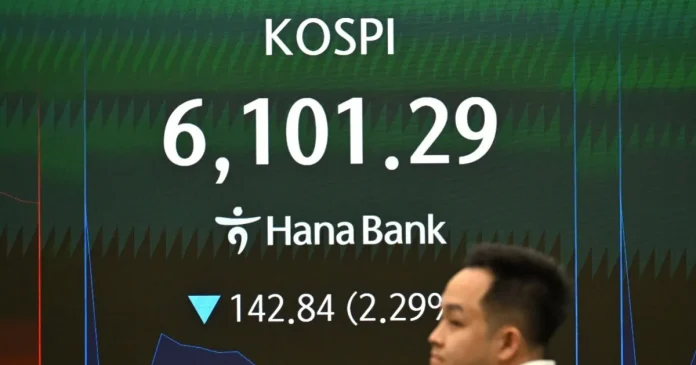
Asian financial markets buckled Tuesday under the weight of an escalating Middle East conflict, as US-Israeli military strikes on Iran and Iranian retaliatory attacks across the Gulf stretched into a fourth consecutive day, triggering a broad flight from risk assets and a sharp rally in energy prices.
South Korea’s KOSPI bore the heaviest blow among major regional indexes, plunging approximately 6.5 percent in afternoon trading — a stunning reversal for an index that had been the best-performing major benchmark of the year heading into the crisis. Korean Air collapsed more than 9 percent as airlines cancelled thousands of flights to the Middle East. Japan’s Nikkei 225 fell 3 percent, extending losses that began Monday when the index shed as much as 2.15 percent at the open, shedding over 1,260 points before paring some of those declines by midday. Australia’s ASX 200 dropped about 1.5 percent, while China’s SSE Composite Index fell as much as 1.3 percent before recovering later in the session.
The sell-off followed a turbulent Monday across global markets. Hong Kong’s Hang Seng fell 2.54 percent, Singapore’s Straits Times Index dropped 2.13 percent, and Japan Airlines sank roughly 6 percent. In the United States, the S&P 500 closed flat while the Nasdaq Composite edged up 0.36 percent, though S&P 500 futures were down 0.67 percent and Dow futures off 0.71 percent by midday Monday, signalling continued unease on Wall Street. Shares in major carriers including Delta and United fell sharply.

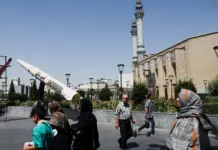
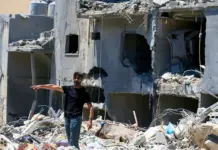
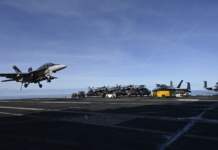
The catalyst for the turmoil was the weekend’s dramatic escalation. US and Israeli forces launched strikes on Iran, killing Supreme Leader Ayatollah Ali Khamenei. Iran responded with a wave of missile and drone attacks across the Gulf, striking targets in Israel, the United Arab Emirates, and Bahrain. The confirmation of Khamenei’s death by Iranian state media sent shockwaves through financial markets globally.
Energy markets were among the most violently affected. Brent North Sea crude surged as much as 13 percent at Monday’s open before easing, and stood approximately 2.2 percent higher as of 04:00 GMT Tuesday. West Texas Intermediate crude was up about 1.6 percent at the same time, having climbed 4.24 percent by midday Monday. European natural gas prices soared as much as 50 percent on Monday. PetroChina opened 7 percent higher in Shanghai, and China’s CSI Energy Index jumped 5 percent as investors rotated into energy producers.
The surge in oil prices reflects deep anxiety over the fate of the Strait of Hormuz, the narrow waterway through which roughly 20 percent of global seaborne oil passes. Iran has explicitly threatened to shut the strait, and at least three ships have already been attacked near the mouth of the Persian Gulf. QatarEnergy announced it had halted production amid the Iranian strikes. Economists have warned that a sustained closure of the strait could push oil prices as high as $108 per barrel.
Against this backdrop, OPEC+ announced a production increase of 206,000 barrels per day beginning in April, with Saudi Arabia, Russia, Iraq, the UAE, and four other member states set to boost output — a move that may do little to calm markets if the Hormuz threat materialises.
Gold rose 1.76 percent on Monday as investors sought traditional safe-haven assets. Bitcoin experienced extreme volatility, dropping below $64,000 within hours of the initial US-Israeli strikes on Saturday before bouncing above $68,000 on Sunday following confirmation of Khamenei’s death. The total cryptocurrency market shed roughly $128 billion in value in the immediate aftermath of the strikes. By early Monday in Asia, Bitcoin was trading around $66,543, down 2.2 percent on the day, with a 24-hour trading volume topping $43.6 billion. The digital asset has now fallen 47 percent from its October all-time high of $126,000, even as spot Bitcoin ETFs attracted nearly $254 million in net inflows over the three sessions prior to Monday’s turmoil.
The breadth and speed of the market reaction underscores how rapidly the conflict has moved from a regional military confrontation to a global economic concern. With Iranian retaliatory strikes still ongoing, energy infrastructure under threat, and no diplomatic off-ramp yet visible, analysts expect volatility to remain elevated across asset classes in the days ahead.