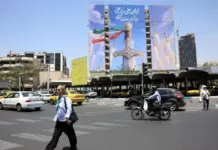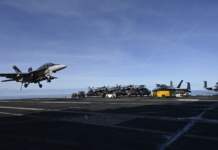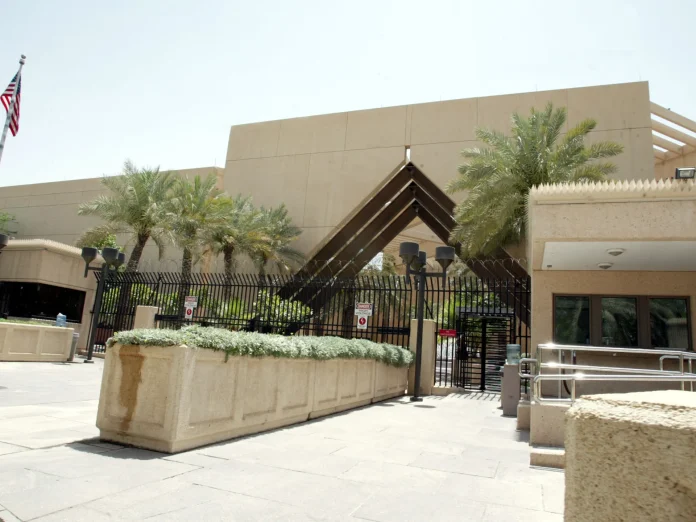
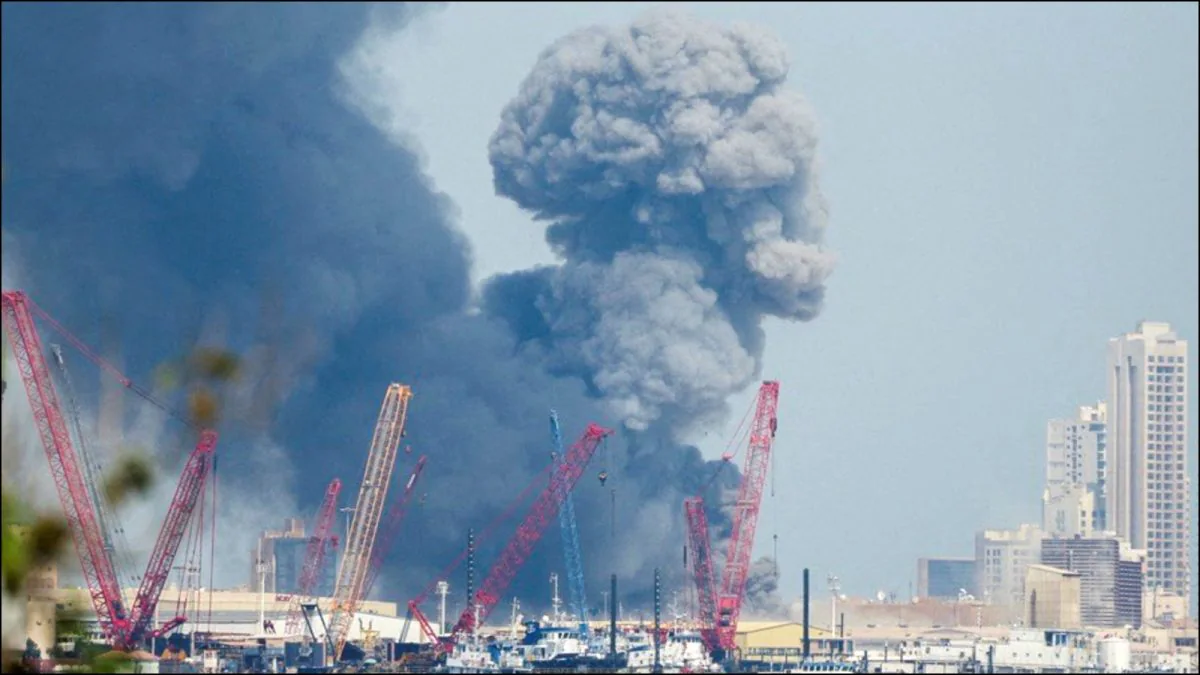
RIYADH — Two drones struck the US Embassy in Riyadh in the early hours of Tuesday, igniting a fire and sending thick black smoke billowing over the Saudi capital’s Diplomatic Quarter, as Iran dramatically widened its military campaign against American and Israeli targets across the Middle East.
The embassy building was unoccupied at the time of the attack, and no casualties were reported. The Saudi Defense Ministry confirmed minor material damage to the compound, while a source close to the Saudi military said air defenses had intercepted four drones in total targeting the Diplomatic Quarter — suggesting two were brought down before reaching the embassy. Witnesses described a powerful explosion followed by visible flames rising from the compound in the pre-dawn darkness.
In response, the US Embassy issued a shelter-in-place notification urging American citizens in Riyadh, Jeddah, and Dhahran to avoid the embassy until further notice. President Donald Trump told a US broadcaster that Washington’s response to the strike would be made clear soon, adding that the United States possessed the military capability to sustain operations well beyond a projected four-to-five-week timeframe.
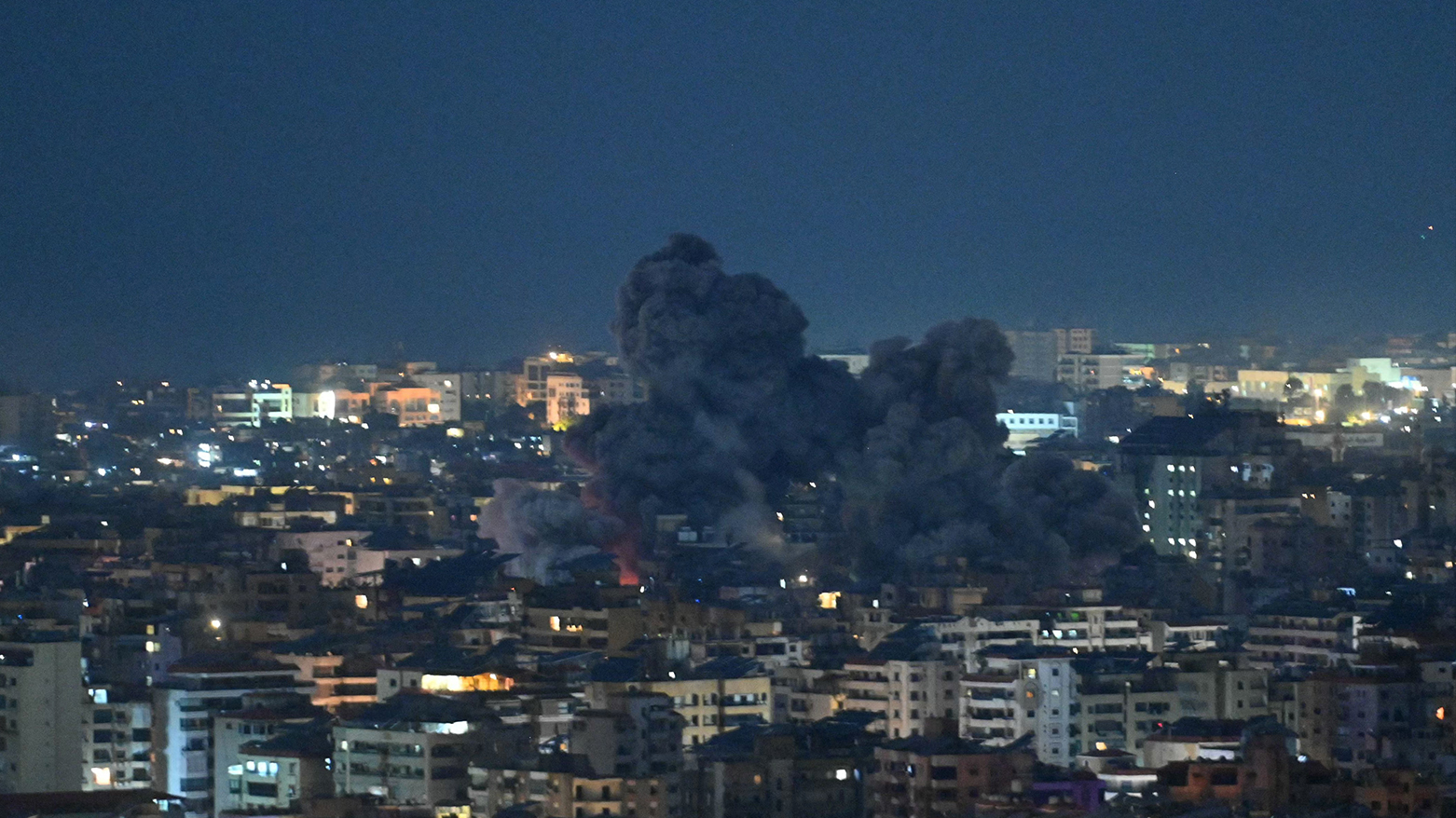
The Riyadh attack was one front in a sweeping Iranian counterstrike. The Islamic Revolutionary Guard Corps (IRGC) announced at dawn Tuesday — in what it designated as the fourteenth wave of Operation Promise 4 — that it had launched 20 drones and three ballistic missiles at the US airbase in the Sheikh Isa area of Bahrain. The IRGC claimed the assault destroyed the base’s main command headquarters and ignited fires in fuel storage tanks. The statement was carried by Iran’s official IRNA news agency.
Iran framed all of Tuesday’s strikes as direct retaliation for a joint US-Israeli military operation that began on Saturday, described by Washington and Jerusalem as aimed at neutralising what they characterise as an existential threat posed by Tehran’s weapons programs. Iranian forces have since fired ballistic missiles at targets in Israel, Bahrain, the United Arab Emirates, Qatar, and Saudi Arabia. Blasts were reported in Qatar as part of the same wave of attacks. Hezbollah separately announced it had targeted radar installations and control rooms at the Ramat David airbase in northern Israel using a drone swarm at dawn on Tuesday.
The conflict’s origins lie in a US-Israeli strike near the offices of Supreme Leader Ayatollah Ali Khamenei, which triggered Iran’s cascading response. Iranian Foreign Minister Abbas Araghchi accused pro-Israel lobbying groups in Washington of drawing the United States into what he called a ‘war of choice,’ and cited US Secretary of State Marco Rubio as having acknowledged the conflict was ignited at the request and in the interest of Tel Aviv.
Israeli Prime Minister Benjamin Netanyahu offered a stark justification for the original offensive, stating that Iran had begun constructing new nuclear facilities and underground bunkers that would render its ballistic missile and atomic bomb programs immune to military strikes within months. The escalation follows weeks of high-stakes nuclear negotiations and intensifying military posturing across the region.
The breadth of Tuesday’s attacks underscored how rapidly the conflict has drawn in multiple nations. Thousands of travellers have been stranded as regional airspace and transport networks are disrupted, and the widening hostilities have sparked mounting concern over the stability of global energy markets and the broader international economy.
With the conflict now in its fourth day and no diplomatic off-ramp visible, the targeting of a US diplomatic mission on Saudi soil marks a significant escalation — one that transforms the confrontation from a bilateral US-Iran and Israel-Iran clash into a broader regional crisis with unpredictable consequences for Gulf stability.