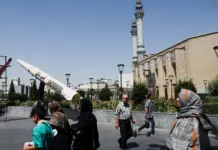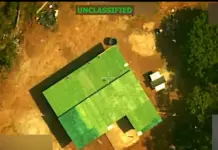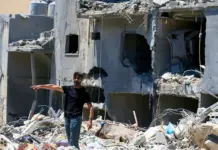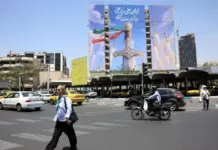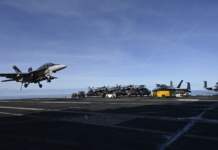
WASHINGTON/TEHRAN — The United States and Israel have launched a sweeping joint military campaign against Iran, killing Supreme Leader Ayatollah Ali Khamenei, numerous senior Iranian officials, and hundreds of civilians, igniting the most significant direct military confrontation between Washington and Tehran in history. Iran has struck back with waves of drones and missiles targeting American bases and assets across the Gulf, killing six US service members, two of whose bodies were recovered from a regional facility hit in the Iranian counterattack.
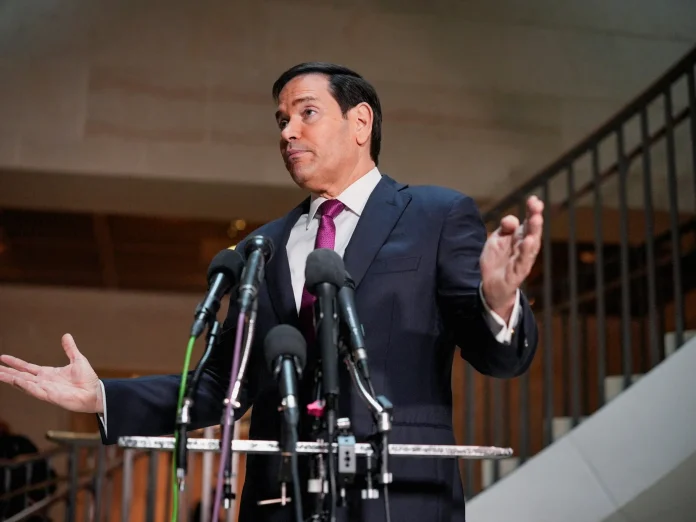
Secretary of State Marco Rubio confirmed the strikes to reporters on Monday following a classified briefing with congressional leaders, offering the clearest public rationale yet for the Trump administration’s decision to enter the conflict. Rubio stated that Washington had advance knowledge of an impending Israeli operation against Iran and concluded that Tehran would automatically retaliate against American forces — a judgment reinforced by intelligence indicating Iran had instructed field commanders to respond against US assets the moment Israel struck.
‘It was abundantly clear,’ Rubio said, ‘that if Iran came under attack from Israel, it would retaliate against the United States.’ Rather than absorb that blow, the administration chose to strike first.
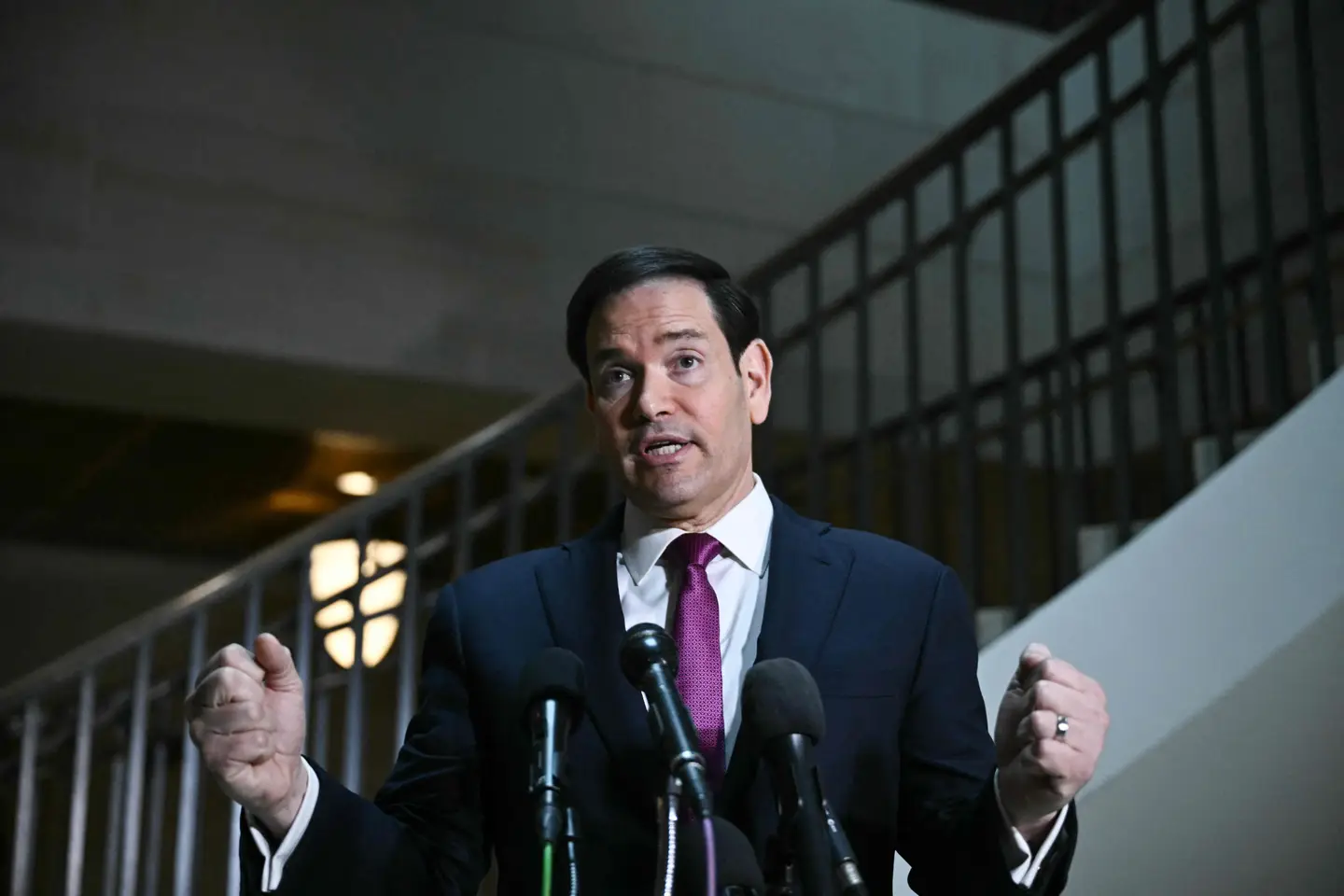
The campaign began less than 48 hours after a round of diplomatic talks between American and Iranian officials over Tehran’s nuclear programme — negotiations that now appear to have served as a final diplomatic overture before hostilities commenced. President Donald Trump told a television host that ‘the big wave hasn’t even happened,’ warning that ‘the big one is coming soon.’ Rubio echoed that warning, telling reporters that ‘the hardest hits are yet to come from the US military.’
The stated military objectives are the destruction of Iran’s ballistic missile and drone programmes, as well as the elimination of its naval threat in the Gulf. Trump argued the campaign was necessary because Iran’s missile capabilities were growing ‘rapidly and dramatically,’ that Tehran already possessed missiles capable of striking Europe, and that it would ‘soon have had missiles capable of reaching our beautiful America.’ Rubio framed Iran’s arsenal as a shield designed to protect a covert nuclear weapons programme, arguing that dismantling it was essential to preventing Iran from acquiring a nuclear bomb.
Prime Minister Benjamin Netanyahu confirmed in a video message that the attacks were carried out with the direct assistance of President Trump, describing the coalition of forces as enabling him to accomplish what he had ‘yearned to do for 40 years.’ The United States has provided Israel with at least $21 billion in military aid since 2023.
Iran’s retaliatory strikes targeted US bases and assets across the Gulf region, killing six American service members. The State Department issued urgent departure advisories for US citizens across more than a dozen Middle Eastern countries, citing serious safety risks. The advisory covered all Gulf Cooperation Council nations, as well as Lebanon, Syria, Egypt, Israel, and the occupied Palestinian territories.
Trump said he expected the conflict to last roughly four weeks. The administration notified congressional leaders before the strikes began, briefing the bipartisan Gang of Eight — lawmakers with the highest security clearances — twice: once on the day of the State of the Union address and again on the evening before the operation commenced. Formal notification was submitted to Congress within 48 hours under the War Powers Act of 1973, which the administration argued fulfilled its legal obligations.
That argument drew sharp criticism on Capitol Hill. Senate Minority Leader Chuck Schumer called the answers provided at the classified briefing ‘completely and totally insufficient.’ Democratic lawmakers in both chambers pushed for votes on resolutions that would block Trump from conducting additional strikes without explicit congressional authorisation. Sen. Andy Kim of New Jersey, a former Obama-era director for Iraq on the White House National Security Council, was among those demanding greater oversight.
Not all criticism was partisan. Sen. Mark Warner, the top Democrat on the Senate Intelligence Committee, acknowledged that the administration’s communication with Congress on this operation was ‘much better’ compared to its other recent military actions — a qualified concession that nonetheless underscored the broader unease among lawmakers.
Public opinion remains deeply divided. A survey conducted over the weekend found that 43% of Americans disapproved of the strikes, while only 27% approved. A further 29% said they were unaware the strikes had taken place — a striking figure given the scale of the operation and its potential to reshape the Middle East for a generation.
Rubio went further than military objectives in describing Washington’s ambitions, expressing hope that the Iranian people would use the moment to overthrow their government. The killing of Khamenei and the decapitation of much of Iran’s senior leadership make the country’s political future deeply uncertain, even as its military continues to launch retaliatory strikes across the region.