The United States State Department issued a sweeping and urgent departure advisory on Monday, March 2, calling on all American citizens across more than a dozen Middle Eastern nations to leave immediately, as a rapidly escalating regional war sparked by joint US-Israeli strikes on Iran threatened to engulf the broader region.
Mora Namdar, the State Department’s assistant secretary for consular affairs, posted on X in stark terms: ‘DEPART NOW’ — urging Americans to use any available commercial transportation to exit the region due to what the department described as ‘serious safety risks.’ The advisory covered an expansive list of countries: Bahrain, Egypt, Iran, Iraq, Israel, the occupied West Bank and Gaza, Jordan, Kuwait, Lebanon, Oman, Qatar, Saudi Arabia, Syria, the United Arab Emirates, and Yemen.
The breadth and delivery of the warning were themselves remarkable. The announcement, made via social media rather than through formal State Department notification channels, struck observers as highly irregular. Veteran Washington correspondents noted they had never witnessed anything comparable — a mass departure advisory for virtually the entire Middle East, delivered through a tweet rather than the established diplomatic and consular processes typically used to alert Americans abroad.
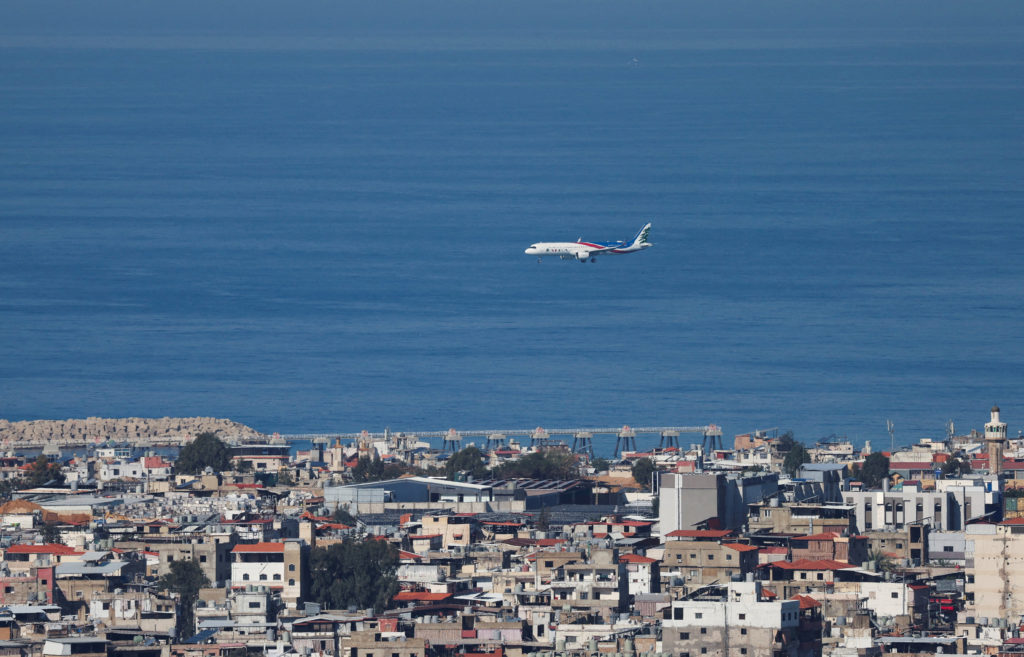
The practical challenge facing those Americans was equally stark. Major airlines have canceled flights to and from the region, raising urgent questions about how civilians could realistically comply with the order amid disrupted commercial air traffic caused by ongoing missile exchanges.
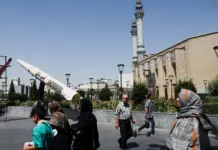
The crisis was ignited on Saturday, March 1, when the United States and Israel launched a coordinated barrage of strikes against targets across Iran. Among those killed was Supreme Leader Ayatollah Ali Khamenei, the most powerful figure in the Islamic Republic and the architect of its regional influence for more than three decades. The strikes also killed numerous other senior Iranian officials. Tehran responded swiftly, launching retaliatory strikes against US and Israeli sites across the region, while Iranian-aligned forces attacked Israel, Gulf states, and infrastructure critical to oil and natural gas production.
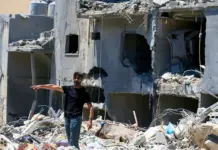
The human toll has been severe. Iranian authorities, citing the Iranian Red Crescent Society, reported at least 555 people killed inside Iran, with more than 130 cities struck during the assault. In Israel, 11 people have been confirmed dead. Lebanese authorities reported 31 fatalities. The US military announced Monday that two previously unaccounted-for service members had been confirmed killed, bringing total American military casualties to six.
President Donald Trump acknowledged Monday that the conflict had originally been projected to last four to five weeks but indicated it could extend beyond that timeline. He and Israeli officials have offered conflicting accounts of the war’s objectives and what an endgame might look like, deepening uncertainty about the conflict’s trajectory.
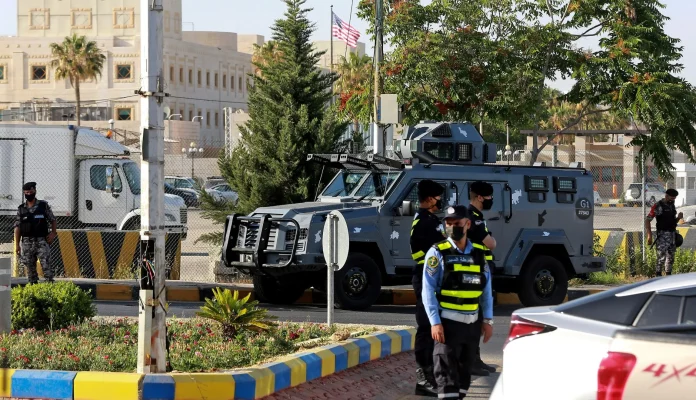
The US Embassy in Amman, Jordan announced Monday that its personnel had evacuated the diplomatic compound following a specific threat — a sign of how rapidly the security environment across the region had deteriorated. The State Department simultaneously activated an inter-agency emergency task force to coordinate the American response to the unfolding crisis.
The economic shockwaves from the conflict have been immediate and severe. Energy prices have spiked sharply as Iranian officials threatened to fire on any vessel attempting to transit the Strait of Hormuz, the narrow waterway through which a significant portion of the world’s oil supply passes. Secretary of State Marco Rubio briefed congressional leaders on the strikes and confirmed that Treasury Secretary Scott Bessent and Energy Secretary Chris Wright are expected to announce measures beginning Tuesday aimed at mitigating the impact of rising energy prices on the American economy.
The conflict has rapidly expanded beyond its initial flashpoint, drawing in nearly every country in the region and threatening to destabilize global energy markets. With commercial aviation suspended across much of the Middle East, US military casualties mounting, and no clear diplomatic off-ramp in sight, the coming days are likely to prove decisive in determining whether the war can be contained — or whether it deepens further into a broader conflagration.