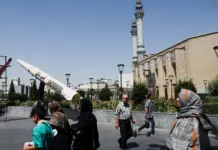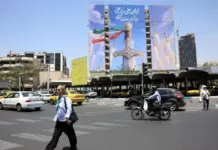
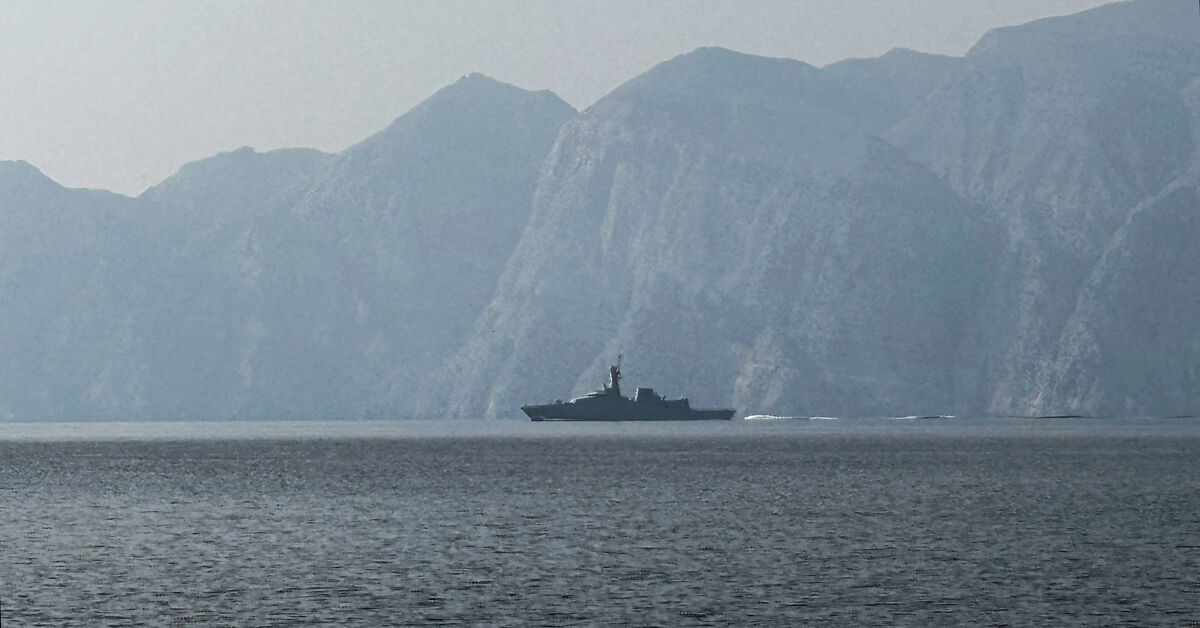
Iran’s Revolutionary Guard Corps declared the Strait of Hormuz closed on Tuesday, warning that any vessel attempting to transit the waterway will be attacked — a move that threatens to choke off roughly a fifth of the world’s daily oil consumption and marks a dramatic escalation in a conflict now engulfing the broader Middle East.
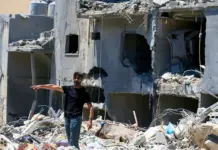
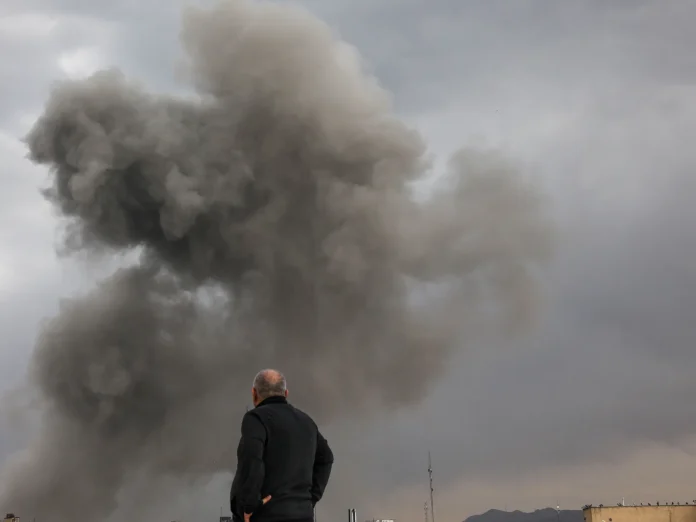
The announcement came as Israeli forces continued heavy bombardment of Tehran and Beirut, with multiple blasts reported across the Iranian capital beginning at midnight and extending into the early hours. Strikes hit the Iranian state broadcaster IRIB, a building belonging to Iran’s Expediency Council, and targets in the cities of Karaj and Qom. The combined death toll across Iran and Lebanon has now surpassed 600 people.
In Israel, the military reported missile interceptions over West Jerusalem, Tel Aviv and Eilat as Iran continued its own offensive. At least 10 people have been killed in Israel since Saturday, with one person injured by rocket shrapnel in the Tel Aviv area. Israeli forces also carried out heavy airstrikes on Hezbollah strongholds in Beirut.
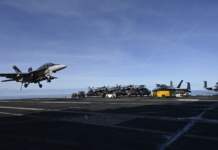
President Donald Trump addressed the scope of the American campaign, stating it could last approximately four weeks. He pledged that Washington would do whatever is necessary to destroy Tehran’s missile and nuclear capabilities, outlining objectives that include eliminating Iran’s capacity to produce new missiles, annihilating the Iranian navy, ensuring Tehran can never obtain a nuclear weapon, and cutting off Iran’s ability to arm and fund proxy groups beyond its borders. Secretary of State Mike Rubio accused Iran of using missile batteries as cover for an illicit nuclear weapons programme.
Iran’s strikes have extended far beyond its immediate adversaries. The IRGC claimed its naval forces carried out a complex attack using drones and missiles targeting American forces in Dubai, and separately claimed a drone strike on the Arifjan Base in Kuwait, later announcing a second wave involving 10 drones against the same facility. The US embassy in Saudi Arabia was struck by two drones, causing a limited fire and minor damage, prompting American authorities to urge citizens in Jeddah, Riyadh and Dhahran to shelter in place. The US military confirmed at least six American troops have been killed in the fighting.
The economic consequences of the conflict are already severe. Iran struck critical energy infrastructure across the Gulf, hitting liquefied natural gas facilities in Qatar, refineries in Saudi Arabia, ports in Dubai, and oil tankers in active shipping lanes. Qatar’s state-owned petroleum company suspended all LNG production after two of its facilities were struck — a significant blow to global gas markets. Saudi Arabia shut its largest domestic oil refinery as a precautionary measure. Global oil and gas prices rose sharply in response.
Qatar’s military has been engaged in sustained air defence operations for three consecutive days, shooting down two ballistic missiles before they entered Qatari territory and repeatedly deploying Patriot interceptor missiles. Multiple explosions were heard over Doha early Tuesday morning. Qatar temporarily closed its airspace beginning Saturday, grounding Qatar Airways and other carriers operating through Doha. In a humanitarian gesture, Qatar’s Ministry of Interior waived expired visas and entry permits for one month. The country’s armed forces reported its Patriot interceptor inventory remains well-stocked. Kuwait and the UAE also reported their air defences were actively engaged against waves of Iranian missiles and drones.
The conflict has drawn concern from the international community over the fate of cultural heritage. UNESCO expressed alarm over the protection of historic sites amid the escalating bombardment. The Golestan Palace in Tehran — a UNESCO World Heritage site and the official royal complex of the Qajar dynasty, where Reza Pahlavi was coronated in 1926 — suffered major damage in the strikes.
Diplomatic signals remain contradictory. Trump spoke by telephone with Kurdish faction leaders Masoud Barzani and Bafel Talabani in Iraq, a day after the initial joint US-Israeli strikes on Iran, in what appeared to be an effort to manage regional dynamics. Iran’s UN envoy Amir-Saeid Iravani insisted his country does not seek war or escalation, but added that Iran will not surrender its sovereignty — a formulation that offered little indication of an imminent diplomatic off-ramp as the region braces for further strikes.