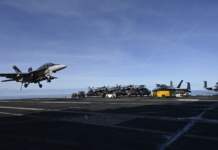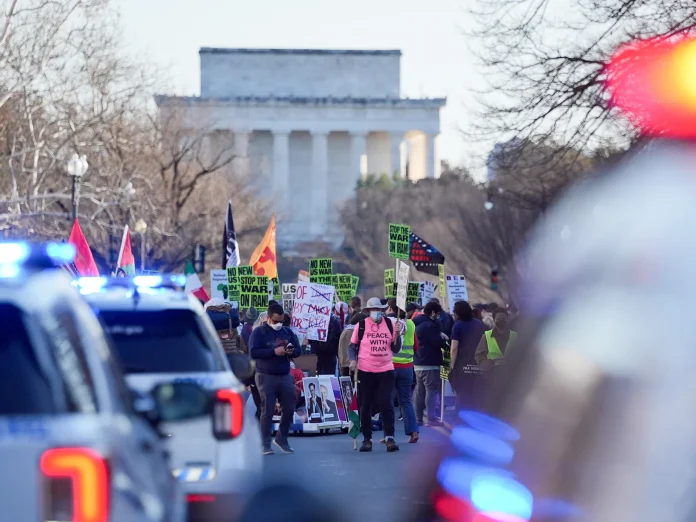
American public opinion has fractured sharply over the joint US-Israeli military campaign against Iran, with a new poll showing only roughly one in four Americans approving of the strikes that killed Iranian Supreme Leader Ayatollah Ali Khamenei and left more than 200 people dead across the region.
The Reuters-Ipsos survey, conducted over two days and closing Sunday, March 1 — just days after the strikes began in the early hours of Saturday, February 28 — found that approximately 25 to 27 percent of the 1,282 US adults polled approved of the military action. Some 43 percent disapproved, and 29 percent remained unsure. The poll carries a margin of error of plus or minus three percentage points.
The partisan divide is stark. Among Republican respondents, 55 percent backed the strikes, while only 13 percent opposed them and 32 percent were undecided. Democrats were overwhelmingly opposed: 74 percent disapproved, just 7 percent approved, and 19 percent were unsure. The survey also found that 56 percent of all respondents believe President Donald Trump is too willing to use military force to advance US interests — a view shared by 87 percent of Democrats, 60 percent of independents, and 23 percent of Republicans.
The strikes, carried out jointly by the United States and Israel, killed Khamenei and, according to Iranian media citing the Red Crescent, left at least 201 people dead and more than 700 wounded inside Iran. Nine people have been killed in Israel, two in Iraq, three in the United Arab Emirates, and one in Kuwait. Three American service members were also confirmed killed in action, a development Trump acknowledged Sunday while pledging to continue what he called a ‘righteous mission’ until ‘all objectives are achieved.’ He warned there would ‘likely be more’ US deaths ‘before it ends.’
The economic dimensions of the conflict are weighing heavily on public sentiment. Some 45 percent of all respondents said they would be less likely to support the campaign if it caused gas or oil prices to rise in the United States. That figure held at 44 percent among independents and 34 percent among Republicans. Several companies have already suspended shipments along trade routes threatened by the widening conflict, raising concerns about supply chain disruptions.
The political fallout in Washington is intensifying. Senator Chris Van Hollen is leading efforts to bring a war powers resolution to a vote early this week, which would require Congressional approval before any further military action against Iran. At least one Democratic senator, however, broke with the party’s dominant opposition and praised the strikes — a sign of the complex political terrain Trump is navigating.
The strikes represent a dramatic escalation in a region already under strain. Trump has ordered military action in Venezuela, Syria, and Nigeria in recent months, and the administration separately confirmed the abduction of Venezuelan leader Nicolas Maduro. Critics have noted the irony that Trump campaigned on ending ‘endless wars’ and halting US interventionism abroad.
Pre-strike polling had already signalled ambivalence. A CBS News/YouGov survey conducted the day before the February 28 attacks found that 51 percent of respondents would favour US military action against Iran specifically to prevent Tehran from developing nuclear weapons — but when asked about broader approaches to Iran’s leadership, opinion splintered: 38 percent preferred diplomacy, 22 percent favoured sanctions, 22 percent preferred no US engagement at all, and only 18 percent wanted the US to remove Iran’s leadership by force.
A University of Maryland poll from early February showed similar hesitancy, with 49 percent of respondents opposing a US-initiated attack on Iran and 30 percent undecided. Notably, even 40 percent of Republicans at that point opposed such a strike — a figure that has since shifted significantly within the party following the operation’s launch.
The question of American casualties is proving particularly sensitive. Among Republicans, 42 percent said they would be less likely to support the operation if it resulted in US troops being killed or injured — a threshold that has already been crossed with the deaths of three service members. With midterm elections scheduled for November, the political stakes of a prolonged military engagement are considerable, and the war powers vote expected this week will test whether Congress is prepared to assert oversight over an administration that has shown a broad appetite for military action across multiple theatres.