WASHINGTON/TEHRAN — The Middle East lurched toward an unprecedented crisis on Sunday after Ayatollah Ali Khamenei, Iran’s 86-year-old Supreme Leader, was killed in coordinated US-Israeli strikes, triggering a sweeping Iranian retaliation that has left three American soldiers dead and drawn much of the Gulf region into open conflict.
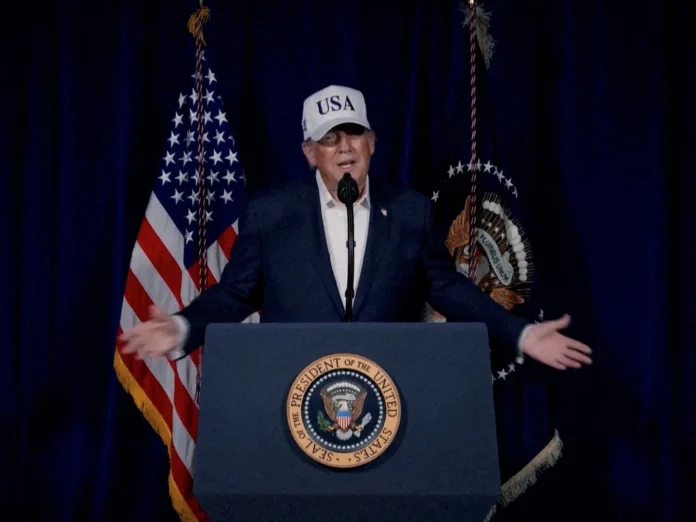
President Donald Trump posted a six-minute video to his Truth Social platform on March 1, describing the offensive — dubbed Operation Epic Fury — as ‘one of the largest, most-complex, most-overwhelming military offensives the world has ever seen.’ Launched in the preceding 36 hours, the operation targeted Iran’s military command structure, naval assets, and nuclear facilities. Trump warned that the campaign would continue until all objectives were achieved, and acknowledged that more American deaths were likely.
‘Forty-eight leaders have been killed in Iran,’ Trump declared, adding that the US had destroyed and sunk nine Iranian naval ships and largely obliterated Iran’s Naval Headquarters. CENTCOM confirmed that the Islamic Revolutionary Guards Corps no longer has a functioning headquarters. Iranian Foreign Minister Abbas Araghchi acknowledged the scale of the disruption, stating that Iran’s military command had been interrupted, with units now acting independently.
The strikes came as a jarring rupture to ongoing diplomatic engagement. US negotiators had been conducting indirect talks with Tehran, mediated by Oman and focused on Iran’s nuclear programme. As recently as February 26, Omani Foreign Minister Badr al-Busaidi described ‘significant progress’ following a round of negotiations. Trump launched preemptive military strikes on February 28, just days after those talks concluded.
Iran’s response has been broad and indiscriminate. Tehran launched strikes against Qatar, the United Arab Emirates, Saudi Arabia, Jordan, Bahrain, and Oman. The IRGC claimed it targeted the USS Abraham Lincoln aircraft carrier with four ballistic missiles, though a US official stated the vessel sustained no damage. Three American service members — reported to have been based in Kuwait — were killed in Iranian strikes, with five others seriously wounded. At least one person died in Kuwait and three in the UAE as a result of the regional escalation.
The human toll inside Iran has been severe. At least 201 people have been killed and 747 wounded since the escalation began. In Israel, nine people have died and 121 have been wounded. A rocket strike on Beit Shemesh, roughly 40 kilometres west of Jerusalem, killed several people. Two additional deaths were recorded in Iraq.
Israeli Prime Minister Benjamin Netanyahu vowed that airstrikes on Iran would intensify in the coming days. Israel’s Air Force confirmed on March 1 that it was striking targets belonging to what it described as the ‘Iranian terror regime’ in the heart of Tehran.
Inside Iran, the political vacuum left by Khamenei’s death prompted rapid institutional manoeuvring. Senior official Ali Larijani announced the formation of a temporary three-member leadership council to govern until the 88-member Assembly of Experts can convene and elect a new supreme leader. The council comprises President Masoud Pezeshkian, Chief Justice Gholam-Hossein Mohseni-Ejei, and Guardian Council member Ayatollah Alireza Arafi.
Despite the ferocity of the offensive, Trump signalled openness to negotiation. In remarks to The Atlantic, he said Iran wants to talk and that he has agreed to engage. A White House official confirmed Trump’s willingness to deal with Iran’s new leadership. The president has estimated the war could last approximately four weeks.
Trump framed the military campaign as a necessary pre-emption against an Iranian regime he accused of pursuing long-range missiles capable of striking the United States and nuclear weapons. Iran has consistently denied seeking nuclear weapons, and independent experts assess that even if Tehran had reversed course, development of a viable weapon would still be several years away. The US has not publicly presented evidence that Iran was close to either capability.
Trump’s remarks on February 28 had called on what he described as ‘Iranian patriots’ to reclaim their country. On Sunday, he warned Iran’s security forces — including the IRGC, military, and police — to lay down their arms or face death. He described the late Khamenei as a ‘wretched and vile man,’ and declared that Iran’s entire military command structure had been eliminated.
The conflict represents a dramatic escalation following a 12-day war between Iran and Israel last June, during which Trump said the US bombed key Iranian nuclear facilities. The current offensive has shattered what remained of regional stability, drawing Gulf states into the crossfire and leaving the future of Iran’s government — and the broader Middle East order — deeply uncertain.