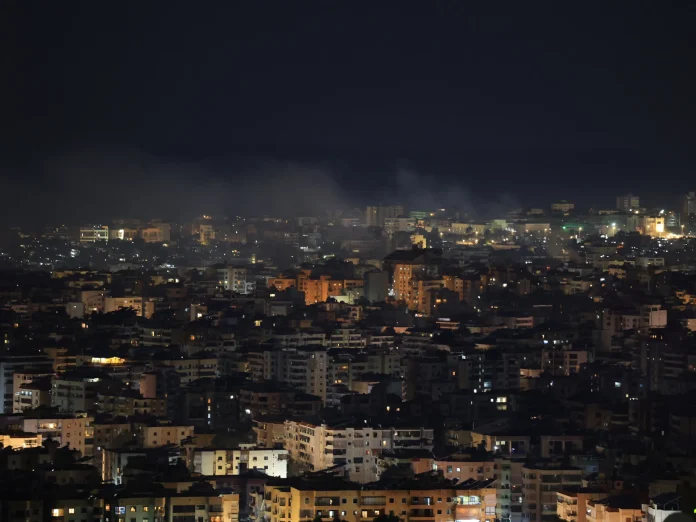
BEIRUT — Israeli warplanes struck Beirut’s southern suburbs with the heaviest bombardment the city has seen since the 2024 war, hours after Hezbollah shattered a months-long ceasefire by launching missiles and a swarm of drones at an Israeli military base south of Haifa. The exchange marks a dramatic and dangerous new chapter in a widening regional conflict.
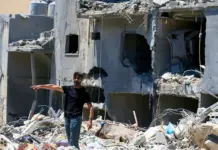
More than a dozen explosions rocked the southern districts of the Lebanese capital, known as Dahiyeh, a densely populated stronghold of the Iran-backed militant group. Israeli strikes hit multiple areas across Dahiyeh, as well as villages in south Lebanon and the Bekaa Valley in the country’s east. Lebanese security sources identified the targets as suspected Hezbollah infrastructure, while the Israeli Defense Forces said the strikes targeted senior Hezbollah members in the Beirut area and a key figure operating in the south.
Hezbollah confirmed it had fired missiles and an aerial drone swarm at the Mishmar HaCarmel missile-defence site, located at an Israeli army base south of Haifa, at midnight Monday. The Israeli military said it intercepted at least one projectile, with others landing in open areas. Israeli Chief of the General Staff Eyal Zamir stated that Hezbollah had opened a campaign against Israel overnight, and the military formally held the group responsible for the escalation.
Hezbollah was unambiguous about its motivation. The group declared the attack a direct act of revenge for the killing of Iranian Supreme Leader Ayatollah Ali Khamenei, who died in US-Israeli airstrikes on March 1, 2026. Iran has vowed retaliation, and Hezbollah publicly pledged to confront both Washington and Tel Aviv over what it called an assassination. The group also cited continuous Israeli violations of Lebanese sovereignty and framed the strike as a defence of Lebanon and its people.
The projectiles were the first launched by Hezbollah since the November 2024 ceasefire that ended more than a year of devastating fighting. That US-brokered agreement left Hezbollah severely weakened — Israeli strikes during the 2024 war killed most of the group’s senior military and political leadership. Despite the truce, Israel has continued carrying out near-daily attacks across Lebanon, and Beirut filed a formal complaint with the United Nations in January documenting 2,036 Israeli violations of Lebanese sovereignty in just the final three months of 2025.
The Lebanese government has been caught in an impossible position. Prime Minister Nawaf Salam condemned Hezbollah’s rocket fire in stark terms, calling it an irresponsible and suspicious act that jeopardises Lebanon’s security and hands Israel pretexts to continue its military campaign. Salam’s government has been pleading with the international community to pressure Israel into honouring the ceasefire, while simultaneously issuing a decree — rejected outright by Hezbollah — demanding the group disarm. Hezbollah operates entirely independently of the Lebanese state.
The Lebanese presidency disclosed that the US ambassador had conveyed assurances as recently as Saturday that Israel would not escalate against Lebanon provided no hostile acts originated from the Lebanese side. Those assurances collapsed within 48 hours.
Israel ordered residents of more than 50 villages across south Lebanon and the Bekaa Valley to evacuate, instructing civilians to maintain at least one kilometre of distance from buildings in the affected areas. The town of Bint Jbeil was among those included in the evacuation orders. The Israeli Defense Forces accused Hezbollah of acting as a proxy for Tehran rather than in Lebanon’s interests.
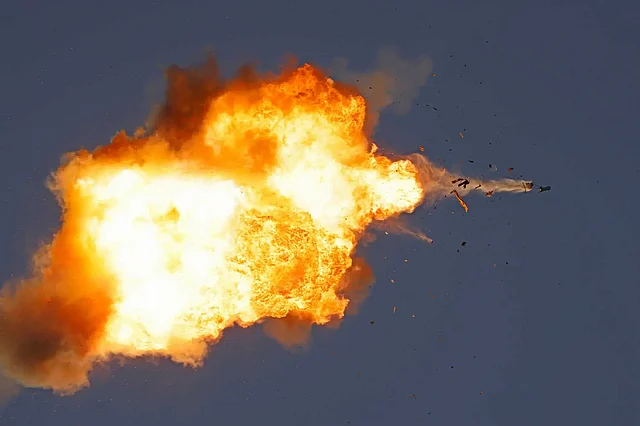
The violence arrives at a moment of acute fragility for Lebanon. The country has endured years of compounding economic collapse and political paralysis, leaving its institutions with little capacity to absorb another military confrontation. The broader regional picture is equally volatile: Iran has promised retaliation for Khamenei’s death, and the strikes on Beirut represent the sharpest escalation yet in what analysts describe as an intensifying conflict pitting the United States and Israel against Iran and its network of allied armed groups across west Asia.
Whether the exchange remains contained or spirals into a broader war may depend on decisions made in the coming hours in Tehran, Washington, and Jerusalem — capitals that have each, in different ways, already crossed lines once considered inviolable.