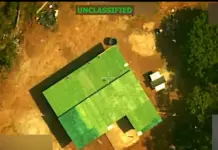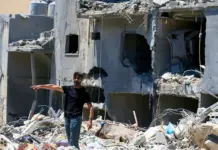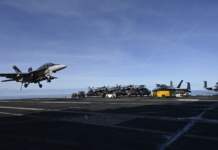
The United States and Israel launched sweeping joint military strikes across Iran, hitting targets in more than 20 of the country’s 32 provinces and triggering a cascade of civilian panic, government repression, and regional escalation that has fundamentally altered the Middle East’s security landscape.
The opening salvo in the capital struck the Pasteur neighbourhood, home to key government offices. The compound housing the offices of Supreme Leader Ayatollah Ali Khamenei was largely destroyed. Iran’s foreign minister subsequently confirmed to an American broadcaster that both Khamenei and President Masoud Pezeshkian had survived.
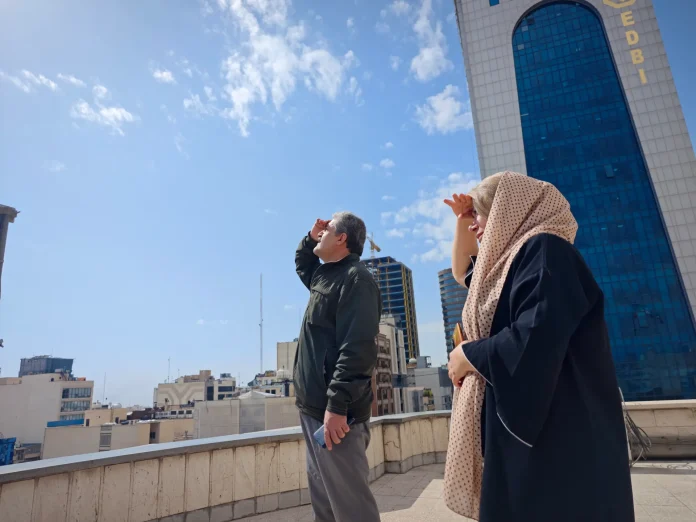
Iran responded swiftly, launching a wave of missile and drone attacks across the region. The Supreme National Security Council declared all universities and schools closed until further notice. Dozens of people, including children, were killed after two schools were struck — one in Minab and one in Tehran.
The human toll on civilians extended well beyond the strikes themselves. All outbound roads from Tehran became heavily congested from the morning the attacks began, as hundreds of thousands of residents attempted to flee. Long queues formed at petrol stations throughout the capital. Many families drove north toward three provinces bordering the Caspian Sea, seeking distance from what they feared would be further bombardment.
The Iranian government sent a text message to an estimated 10 million Tehran residents on Saturday afternoon, urging citizens to follow only official state media and to report any suspicious activity to authorities. Within minutes of the strikes commencing, Iranian authorities began severing internet and mobile phone connections across multiple districts of the capital. The blackout rapidly expanded nationwide, with almost all traffic blocked — an echo of the unprecedented 20-day total internet shutdown imposed in January.
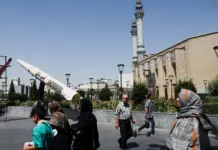
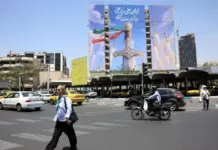
Basij members of the Islamic Revolutionary Guard Corps patrolled the streets of downtown Tehran on Saturday afternoon. Pro-government groups gathered at Palestine Square, chanting slogans against the United States and Israel in a show of state-organised defiance.
The political dimension of the crisis extended far beyond Iran’s borders. US President Donald Trump issued a video message directed at the Iranian people, urging them to remain in their homes and wait for an opportunity to overthrow their government. Israeli Prime Minister Benjamin Netanyahu released a separate video carrying similar sentiments. Reza Pahlavi — son of the late Shah Mohammad Reza Pahlavi and a prominent figure among Iranian opposition movements in exile — also released a video calling on Iranians to prepare for street protests.
The appeals arrived against a backdrop of severe domestic unrest. Nationwide protests gripped Iran in January, during which thousands of civilians were killed — with the heaviest casualties recorded on the nights of January 8 and 9. The United Nations and multiple international human rights organisations attributed the deaths to an unprecedented crackdown by state security forces against peaceful demonstrators. Tens of thousands of people have since been incarcerated, with some facing execution.
Unrest had already been resurfacing in the days before Saturday’s strikes. Student protests erupted last week in Tehran, Mashhad, and Shiraz. Authorities responded by suspending, arresting, or summoning a number of students for interrogation by intelligence services.
The scale and coordination of the joint American-Israeli operation — targeting critical infrastructure, government compounds, and military sites across two-thirds of Iran’s provinces simultaneously — represents a dramatic escalation with consequences that will reverberate well beyond the region. Whether the strikes accelerate internal political collapse or harden public support behind the Islamic Republic remains the defining question of the hours and days ahead.