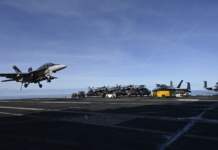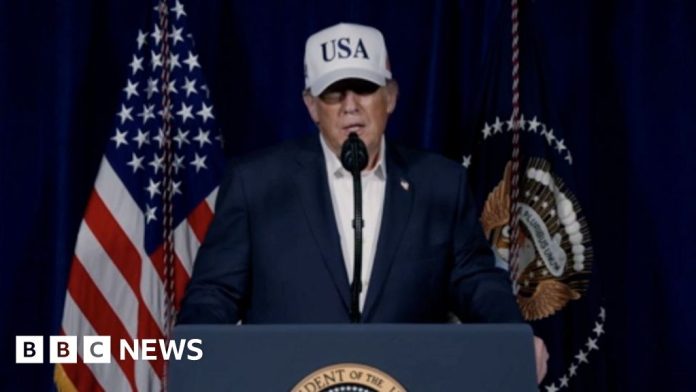
WASHINGTON/TEHRAN — President Donald Trump declared in the early hours of Saturday that the United States had launched ‘major combat operations’ against Iran, announcing a sweeping, coordinated military campaign alongside Israel that he described as both necessary and noble. Explosions shook the Iranian capital Tehran shortly before Trump released a video on Truth Social confirming the strikes were underway.
‘This is a noble mission,’ Trump said, framing the assault as a response to Iran’s relentless pursuit of nuclear weapons and long-range missile systems capable of reaching American soil, US troops stationed overseas, and targets across Europe. He accused the Iranian regime of waging an ‘unending campaign of bloodshed and mass murder targeting the United States,’ and urged Iranian forces — including the Islamic Revolutionary Guard Corps — to surrender immediately.
The stated objectives of the operation are sweeping in scope: destroy Iran’s missile forces, raze its missile production industry, and, in Trump’s words, ‘annihilate their navy.’ Trump also called on the Iranian people directly, urging them to ‘take over your government — it will be yours to take.’ The president described Saturday’s strikes as part of ‘a massive and ongoing operation,’ signalling that the campaign would extend well beyond a single night of bombardment.
The military action follows a prior strike on Iranian nuclear facilities, which Trump referenced explicitly. He claimed Tehran had ‘attempted to rebuild their nuclear program’ in the aftermath of that earlier assault, and that Iran continued developing long-range ballistic missiles despite international pressure. US military planning, according to internal assessments, anticipates sustained, weeks-long operations if the president orders a full campaign.
The Chairman of the Joint Chiefs had previously warned internally about munitions depletion and the operational complexities of major action against Iran — concerns that now take on acute relevance. Iran’s air defences, comprising Russian-origin S-300 systems, the domestically developed Bavar-373, and a range of supplementary sensors and missile batteries, present a layered challenge. After Israeli strikes in 2025, Iran’s senior military leaders publicly acknowledged damage to air defence assets, though Tehran claimed pre-positioned replacement systems had already been activated.
Israel’s role in the current campaign builds on a 12-day military operation it conducted against Iran that combined targeted strikes with covert sabotage, systematically attacking radar installations, air defence networks, missile sites, and key personnel. A critical Israeli advantage was the ability to disrupt air defence integration through covert operations timed precisely to coincide with kinetic strikes — a capability the United States has also refined through its own suppression and destruction of enemy air defences programmes.
Iranian military figures had previously warned of a decisive shift away from ‘restrained retaliation’ should the US launch a direct attack. Tehran’s potential response options are broad and destabilising: missile and drone strikes on regional infrastructure, harassment of commercial shipping, cyber operations, proxy violence across the Middle East, and the possible closure of the Strait of Hormuz — a chokepoint through which a significant portion of global oil supply passes. More alarming assessments raise the possibility that a regime facing existential threat could consider chemical or biological weapons as a last resort.

Iran’s governing structure — a complex web of security services, intelligence agencies, the IRGC’s extensive economic holdings, local enforcement bodies, and institutions upholding clerical legitimacy — makes regime change through air power alone deeply uncertain. Analysts have long cautioned that air campaigns cannot create political legitimacy, govern territory, or determine the internal succession deals that shape what follows a government’s collapse. The experience of other US interventions, including in Venezuela, illustrates how entrenched coercive forces and patronage networks can survive even significant external pressure.
Domestically, the strikes arrive against a backdrop of divided public opinion. AP-NORC polling conducted this month found that while many Americans view Iran as an adversary and express concern about its nuclear ambitions, confidence in President Trump’s judgment on the use of military force remains low. The administration has long signalled its willingness to act, having previously threatened ‘very strong options’ including military intervention.
The geopolitical context surrounding the strikes is volatile. The expiration of the New START treaty means there are currently no binding limits on nuclear arsenals between the United States and Russia — the first time that has been true since 1991. Iran, meanwhile, had been reported to be approaching a deal to acquire Chinese CM302 supersonic anti-ship cruise missiles, weapons designed to fly low and fast specifically to evade interception systems.
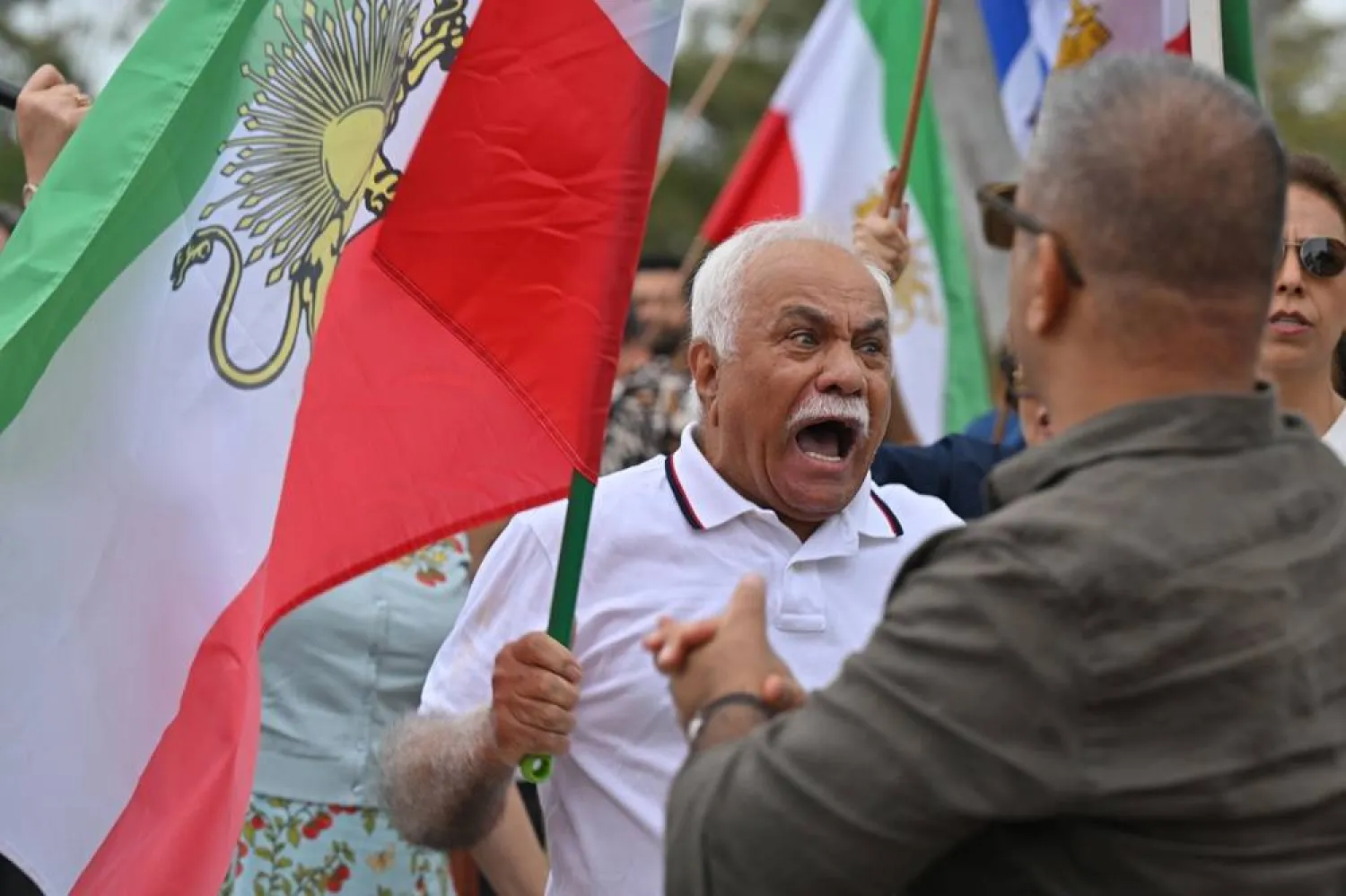
Inside Iran, the regime was already under severe internal strain. An Iranian security official acknowledged that 2,000 people had been killed during a crackdown on weeks of anti-government protests — a figure that underscores the depth of domestic discontent the government has been managing even before Saturday’s strikes transformed the crisis into open war.
The full consequences of the operation — military, political, and humanitarian — remain to be seen. What is clear is that the United States and Israel have crossed a threshold that will reshape the Middle East for years to come.