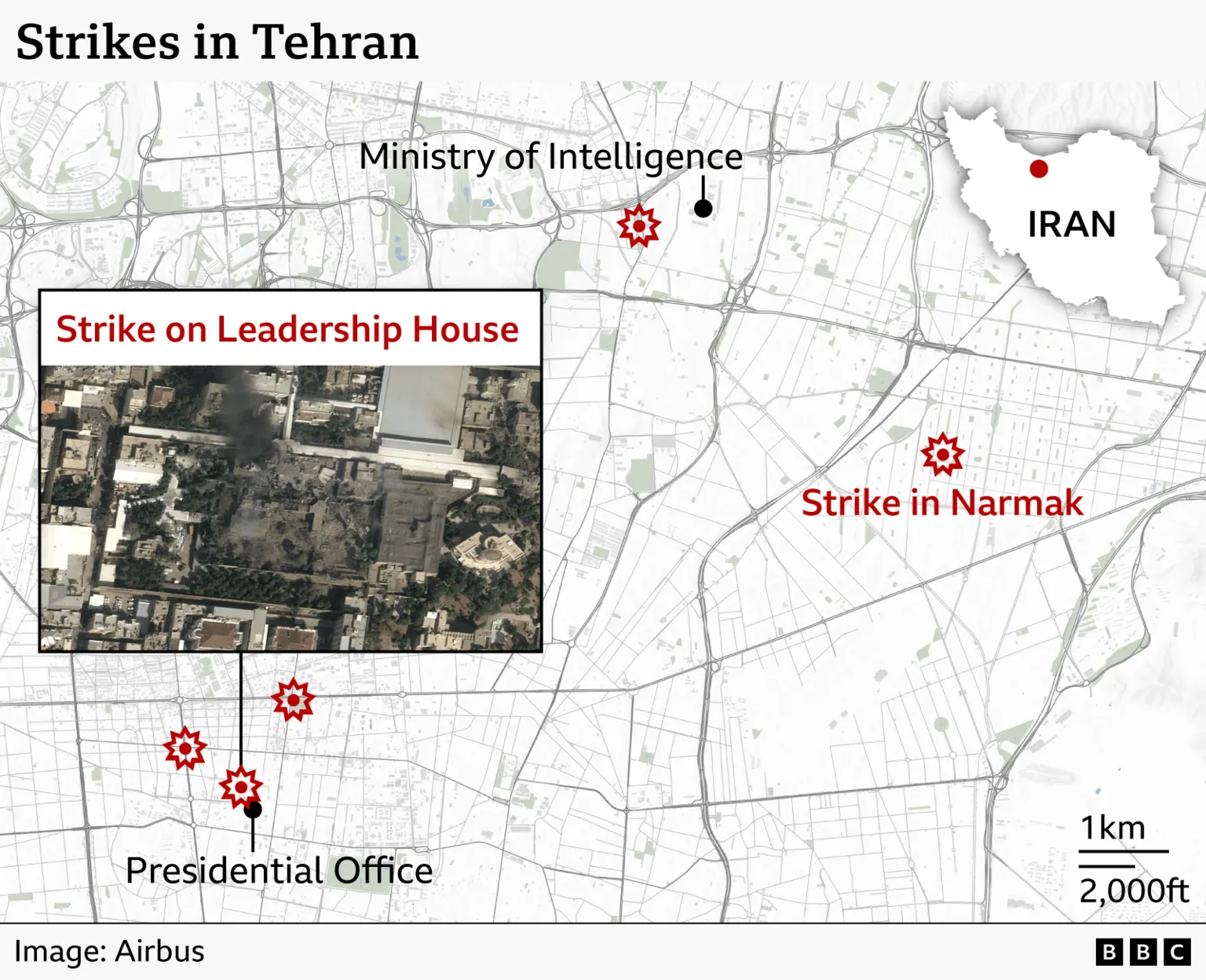
Tehran — Ali Khamenei, the Supreme Leader of the Islamic Republic of Iran for 36 years, is dead, killed when Israeli strikes targeted his compound during the opening wave of a military offensive on Saturday morning. He was 86 years old.
Israeli Prime Minister Benjamin Netanyahu was the first world leader to address the development publicly, announcing in a nationally televised address that there were signs the Supreme Leader ‘is no longer.’ Within hours, US President Donald Trump confirmed Khamenei’s death on his social media platform. An Iranian state television presenter then formally announced the passing — a rare and historic moment of acknowledgment from a broadcaster that had long served as a mouthpiece for the clerical establishment Khamenei embodied.
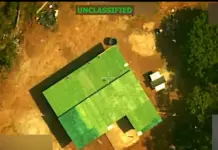
Satellite imagery released in the aftermath of the strikes showed extensive damage to the Supreme Leader’s compound, providing visual confirmation of the scale and precision of the attack. The Islamic Revolutionary Guards Corps, the elite military force constitutionally mandated to defend both the Supreme Leader and the Islamic revolution itself, had been unable to prevent the strike.
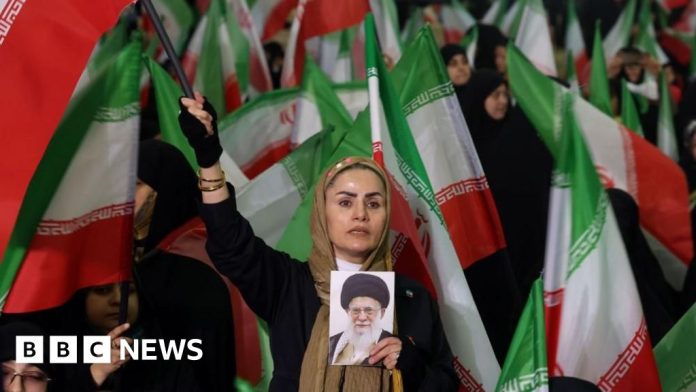
A 40-day mourning period was declared by Iranian authorities, and pro-government mourning events emerged on the second day of the conflict. Yet the official grief stood in stark contrast to scenes unfolding elsewhere across the country. Videos verified by international observers showed groups of Iranians celebrating openly in the streets of Tehran and Karaj, while similar scenes were reported among Iranian communities in numerous countries abroad — a reflection of the deep divisions Khamenei’s rule had carved into Iranian society.
Khamenei had governed the Islamic Republic since 1989, wielding near-absolute authority over the country’s political, military, and religious institutions. His tenure was defined by an uncompromising hostility toward Israel and deep suspicion of the United States and the broader West. Domestically, he systematically suppressed calls for reform and crushed repeated waves of popular protest. A security crackdown widely described as the worst in Iran’s history left many thousands of Iranians dead.
The current conflict follows a bruising 12-day war fought the previous June, during which Israel demonstrated both the reach and lethality of its intelligence capabilities inside Iran. On the first night of that earlier conflict, nine nuclear scientists were assassinated. In the days that followed, a number of senior security chiefs and more than 30 leading military commanders were killed. Khamenei survived that war sheltering in a specially constructed bunker.
That experience appeared to have sharpened his awareness of his own vulnerability. Khamenei had instructed the Assembly of Experts — the body of approximately 88 senior clerics constitutionally empowered to select a supreme leader — to prepare for every eventuality. A report had also identified three senior clerics Khamenei had privately designated as potential successors. His son, Mojtaba Khamenei, has been widely discussed in political circles as a possible candidate, though his elevation would mark an unprecedented dynastic turn for a republic that formally rejects hereditary rule.
The Assembly of Experts now faces the most consequential decision in the Islamic Republic’s 47-year history. The institution must convene to select a new supreme leader at a moment when the country is at war, its military leadership has been decimated across two conflicts, and its population is visibly fractured between those mourning the old order and those welcoming its collapse.
The death of Khamenei does not merely remove a head of state — it severs the ideological and institutional thread that has held the Islamic Republic together since the revolution’s founding generation passed from the scene. Whether his successors can maintain the system he spent four decades fortifying, under the pressure of active military conflict and internal dissent, is now the defining question facing Iran and the wider region.