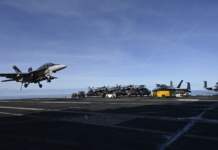
Iran’s Islamic Revolutionary Guard Corps unleashed a sweeping barrage of missiles and drones across the Middle East on Saturday and into Sunday, striking at US military installations and civilian infrastructure in at least five countries in what Tehran designated Operation Truthful Promise 4. The offensive came hours after a joint US and Israeli strike hit areas linked to the Iranian leadership at approximately 09:30 Tehran time — 06:00 GMT — on Saturday morning.
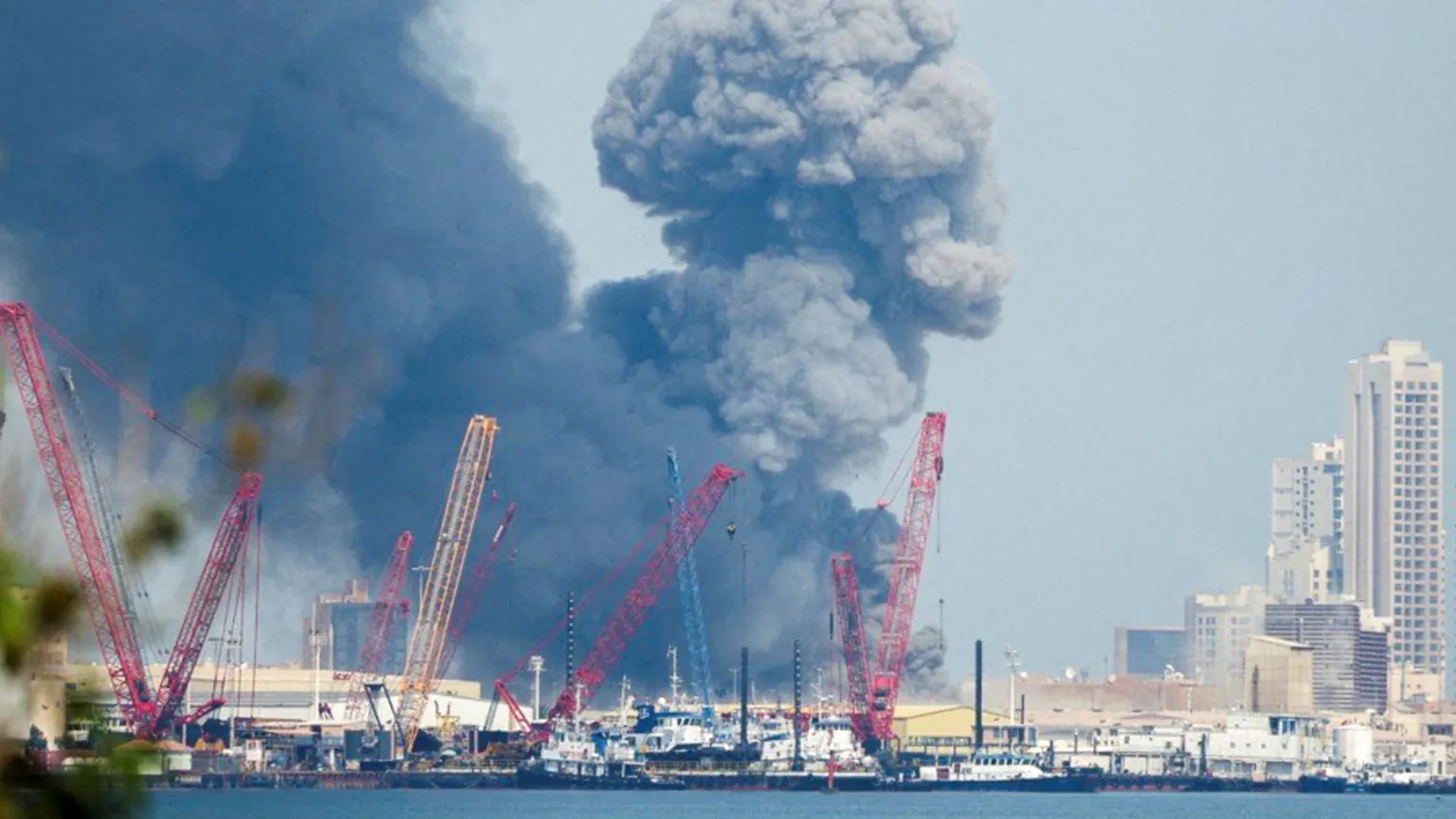
The scale of the Iranian response was unprecedented in its geographic breadth. Qatar, Bahrain, Jordan, and Kuwait all reported intercepting ballistic missiles fired toward their territories. In Bahrain, black smoke rose near the headquarters of the US Navy’s Fifth Fleet in Manama, and three buildings in Manama and the neighbouring city of Muharraq were struck by drones or damaged by falling debris from intercepted missiles. Naval Support Activity Bahrain, the home port for US anti-mine vessels and logistical support ships, sits at the heart of American naval operations in the Gulf.
Qatar’s defence ministry confirmed it had intercepted several missiles apparently aimed at the al-Udeid Air Base, the largest US military installation in the region. In Kuwait, a drone targeting the country’s international airport caused minor injuries to several airport employees. Jordan’s armed forces reported shooting down two ballistic missiles over its territory. Further north, US air defences destroyed a drone over a military base near Erbil in northern Iraq.
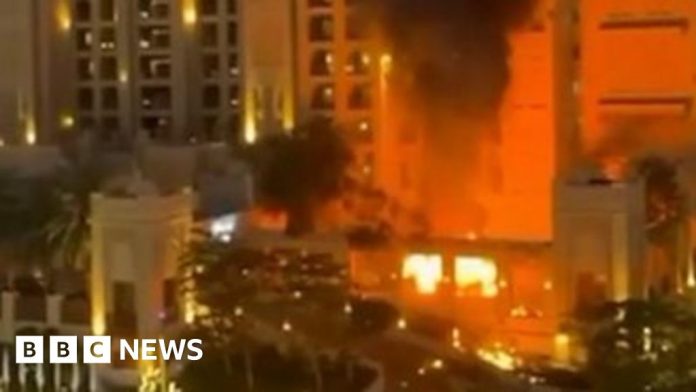
The United Arab Emirates was not spared. The UAE Ministry of Defence said it intercepted a number of drones and missiles directed at the country. A fire broke out at the Fairmont The Palm Hotel in Dubai on Saturday, injuring four people, and a separate incident at Dubai International Airport in the early hours of Sunday wounded four more and caused minor damage to one of the airport’s concourses. Iranian state media claimed responsibility for the Dubai strikes.
Sirens wailed across Israel throughout the weekend as the country’s military reported numerous rounds of Iranian missiles launched in its direction, adding another front to an already volatile regional picture.
The IRGC framed the assault as a direct and proportionate response to what Iran’s Foreign Minister Abbas Araghchi called a ‘wholly unprovoked, illegal, and illegitimate’ attack by the United States and Israel on Iranian soil. US President Donald Trump, for his part, used the moment to call on the Iranian people to rise up against their government.
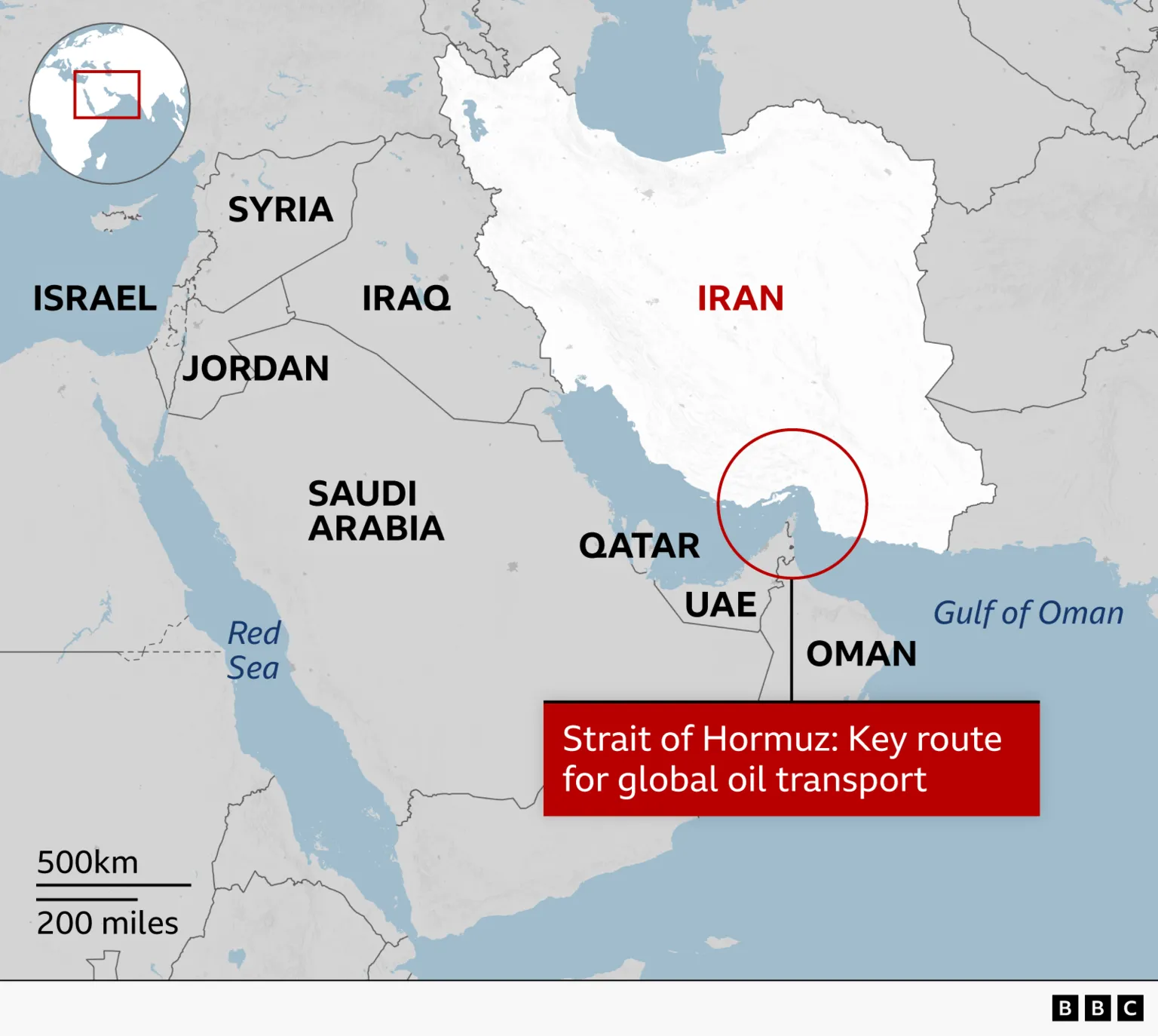
The threat to global energy markets loomed large over the crisis. The UK Maritime Trade Operations received reports that vessels had been warned the Strait of Hormuz would be shut off to shipping — a move that would have catastrophic consequences for world energy supplies. Approximately one-fifth of the planet’s oil and gas transits the narrow waterway each day. Any sustained closure would send shockwaves through commodity markets and strain economies already grappling with elevated energy costs.
The United States maintains approximately 13 military bases across the Middle East, normally deploying between 30,000 and 40,000 troops in the region. The breadth of Saturday’s Iranian strikes — spanning the Gulf, the Levant, and the Arabian Peninsula — underscored Tehran’s intent to impose costs across the full footprint of American military presence rather than confine its response to a single theatre.
The cascading exchanges mark a dramatic escalation in hostilities that have simmered for months, raising urgent questions about the capacity of regional governments and international mediators to contain a conflict that now threatens to engulf the broader Middle East and disrupt the arteries of global commerce.