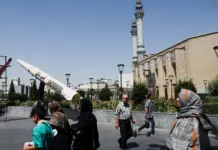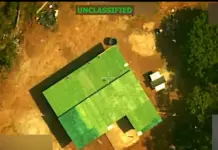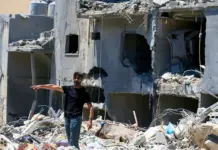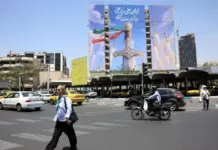
Explosions shook the skies above Dubai, Doha and Manama for a second consecutive morning on Sunday, March 1, as Iran pressed forward with a sweeping campaign of retaliatory strikes across the Persian Gulf following the killing of Supreme Leader Ayatollah Ali Khamenei in joint US-Israeli attacks.
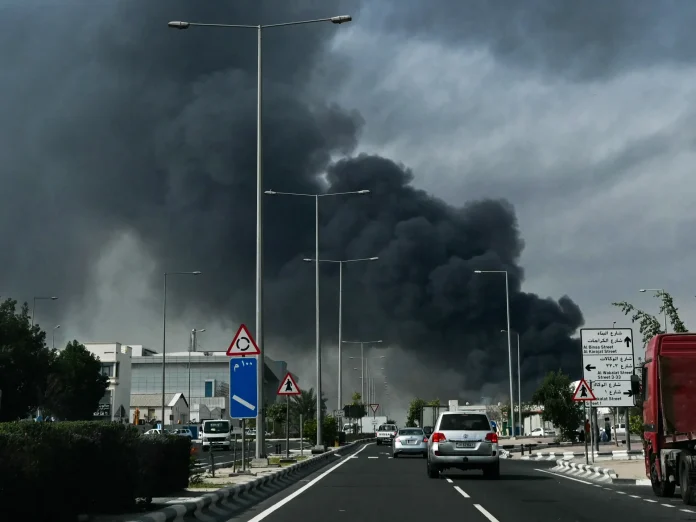
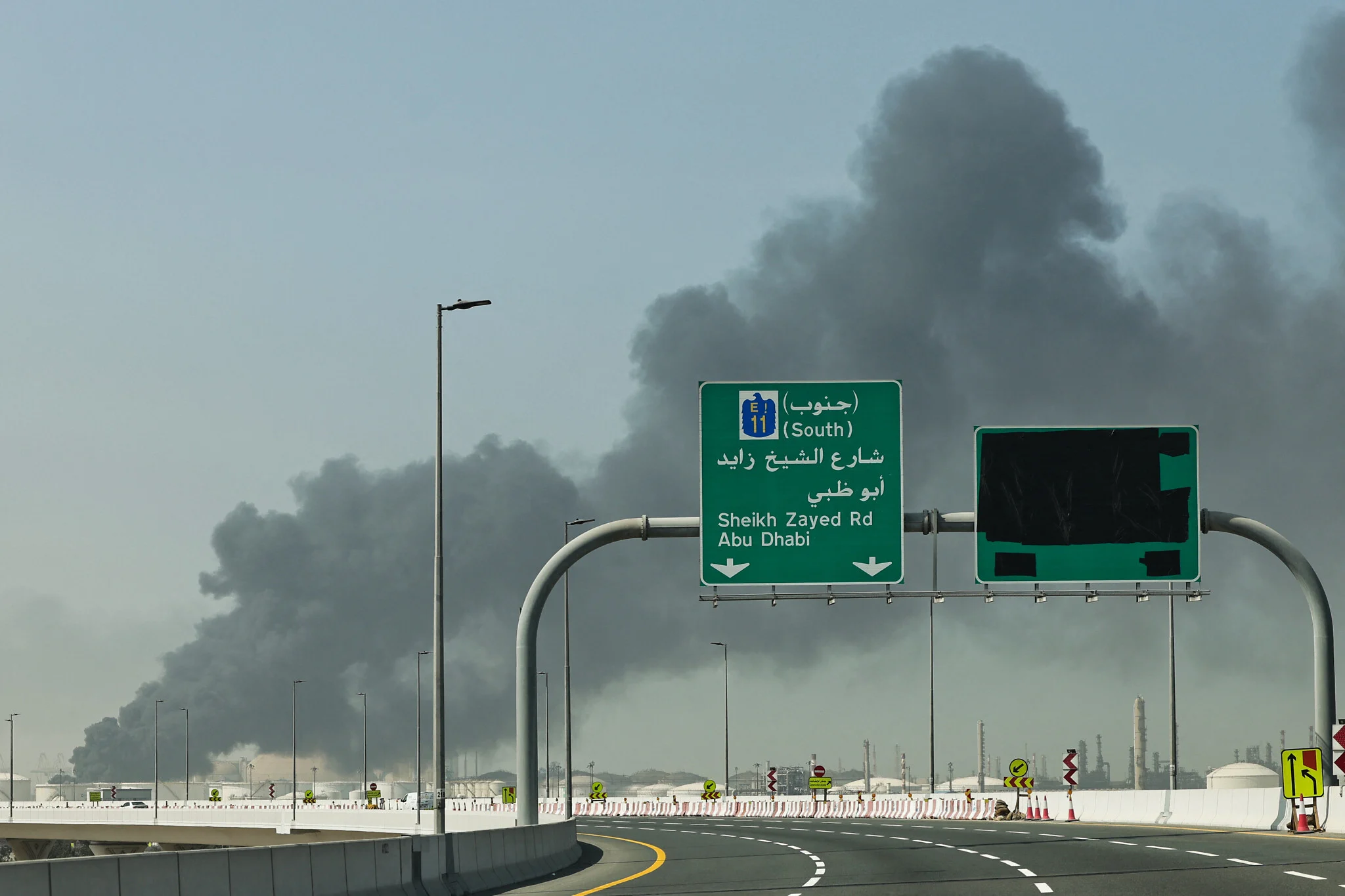
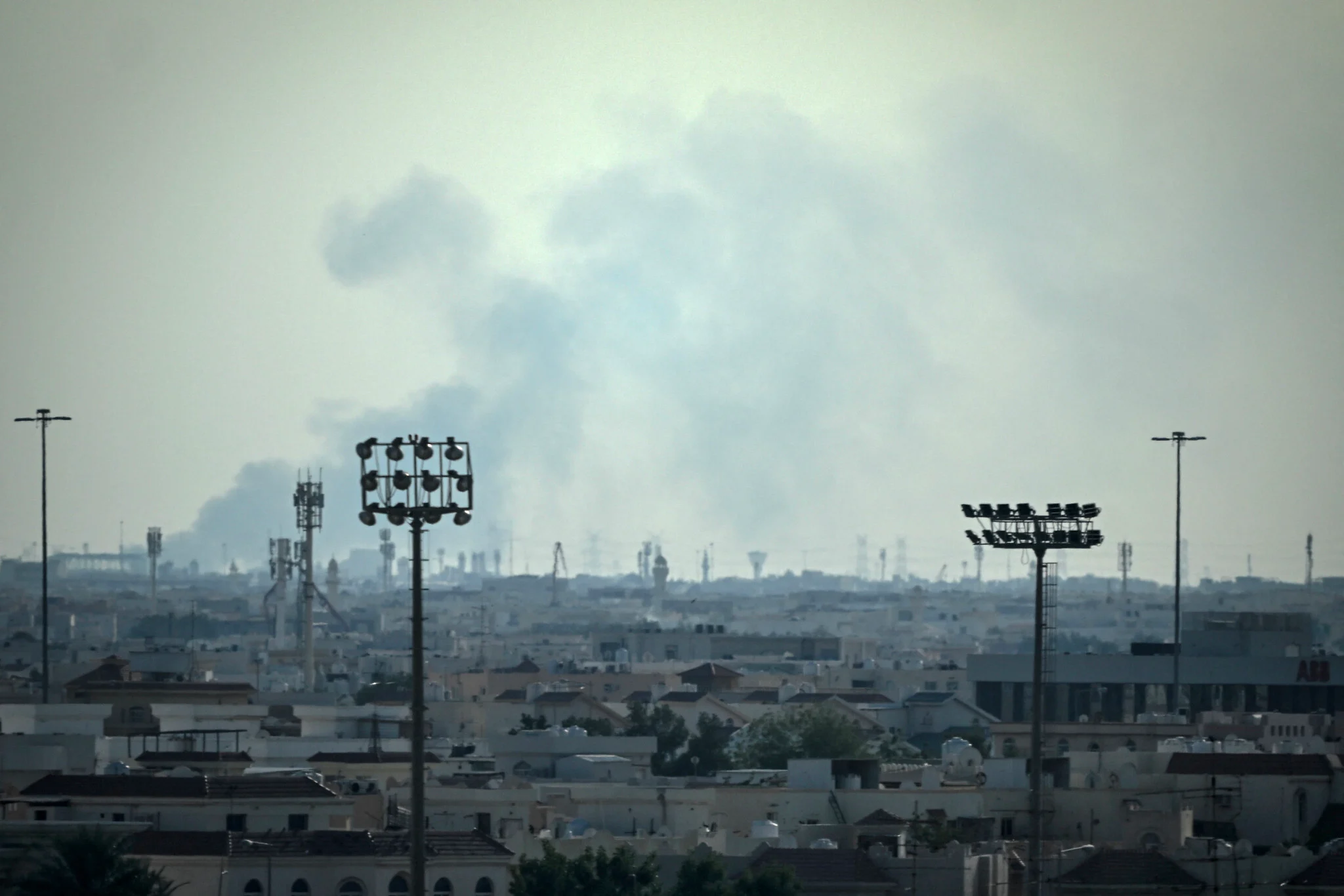
Witnesses in Dubai reported white smoke streaking across the skyline as air defence systems intercepted incoming projectiles, while thick dark smoke rose over the port of Jebel Ali, one of the busiest commercial hubs in the Middle East. In Doha, residents described a dense black plume climbing above the southern horizon. At least four loud blasts were reported by witnesses in Manama, the Bahraini capital. No immediate reports of casualties from Sunday’s explosions were confirmed.
The strikes represent the second wave of an Iranian offensive that began Saturday. The UAE Ministry of Defence confirmed Iran fired 137 missiles and 209 drones at UAE territory on Saturday alone. Fires and smoke from those attacks reached some of Dubai’s most recognisable landmarks, including Palm Jumeirah and the Burj al-Arab. At least one person was killed and seven others wounded at Abu Dhabi’s airport during Saturday’s assault. Dubai airport and Kuwait’s airport were also struck.
Qatar bore significant damage on Saturday as well. Iran launched 65 missiles and 12 drones toward Doha, with most intercepted but not without cost. Authorities responded to 114 reports of falling missile debris across the country. Qatar’s Ministry of Interior spokesperson Abdullah Khalifa Al Muftah confirmed at least eight people were injured by missile fragments in Doha, including one in critical condition. Qatar Airways suspended all flights to and from Doha until further notice, and the country temporarily closed its airspace.
The Islamic Revolutionary Guard Corps stated it was conducting retaliatory strikes against 27 US military bases across the region. The IRGC also announced it had targeted Tel Nof airbase and the Israeli army’s command headquarters at HaKirya in Tel Aviv. Air raid sirens sounded across Israel, including in Tel Aviv, shortly after 6am local time Sunday. Israel’s military said it struck more than 30 targets in western and central Iran on Sunday in continued operations.
In Jordan, defence systems intercepted missiles that entered Amman’s airspace and northern regions. Sirens were heard in Kuwait. A drone crashed near Erbil international airport in northern Iraq, where US troops are stationed as part of an international coalition against ISIL. Oman was not targeted in the strikes.
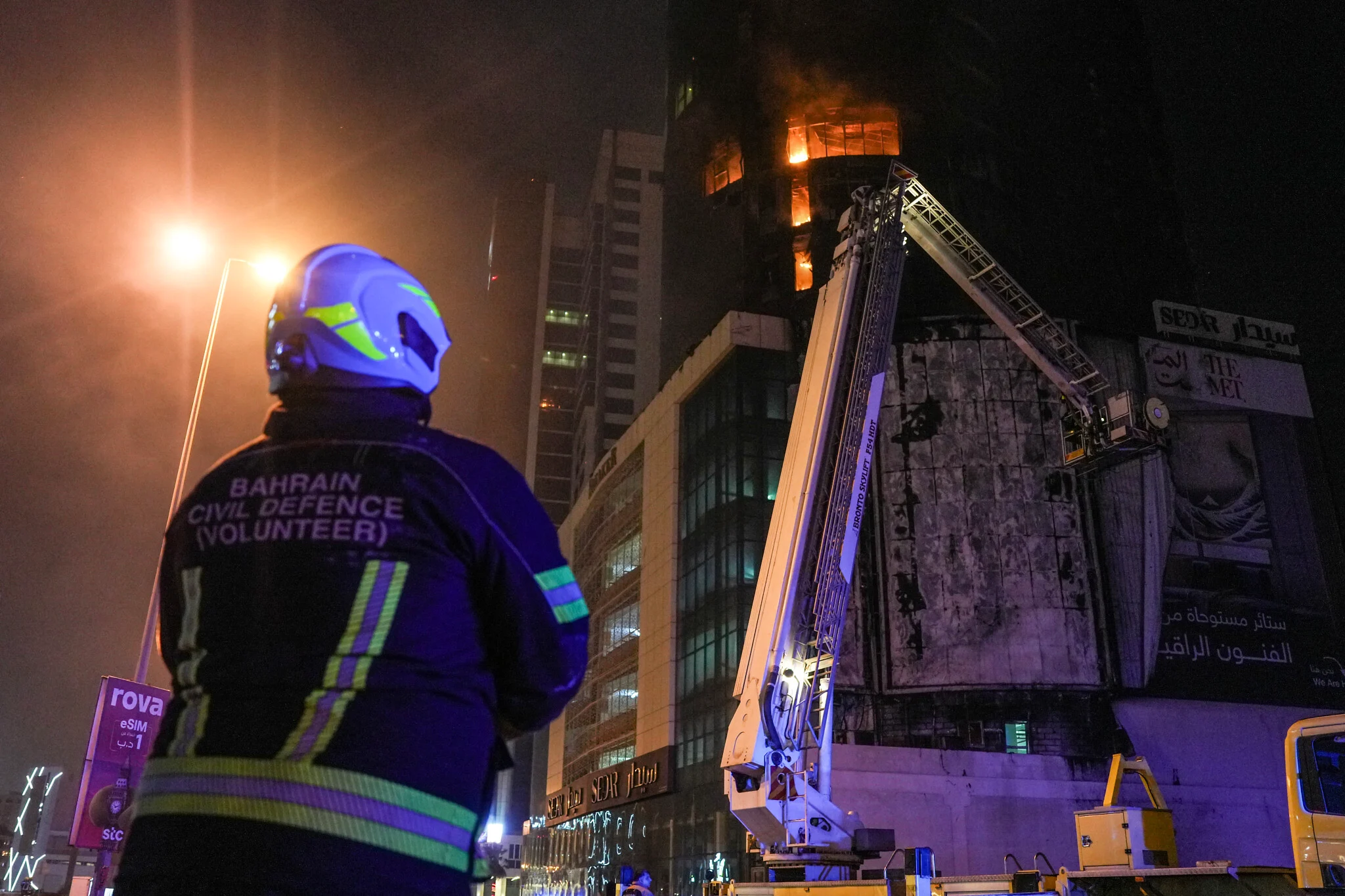
The trigger for the escalation was the killing of Khamenei, who ruled Iran for 37 years, along with the country’s armed forces chief of staff Abdul Rahim Mousavi, in the joint US-Israeli strikes. The death of Iran’s paramount leader has sent shockwaves through the Islamic Republic and ignited the most severe regional conflagration the Middle East has seen in decades.
Inside Iran, the human toll has been catastrophic. At least 201 people have been killed since Saturday. Among the dead are at least 148 victims of an attack on an elementary girls’ school in Minab, in southern Iran — a strike that drew immediate international condemnation. Iranian President Masoud Pezeshkian declared seven days of public holidays and 40 days of national mourning, denouncing Khamenei’s killing as ‘a great crime.’
Mohammad Bagher Qalibaf, Iran’s parliamentary speaker, issued a stark warning to Washington and Jerusalem. ‘The US and Israel have crossed our red line and must pay the price,’ he said. Iran announced the formation of a three-person interim council to oversee the country’s political transition following Khamenei’s death.
The Gulf region, long regarded as a haven of stability and commercial prosperity, has been transformed almost overnight into an active theatre of war. The attacks have disrupted major international airports, threatened critical energy infrastructure, and placed millions of civilians across multiple countries in the path of an escalating military exchange with no clear endpoint in sight. Fears of a broader regional conflict are mounting rapidly as governments across the Middle East and beyond scramble to assess the fallout.