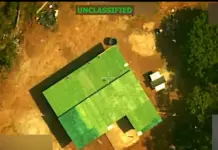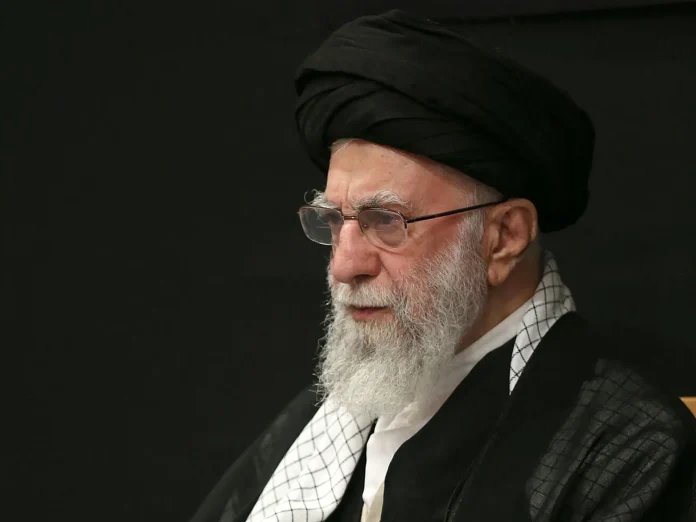
TEHRAN — Ayatollah Ali Khamenei, the iron-fisted supreme leader who shaped the Islamic Republic of Iran for nearly four decades, was killed Saturday in a joint US-Israeli air strike on his compound. He was 86. Iranian state media confirmed his death in the early hours of Sunday, March 1, 2026, and US President Donald Trump publicly announced that Khamenei had been killed in the operation. Also killed in the strike were Khamenei’s daughter, son-in-law, and grandson.
The attack represents the most consequential act of targeted killing in the modern Middle East, eliminating the man who had served as the Islamic Republic’s supreme authority since 1989 and who had spent decades building an ideological and military empire stretching from Tehran to Beirut, Gaza, and Sanaa.
Khamenei’s death comes at the end of a catastrophic period for the Iranian state. In June 2025, the Israeli army struck Iran in an operation conducted with US knowledge, killing dozens of senior commanders and top nuclear scientists. Iran retaliated with a missile barrage targeting Tel Aviv, igniting a full-scale war between the two countries that lasted nearly two weeks. During that conflict, the United States dropped bunker-busting munitions on three key Iranian nuclear facilities, effectively dismantling the programme Khamenei had spent years defending as a national right.
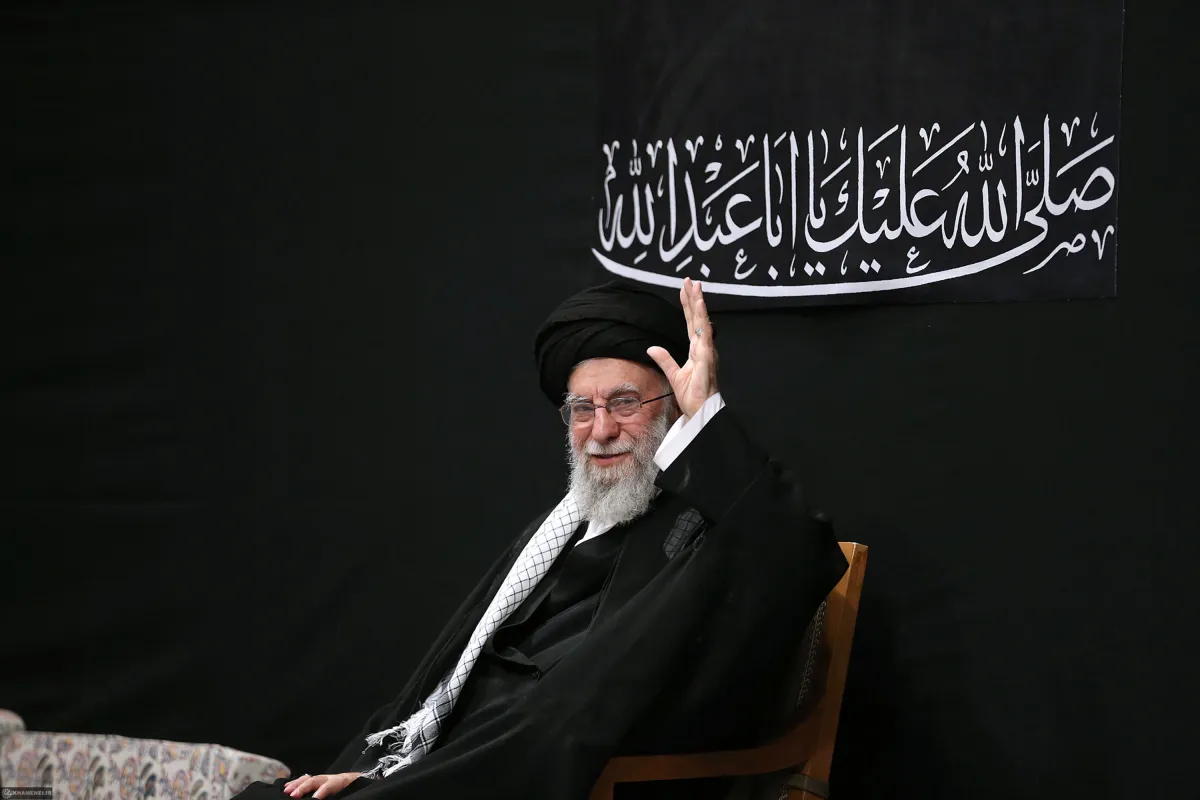
The military disaster was compounded by economic collapse. In late December 2025, protests triggered by a currency implosion rapidly transformed into a nationwide uprising demanding an end to Khamenei’s rule. Iranian authorities acknowledged more than 3,000 deaths in the crackdown that followed; a US-based human rights organisation placed the toll above 7,000. The regime’s legitimacy, already eroded by years of internal dissent, had never been more fragile.
Born in 1939 in Mashhad, the holy Shia city in northeast Iran, Khamenei was the son of a prominent Muslim cleric and began religious studies at the age of four. He trained at the Shia seminaries of Najaf and Qom, becoming a student and close ally of Ayatollah Ruhollah Khomeini. During the 1960s and 1970s, he actively opposed the Pahlavi monarchy, enduring multiple arrests by the SAVAK secret police and periods of exile. He played a central role in the 1979 Islamic Revolution, subsequently serving as Minister of Defence and as supervisor of the Islamic Revolutionary Guard Corps (IRGC).
In 1981, Khamenei narrowly survived an assassination attempt by the Mojahedin-e Khalq (MEK) that left him permanently unable to use his right arm. That same year, he won the Iranian presidency, becoming the country’s first clerical head of state. His two presidential terms coincided with the devastating Iran-Iraq War, a conflict that claimed more than one million lives.
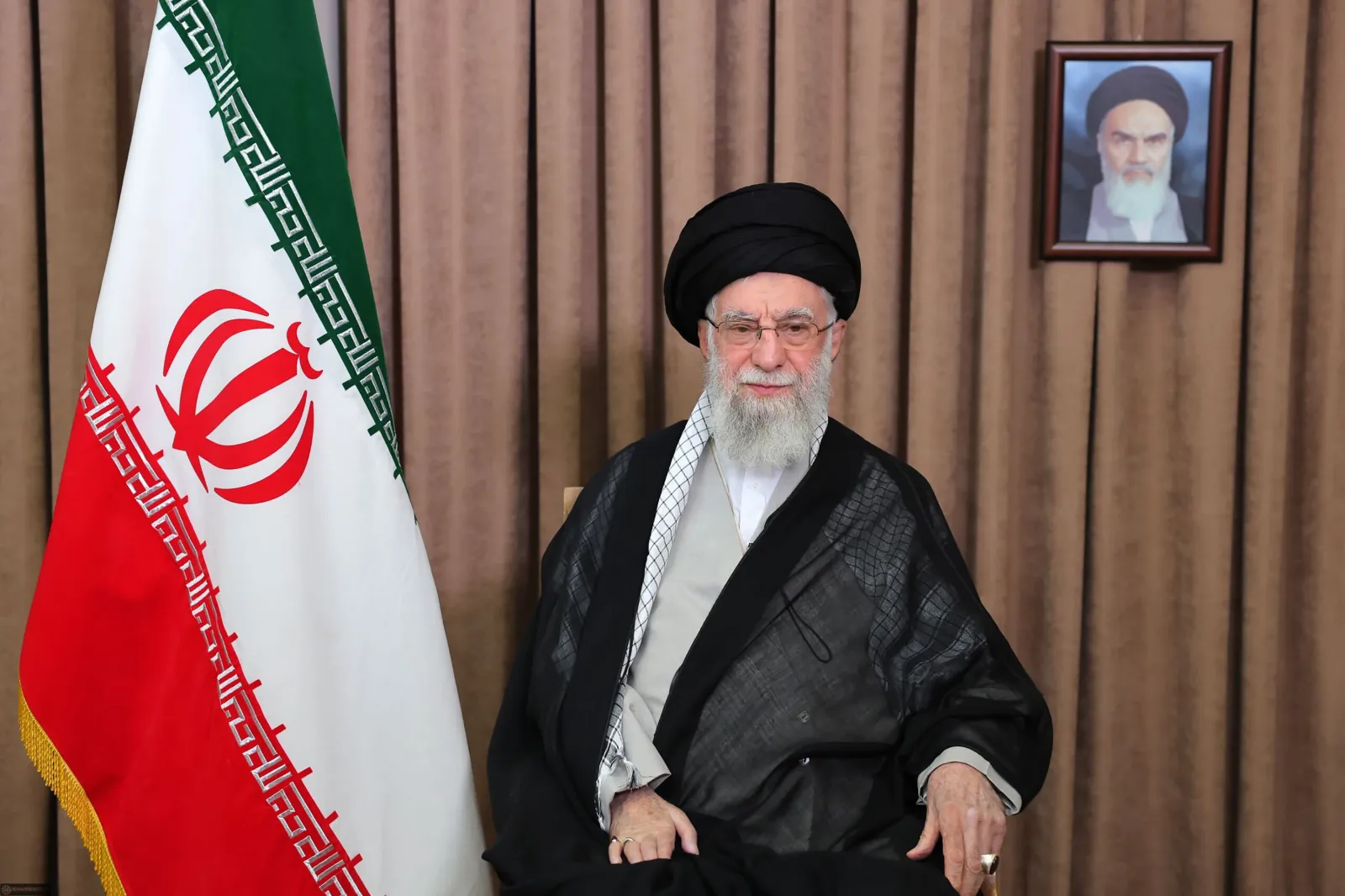
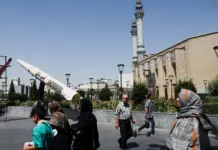
Following Khomeini’s death in 1989, Khamenei was appointed Supreme Leader — a position he would hold for 37 years. He proved a far more durable and ruthless consolidator of power than many had anticipated. He expanded the Revolutionary Guard into a dominant political, military, and economic institution, and constructed what he called the ‘Axis of Resistance’ — a network of proxy forces including Hezbollah in Lebanon, Hamas in Gaza, and the Houthis in Yemen — designed to project Iranian power across the region without direct confrontation.
His tenure was defined by recurring cycles of domestic repression and external confrontation. In 1997, reformist candidate Mohammad Khatami won a landslide presidential election advocating rapprochement with the West, only to find his agenda systematically blocked by Khamenei’s office. In 2009, hundreds of thousands of Iranians flooded the streets in the Green Movement to contest the disputed re-election of Mahmoud Ahmadinejad; Amnesty International documented dozens of deaths in the crackdown. In 2022, the death of Mahsa Amini in police custody — arrested for allegedly violating mandatory hijab laws — ignited the most sustained protest movement the republic had ever faced, leaving more than 500 dead according to Amnesty International.
On the nuclear front, Iran signed the Joint Comprehensive Plan of Action (JCPOA) in 2015 with world powers, agreeing to curb its enrichment activities in exchange for sanctions relief. Trump withdrew the United States from the agreement three years later, and Iran subsequently resumed uranium enrichment to 60 percent purity. The programme was ultimately destroyed by US munitions in the summer of 2025.
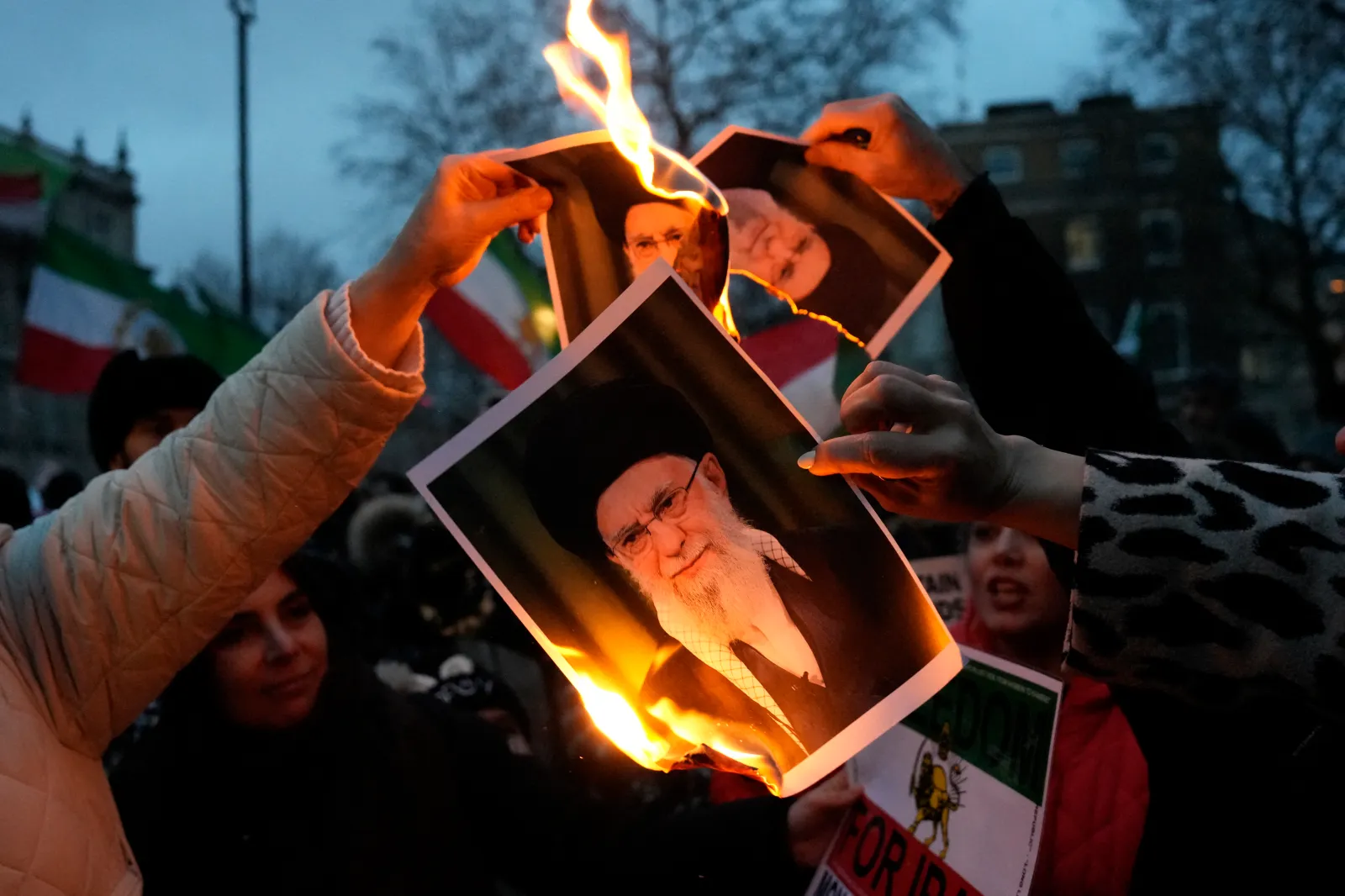
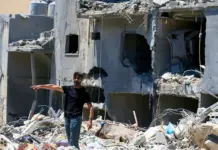
The regional architecture Khamenei built has also crumbled in his final years. The US assassinated Qassem Soleimani, commander of the IRGC’s Quds Force and the principal architect of the Axis of Resistance, in January 2020. Israel killed Hezbollah secretary-general Hassan Nasrallah in 2024. Syria’s Bashar al-Assad, a cornerstone ally, was overthrown by rebel forces in December 2024. Hamas launched its assault on southern Israel on October 7, 2023, triggering an Israeli military campaign in Gaza that killed more than 70,000 people and effectively destroyed the organisation as a governing force.
Khamenei’s death leaves the Islamic Republic without a supreme leader for the first time in its 47-year history, at a moment of unprecedented military, economic, and political weakness. The question of succession — and whether the republic’s foundational structures can survive the vacuum — now confronts a nation in profound crisis.