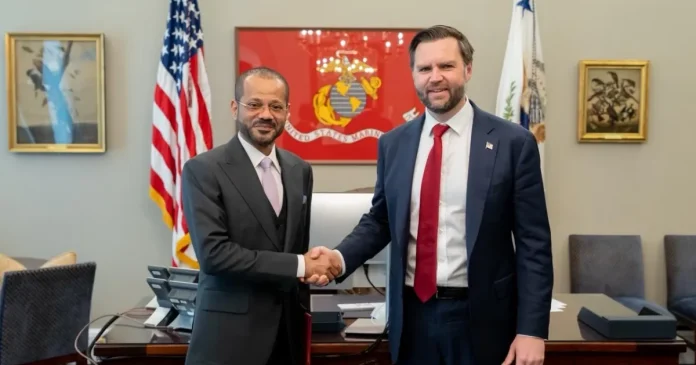
Oman’s Foreign Minister Badr bin Hamad Al Busaidi emerged from a meeting with US Vice President JD Vance in Washington on Friday declaring that indirect nuclear negotiations between the United States and Iran had produced “significant, important, and unprecedented progress” — a rare note of optimism in a standoff that has simultaneously drawn one of the largest American military concentrations in the Middle East in more than two decades.
Al Busaidi, who has served as the principal mediator between Washington and Tehran, said the talks had generated “creative and constructive ideas and proposals” and expressed confidence in a “positive push to go the extra mile towards finalizing the deal.” The latest round of face-to-face negotiations between American and Iranian officials took place in Geneva on Thursday, a session that both governments had publicly confirmed in advance — itself a signal of the unusual transparency surrounding the process.
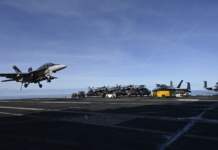
The diplomatic momentum, however, is shadowed by stark military realities. The USS Gerald R. Ford, the world’s largest aircraft carrier, docked Friday in the Israeli port city of Haifa, part of what analysts describe as the biggest US air power concentration in the region since the 2003 invasion of Iraq. The deployment underscores the dual-track pressure strategy that President Donald Trump has pursued: publicly favouring a diplomatic resolution while repeatedly threatening to bomb Iran if negotiations collapse.
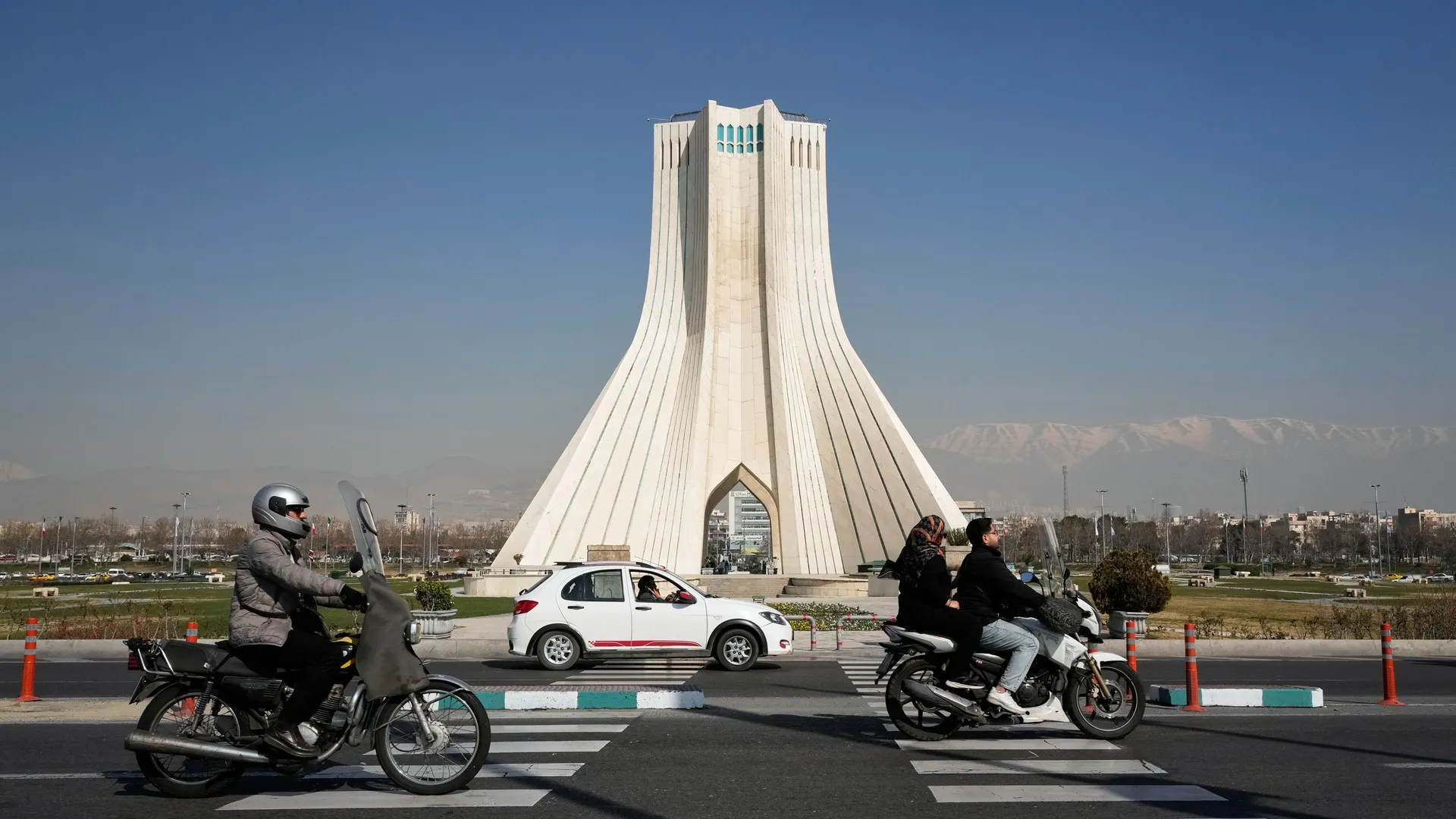
Trump has gone further in private deliberations. He has told advisers he is weighing a limited military strike against Iran as a first option, and that if such an action — or diplomacy — fails to produce Iranian abandonment of its nuclear programme, he would consider a significantly larger campaign in the months ahead. Potential targets under consideration include the headquarters of Iran’s Islamic Revolutionary Guard Corps, the country’s nuclear sites, and its ballistic missile infrastructure.
The gap between the two sides remains substantial. Washington is demanding that Iran dismantle its nuclear infrastructure entirely, curtail its ballistic missile arsenal, and cease support for regional allies and proxy forces. Tehran has shown a degree of flexibility on uranium enrichment limits for civilian purposes, but Iranian officials have treated missiles and proxies as non-negotiable — red lines that have complicated every previous attempt at a comprehensive agreement.
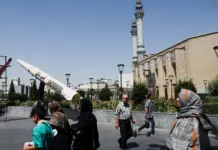
Iranian Foreign Minister Abbas Araghchi stated publicly that diplomacy represents the only viable path to resolving the nuclear dispute, while simultaneously warning that Iran would respond forcefully if attacked and would target bases used by US forces across the region. Tehran has also insisted it has no intention of initiating a conflict.
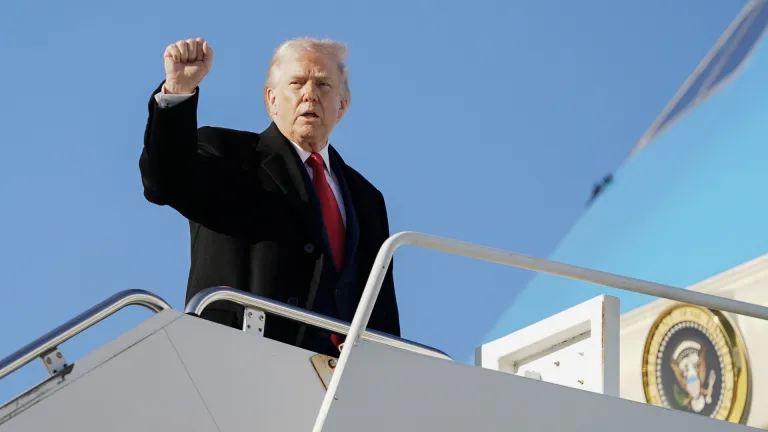
The military and diplomatic signals have prompted a wave of precautionary measures. The United States authorised the departure of non-emergency embassy staff from Israel on Friday, following a similar order for personnel in Lebanon earlier in the week. China, Canada, the United Kingdom, and Italy have all urged their citizens to leave Iran in recent days, a coordinated pattern that reflects the depth of concern among major powers about the trajectory of the crisis.
Iran’s conduct over recent years has hardened Western positions considerably. The country has rapidly expanded uranium enrichment to levels approaching weapons-grade, conducted attacks on commercial oil tankers in the Strait of Hormuz, and carried out a brutal crackdown on domestic protesters that left thousands dead and thousands more imprisoned.
On Capitol Hill, the prospect of military action has triggered a rare bipartisan response. Representative Ro Khanna, a California Democrat, announced Wednesday that he intends to bring a War Powers Resolution to the floor for debate and a vote, co-sponsored by Representative Thomas Massie, a Kentucky Republican. Khanna declared he would not allow Trump to “launch a disastrous war without Congress voting to stop it,” characterising potential military action as “catastrophic.” Massie framed his support in terms of an “America First” opposition to further Middle East entanglements.
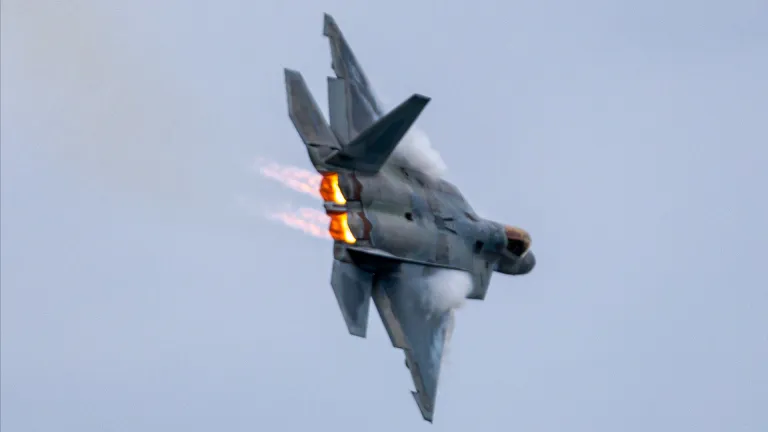
The resolution reflects broader anxiety in Congress about the executive branch’s authority to initiate hostilities without legislative approval — a debate that has resurfaced repeatedly since the original War Powers Act of 1973.
Whether the Geneva talks and Al Busaidi’s optimistic assessment translate into a durable framework remains deeply uncertain. The Omani foreign minister’s language — “unprecedented progress” and a push to “go the extra mile” — suggests the two sides are closer than at any recent point. Yet the fundamental asymmetry of demands, combined with the visible military build-up and Trump’s documented consideration of strike options, means the window for diplomacy is narrow and the stakes for miscalculation extraordinarily high.