Rsf Drone Strikes Sudan — Drone strikes tore through the central Sudanese city of el-Obeid overnight Thursday, killing at least 23 people and wounding 19 others in a wave of attacks that struck a funeral procession, residential neighbourhoods, an airport district, and areas surrounding an army base. The assault marks one of the deadliest single episodes in a conflict that has already claimed at least 50,000 lives.
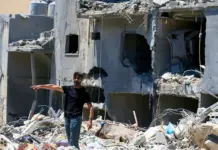
Among the dead were mourners gathered at a cemetery when a drone struck their procession, killing at least four people and injuring several others. Thirteen more civilians died after congregating near houses already destroyed in earlier strikes — a pattern that has become grimly familiar in Sudan’s urban battlegrounds. A lorry driver transporting food supplies was also killed when his vehicle was hit on Thursday, underscoring the strikes’ indiscriminate reach.
Health officials at el-Obeid Hospital recorded 15 dead and more than 10 wounded. The rights group Emergency Lawyers put the toll higher, at 23 killed and 19 injured, and reported that the strikes began on Wednesday evening. Five civilians died in those initial attacks before the death toll climbed through the night.
Recommended Reading
![Drone warfare is becoming increasingly prominent in the ongoing conflict in Sudan [File: Guy Peterson/AFP]](https://world-tension.s3.us-east-2.amazonaws.com/articles/1421/9d96cae22856474292f6de71e311aeb9.webp)
Both Emergency Lawyers and the Sudan Doctors Network attributed the strikes to the Rapid Support Forces (RSF), the paramilitary organisation fighting the Sudanese military for control of the country. The RSF has not commented on the attacks and did not immediately claim responsibility.
El-Obeid, the capital of North Kordofan state, remains under army control but has been partially encircled by RSF forces for months. Its strategic value is considerable: the city sits at the intersection of RSF-dominated territory to the west and army-controlled areas to the east, making the broader Kordofan region a critical corridor linking RSF strongholds in Darfur to the military’s eastern heartland. Whoever controls Kordofan effectively controls Sudan’s oil supply and commands a vast swathe of the country’s territory.
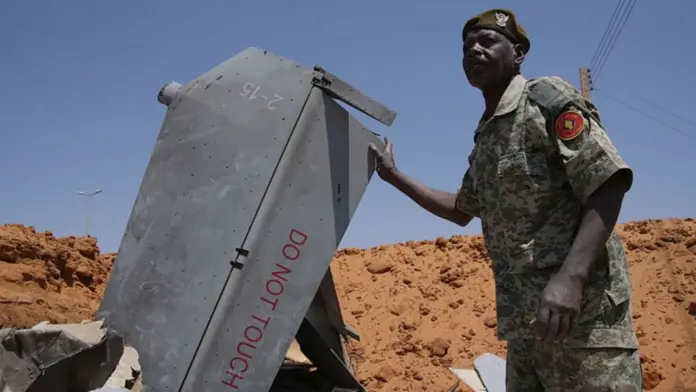
The el-Obeid strikes did not occur in isolation. Less than a week earlier, a drone hit the main market in Abu Zaeima, a paramilitary-controlled town also in North Kordofan, killing at least 11 people and injuring dozens more. Neither side claimed responsibility for that attack. The back-to-back strikes illustrate how drone warfare has become an increasingly prominent and lethal feature of the conflict, with both sides deploying unmanned aircraft against civilian and military targets alike.

The scale of aerial violence is staggering. The United Nations reported in May that at least 880 civilians were killed in drone strikes across Sudan between January and April alone — an average of more than seven deaths per day. Fighting has intensified in recent months not only in Kordofan but also in Blue Nile state near the Ethiopian border, stretching the humanitarian crisis across multiple fronts.
Rsf Drone Strikes Sudan: The Broader African Context
Sudan’s civil war erupted in April 2023 after the leaders of the national army and the RSF fell out over the country’s political future, transforming a power struggle between generals into a catastrophic nationwide conflict now entering its fourth year. The RSF captured el-Fasher in October, stripping the army of its last major stronghold in western Darfur and shifting the war’s centre of gravity toward Kordofan.
The human cost has been immense. Nearly 13 million people have been displaced — the largest displacement crisis anywhere in the world, according to the UN. A further 28 million people face acute hunger, and the organisation describes Sudan as the epicentre of the global hunger and displacement emergency. The death toll, already estimated at a minimum of 50,000, is widely believed to be a significant undercount given the difficulty of documenting casualties in active combat zones.
For the residents of el-Obeid, Thursday’s strikes brought the war’s full brutality to streets, cemeteries, and supply routes that had previously offered some measure of distance from the front lines. With the city encircled and drone attacks now reaching funeral gatherings, the space for civilian life continues to shrink.