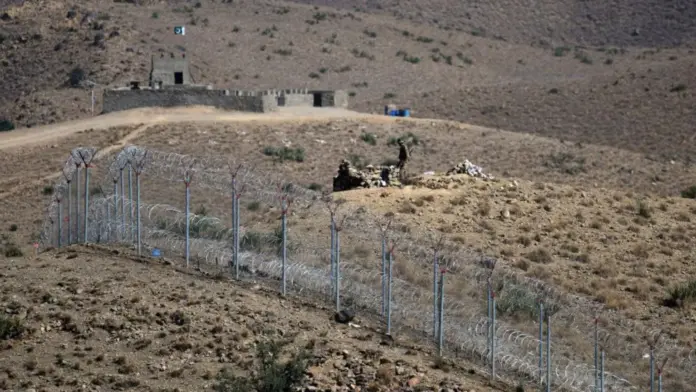
Pakistan conducted air strikes against targets across three Afghan provinces on Wednesday, triggering a sharp diplomatic confrontation with the Taliban government in Kabul and shattering months of relative calm along one of the world’s most volatile border regions.
Pakistan Strikes Afghan Provinces — Pakistani Information Minister Attaullah Tarar announced the strikes, describing them as "calibrated" operations targeting militant hideouts, safe havens, a training centre, and an ammunition cache. Islamabad claimed four targets were destroyed and 26 militants killed in the operation.
Afghanistan’s Taliban administration offered a starkly different account. Government spokesman Zabihullah Mujahid said the strikes killed 13 people — among them 11 children, one woman, and one elderly man — in the provinces of Kunar, Khost, and Paktika. The Taliban government flatly rejected Pakistan’s characterisation of the victims as militants.
Recommended Reading
Tarar said the strikes were a direct response to "recent terrorist incidents in Pakistan," framing the operation as a necessary defensive measure against groups operating from Afghan soil. Pakistan has long accused Afghanistan’s Taliban administration of permitting militant organisations to use Afghan territory as a staging ground for attacks inside Pakistan.
The Taliban government rejected those accusations outright. Kabul has consistently maintained that Afghan territory is not being used to threaten the security of neighbouring states — a position it reiterated forcefully in the wake of Wednesday’s strikes. The fundamental disagreement over whether Afghanistan harbours anti-Pakistan militants has been a persistent source of tension between the two governments since the Taliban returned to power in 2021.
The strikes represent a significant escalation following what had been a period of reduced hostilities. The border region had experienced months of relative calm before Wednesday’s operation, though that fragile stability had already been tested by heavy fighting between Pakistani and Afghan forces in late February. World leaders had previously called on both sides to cease hostilities following that earlier bout of violence.
The civilian casualty figures reported by the Taliban — if accurate — are likely to intensify international pressure on Islamabad. The deaths of 11 children in particular draw attention to the human cost of cross-border military operations in densely populated frontier areas. Pakistan has not addressed the Taliban’s casualty figures directly.
The three targeted provinces sit along Afghanistan’s eastern border with Pakistan, a rugged and historically ungoverned stretch of territory that has served as a corridor for militant movement for decades. Kunar in particular has long been identified as a stronghold for armed groups hostile to Islamabad, including factions of the Tehrik-i-Taliban Pakistan, which has claimed responsibility for numerous deadly attacks on Pakistani security forces and civilians in recent years.
Pakistan Strikes Afghan Provinces: Regional Security Implications
Pakistan’s decision to conduct air strikes rather than pursue diplomatic or intelligence-sharing channels signals growing frustration within Islamabad over what it views as Afghan inaction — or complicity — in cross-border militancy. The move also carries significant risks, potentially deepening hostility with the Taliban government and foreclosing any remaining avenues for bilateral security cooperation.
The Taliban, for their part, face domestic and ideological pressures that make any public accommodation of Pakistani demands politically untenable. Acknowledging the presence of anti-Pakistan militants on Afghan soil would undermine the government’s claims of sovereign control and could be seen as capitulation to a foreign power.
The international community has yet to formally respond to Wednesday’s strikes. Previous calls for restraint following the February clashes went largely unheeded, and there is little indication that either side is prepared to de-escalate in the near term. The strikes mark a dangerous new chapter in a bilateral relationship that has rarely been stable and is now under acute strain.