TYRE, Lebanon — Satellite imagery captured between January and early June 2026 reveals the systematic transformation of one of the world’s oldest continuously inhabited cities into fields of rubble, as Israeli military operations grind through southern Lebanon with mounting civilian and cultural costs.
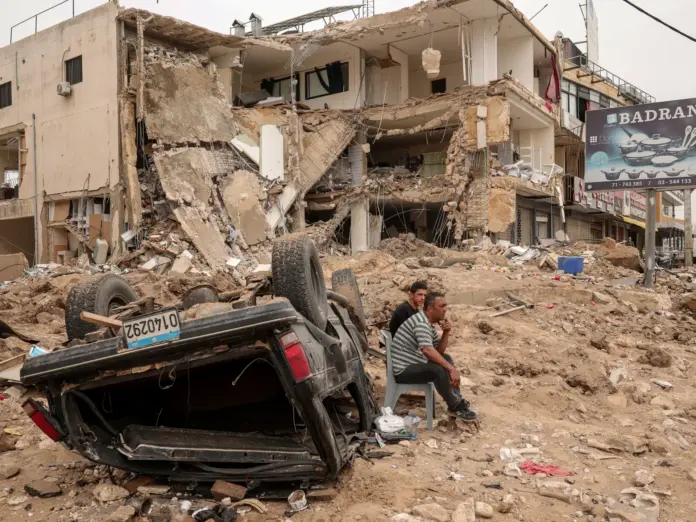
Tyre Lebanon Destruction — The imagery, analysed by open-source researchers, documents extensive bulldozing and levelling of multistorey residential complexes across Tyre, a maritime city with nearly 5,000 years of recorded history. At least 25 residential buildings have sustained direct hits, suffering total or partial collapse, while critical infrastructure — power grids, water stations, telephone lines and sewage networks — has been extensively damaged across the city.
Since March 2, 2026, Tyre has been subjected to approximately 31 direct Israeli air raids. The broader offensive across Lebanon has killed more than 3,600 people and displaced approximately 1.2 million in that same period. On Wednesday alone, at least 20 people were killed and dozens wounded in Israeli attacks across southern Lebanon — strikes that occurred despite a US-brokered ceasefire remaining nominally in effect. Six of those deaths occurred in the town of Tayr Debba in the Tyre district.
Recommended Reading
The scale of destruction is compounding a humanitarian emergency already stretched to its limits. Tyre’s permanent population of 60,000 — including roughly 10,000 residents of the densely packed historical Old City — had already absorbed 19,000 internally displaced people from surrounding border villages before the latest wave of military warnings. Some 6,000 of those displaced were sheltering across 19 local facilities. Following the most recent evacuation alerts, an estimated 8 percent of Tyre’s population fled within a 48-hour window.
The situation inside the city’s Palestinian refugee camps is particularly acute. Three official camps in the Tyre district — Rashidieh, el-Buss and Burj Shemali — collectively house 28,000 refugees. Satellite imagery has confirmed the destruction of several buildings inside el-Buss camp, and UNRWA officials report that one-third of the combined camp population has already fled due to sustained bombardment. Across Lebanon, approximately 246,000 Palestinians live in 12 official camps, representing one of the most vulnerable populations caught in the conflict’s widening arc.
The destruction extends beyond residential areas. Israeli warplanes struck the immediate vicinity of the Islamic University of Lebanon in Tyre, causing structural damage to the institution. The strikes have also raised urgent alarms among cultural heritage authorities worldwide.
Tyre’s archaeological site has been inscribed on the UNESCO World Heritage List since 1984, recognising its exceptional historical significance as an ancient Phoenician trading hub. In November 2024, the targeted perimeter around the site was granted ‘enhanced protection’ under the 1954 Hague Convention — a designation specifically designed to shield irreplaceable cultural monuments from the effects of armed conflict. Whether those protections have been observed remains a matter of intense international scrutiny.
Israel has enforced what it designates a ‘Yellow Line’ policy, establishing a 10-kilometre-deep buffer zone along the Lebanese border. Tyre sits just 11 kilometres — roughly 6.5 miles — from the boundary of that exclusionary military zone, placing the entire city within effective range of ongoing operations and evacuation pressure.
Tyre Lebanon Destruction: Regional Implications
The pattern of destruction in Lebanon is drawing direct comparisons to the situation in Gaza, where Israeli military operations have killed approximately 73,000 people and damaged or destroyed 80 percent of buildings, including numerous heritage sites. Critics argue the twin campaigns represent an unprecedented assault on civilian infrastructure and cultural patrimony across the region.
The Lebanese government and international bodies have repeatedly called for a genuine cessation of hostilities, but Wednesday’s death toll underscores the fragility — or effective collapse — of existing ceasefire arrangements. With displacement figures continuing to rise and the physical fabric of ancient Tyre being methodically erased, pressure is mounting on international mediators to move beyond brokered pauses toward a durable political resolution.
For the residents who remain, the calculus is stark: a city that has survived Assyrian sieges, Alexander the Great’s legendary causeway assault, and centuries of conquest now faces an adversary armed with precision munitions and satellite-guided bulldozers — and the world is watching through the same satellites that are documenting its destruction.