Iran Hormuz Strikes — A US Apache helicopter shot down over the Strait of Hormuz has triggered a dangerous cycle of retaliatory strikes between Washington and Tehran, with Iran’s Islamic Revolutionary Guard Corps (IRGC) launching coordinated drone and missile attacks against American military positions across the region while the US military responded with targeted strikes inside Iran.
President Donald Trump confirmed that Iran downed the Apache helicopter, a development that marked a significant escalation in the long-running confrontation between the two countries — now entering at least its 103rd day of active conflict. The US military characterised its subsequent strikes as acts of self-defence, with reporting indicating the operations were deliberately calibrated to hit radar installations and missile defence sites rather than broader strategic targets.
Iran’s response was swift and multi-front. The IRGC’s Aerospace Force claimed it launched long-range missiles at an airbase in Jordan hosting US military personnel, asserting the strike destroyed four key targets — including hangars housing F-35 fighter jets and a command-and-control centre. Separately, the IRGC claimed a drone attack against the US Fifth Fleet headquarters in Bahrain, while the Kuwaiti army confirmed its air defence systems were actively intercepting what it described as hostile aerial targets.
Recommended Reading
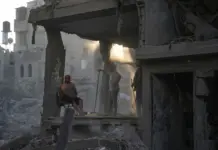
Inside Iran, the strikes left visible marks. Residents reported explosions near Bandar Abbas and Jask, two cities situated close to one of the world’s most strategically critical oil shipping corridors. Iranian state media reported attacks on Qeshm Island and a projectile strike in the port city of Sirik. The proximity of the fighting to major Persian Gulf shipping lanes has raised alarm among energy markets and regional governments alike.
Iranian Foreign Minister Abbas Araghchi issued a stark warning, stating that Tehran would "leave no attack or threat unanswered." The IRGC framed its multi-country strikes as a direct response to American operations against southern Iran, signalling that any further US military action would draw additional retaliation.
Despite the intensity of the exchanges, some military observers see signs that both sides are managing the crisis rather than seeking to expand it. Retired US General Mark Kimmitt, speaking publicly on the situation, described Iran’s retaliation as relatively restrained and characterised the limited scope of both countries’ strikes as a possible indicator that neither side wants the confrontation to spiral into full-scale war. Kimmitt said he would be surprised if the situation escalated further, noting that the pattern of targeting — radar sites, missile defences, and specific military infrastructure — suggests deliberate constraint on both sides.
Trump, for his part, insisted the US military operations should not derail ongoing peace talks, a statement that underscored the administration’s desire to pursue diplomatic channels even as it authorised military force. The dual-track approach reflects the complexity of a conflict that has drawn in multiple regional actors and now threatens the stability of some of the world’s most vital maritime trade routes.
Iran Hormuz Strikes: Regional Implications
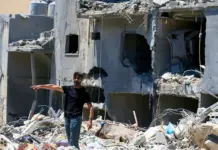
The broader regional picture grew darker still with fresh violence in Lebanon. At least 17 people were killed and dozens more wounded in attacks across the country’s south, according to Lebanese authorities. The Israeli military simultaneously issued a new displacement order for the city of Tyre, extending the evacuation zone to include the city’s Christian quarter for the first time — a move that signals continued expansion of operations in Lebanese territory.
Iran’s strategic calculus throughout the crisis has centred on maintaining a credible deterrent against both the United States and Israel. The IRGC’s willingness to strike targets in three separate countries — Bahrain, Kuwait, and Jordan — in a single operational wave demonstrates both the reach of its drone and missile arsenal and its intent to impose costs on Washington’s regional military posture.
The Strait of Hormuz, through which roughly a fifth of the world’s oil supply passes, remains the geographic flashpoint at the heart of the crisis. With Iranian and US forces now having exchanged direct fire in and around that waterway, the risk of miscalculation — whether through an errant strike, a misidentified vessel, or an escalatory decision made under pressure — has grown considerably. The coming days will test whether the apparent restraint observed by analysts holds, or whether the conflict enters a more destructive phase.