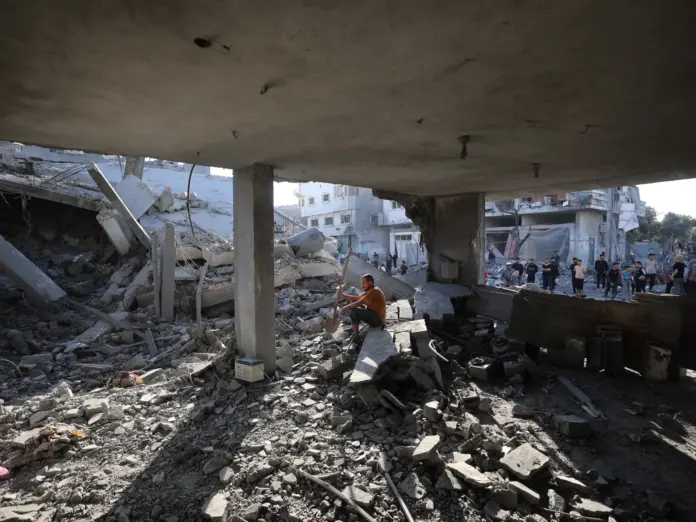
Gaza Ceasefire Talks — A drone strike near Khan Younis killed a young woman and wounded at least 15 others on Friday morning, opening another bloody chapter in a conflict that has continued to rage despite a ceasefire nominally in place since October. Hours later, a separate Israeli attack near Gaza City injured a child, underscoring the relentless pace of strikes across the territory.
The violence follows a particularly deadly Thursday, when at least 11 people were killed across Gaza. Among the dead were five members of a single family, struck inside residential apartments, according to Gaza's Civil Defence. Israel's military asserted that one of those killed in northern Gaza was a fighter preparing imminent attacks against Israeli forces — a claim that could not be independently verified.
Since the ceasefire began, Israeli strikes have killed at least 947 people and injured a further 2,935, according to figures compiled by Gaza's Health Ministry. More than half of the territory is now under Israeli military control, and crossings remain closed to those seeking medical evacuation or humanitarian aid.
Recommended Reading
Against this backdrop, Hamas officials arrived in Cairo on Friday for a series of planned meetings with Egyptian officials and mediators scheduled over the weekend. The delegation said it intends to discuss finalising the implementation of the ceasefire's first phase, halting the ongoing Israeli strikes, and establishing a pathway into the agreement's second phase — negotiations that have been deadlocked for months.
The first phase of the ceasefire centred on the release of Israeli captives held by Hamas in exchange for Palestinians detained by Israel. The second phase was designed to go further, requiring the disarmament of Hamas and a gradual withdrawal of Israeli military forces from Gaza. That transition has stalled entirely.
Husam Badran, a member of Hamas's political bureau, signalled the group's firm position ahead of the Cairo talks: Hamas will not surrender its weapons immediately. Instead, the organisation said it would commit to a future Palestinian police force operating under a technocratic committee, with that force serving as the sole body authorised to carry weapons openly. The proposal reflects Hamas's effort to reframe disarmament as a gradual, governance-linked process rather than a precondition for further negotiations.
Palestinian factions more broadly are also preparing to convene in Egypt to deliberate on Gaza's political future, adding a wider dimension to the diplomatic activity unfolding in Cairo this weekend.
Gaza Ceasefire Talks: Regional Implications
The humanitarian situation inside Gaza continues to deteriorate. Israeli crossings remain shut to outbound movement, blocking both medical evacuations and the entry of aid. Reporting from Gaza City has highlighted the dual reality facing residents: ongoing military strikes on one side, and the near-total paralysis of civilian infrastructure on the other.
The gap between the ceasefire's stated terms and the reality on the ground has grown increasingly stark. What was envisioned as a framework for de-escalation has instead produced months of continued bloodshed, with each round of diplomacy failing to translate into a durable halt to hostilities. Whether the Cairo meetings this weekend can break that pattern remains deeply uncertain, particularly given the hardened positions on both sides over the question of Hamas's weapons and Israel's military presence in the territory.
For the families of the 11 people killed on Thursday — including five relatives who died together in their home — and for the wounded from Friday's drone strike near Khan Younis, the diplomatic calendar in Cairo offers little immediate relief.