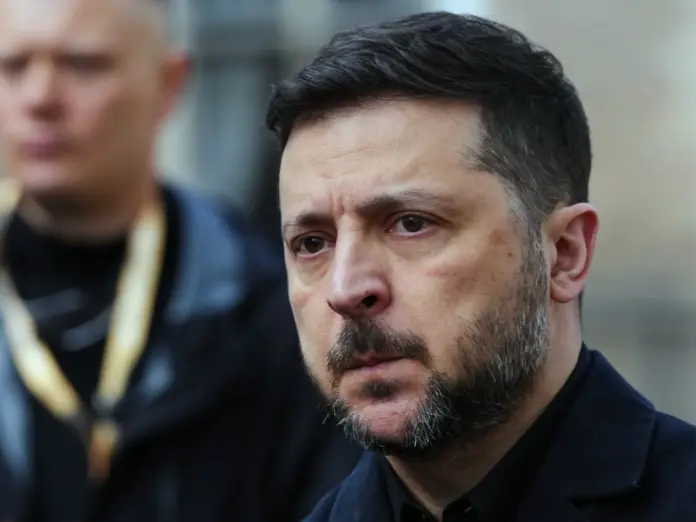
Zelenskyy Putin Peace Talks — Ukrainian President Volodymyr Zelenskyy has issued a direct public challenge to Russian President Vladimir Putin, publishing an open letter proposing a face-to-face meeting to negotiate an end to a war that has now ground into its fifth year and claimed the lives of at least 707 children.
The letter, posted on the Ukrainian presidential website on Thursday and transmitted through diplomatic channels to Russia, the United States, and other nations, names Switzerland, Turkey, and countries of the Arab world as possible meeting venues. Zelenskyy had already signalled his willingness to travel to Turkey on May 11, 2025, underscoring that the proposal carries genuine intent rather than symbolic posturing.
Ukrainian Foreign Minister Andrii Sybiha characterised the letter as a serious proposal containing clear, actionable steps. The move comes as European diplomatic momentum appears to be building: leaders of the United Kingdom, France, Germany, and Poland travelled to Kyiv in May for talks with Zelenskyy, and a German official has noted that a window for dialogue between Russia and Europe is slowly opening.
Recommended Reading
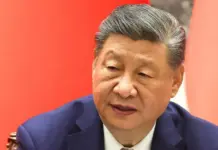
The Kremlin’s initial response was measured but non-committal. Putin’s spokesman confirmed the Russian president was aware of the letter but had not yet been briefed on its contents in detail. Putin himself has previously insisted he would only meet Zelenskyy in Moscow or a neutral third country — but only after a peace agreement has already been finalised, a condition Kyiv regards as untenable.
In remarks that illustrated the vast gap separating the two sides, Putin declared that Russia has taken full control of the Luhansk People’s Republic, brought more than 85 percent of the Donetsk People’s Republic under its authority, and secured 80 percent of the Zaporizhzhia region. He also stated that Russia remains prepared to reach an agreement through peaceful means — language that analysts have repeatedly noted is difficult to reconcile with continued offensive operations.
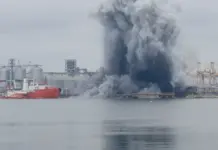
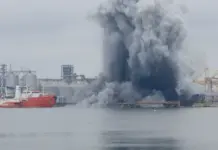
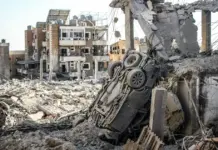
The human cost of those operations was starkly visible on Thursday. At least 12 people were killed and dozens more wounded in Russian strikes across Ukraine. Four additional deaths were recorded in Ukrainian drone attacks on Russian-occupied territory the same day. A day earlier, Ukraine struck an oil complex and a naval base in St Petersburg, demonstrating Kyiv’s continued capacity to carry the conflict deep into Russian territory.
Zelenskyy’s letter pointedly noted that Putin has held power in Russia for 26 years, a rhetorical framing that positions the Russian leader as personally responsible for the war’s continuation. Since Russia launched its full-scale invasion in February 2022, indirect peace talks have proceeded fitfully, producing no concrete outcomes.
US President Donald Trump, who returned to the White House in January 2025, has met both leaders separately in pursuit of a negotiated settlement. A Trump-Putin summit held in Alaska in August 2025 ended without agreement. US Secretary of State Marco Rubio said on May 22 that Washington stood ready to organise a new round of peace talks, signalling continued American engagement despite the stalled diplomacy.
Zelenskyy Putin Peace Talks: The Wider European Impact
Putin’s rejection on Thursday of European leaders’ direct involvement in truce negotiations adds another layer of complexity to an already fractured diplomatic landscape. The Russian president hosted allied leaders at a Victory Day parade in Moscow’s Red Square just one day before the Kyiv summit, a juxtaposition that underscored the competing narratives both sides are projecting to the world.
Analysts watching the conflict closely note that Zelenskyy’s public letter serves multiple audiences simultaneously. It signals flexibility to Western partners who have urged Ukraine toward negotiations, applies pressure on Putin by making any refusal visible on the global stage, and reinforces Kyiv’s position that Ukraine — not Russia — is the party seeking a just peace.
Whether Putin will respond substantively remains uncertain. What is clear is that the war’s toll continues to mount with each passing week, and the distance between the two leaders’ stated positions remains formidable.