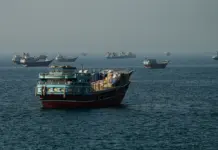
Ukraine Shadow Fleet — Ukrainian drone forces struck five cargo vessels in the Sea of Azov and adjacent coastal waters of Russian-occupied territory, targeting what Kyiv described as a shadow fleet engaged in the theft of Ukrainian grain and the transfer of military supplies and fuel to Russian forces.
Robert Brovdi, commander of Ukraine’s drone forces, said the targeted ships had deliberately obscured their identities — painting over their names and switching off their radar transponders — in an effort to evade detection. Russia blamed Ukraine for the attacks, and Azerbaijan’s foreign ministry confirmed that five Azerbaijani nationals were killed in the strikes. Two of the vessels, identified as the Natra and the Zirkon, were hit by drones overnight in the Taganrog Bay area.
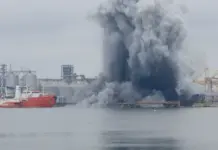
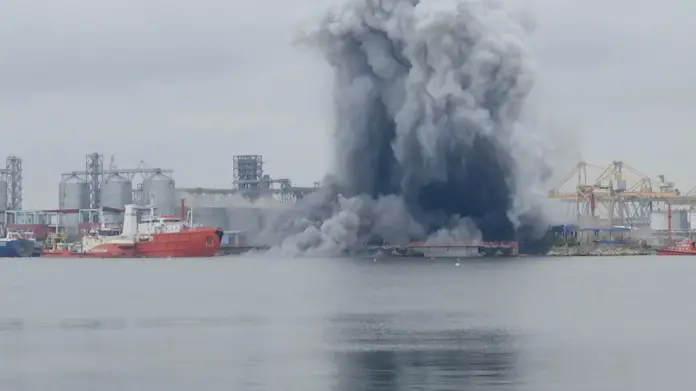
The maritime offensive coincided with a dangerous spillover into NATO territory. A Ukrainian naval drone self-detonated near an oil terminal in the Romanian Black Sea port of Constanta on Friday, causing considerable damage to a ship and nearby warehouses. No casualties were reported at the terminal, though Romanian authorities confirmed the blast. Kyiv attributed the drone’s deviation from its intended course to Russian electronic jamming. The drone was part of a group of five; a second exploded inside Ukraine, while three others remained unaccounted for.
Recommended Reading
The Constanta incident is not isolated. A week earlier, two people were injured when a drone struck an apartment block in the Romanian city of Galati. Romanian officials confirmed that drone was of Russian origin, a finding Moscow dismissed as unsubstantiated. A stray naval mine was also discovered on a beach near Vama Veche, more than 50 kilometres north of Constanta, underscoring the widening hazard posed by the conflict to civilian infrastructure along the Black Sea coast.
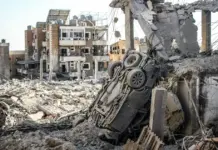
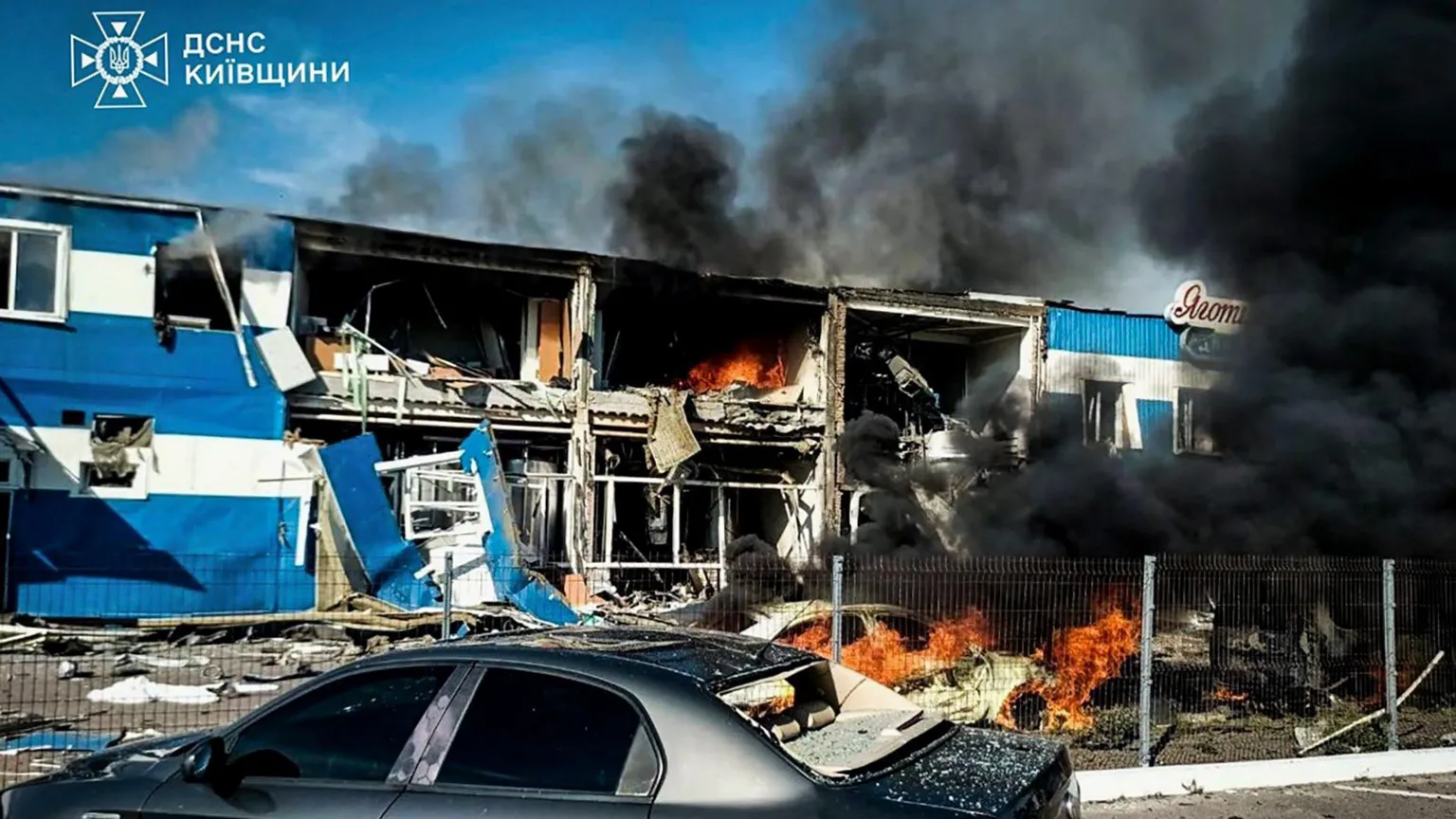
On the ground inside Ukraine, the human toll continued to mount. At least 13 people were killed and more than 70 injured in the past 24 hours as Russian strikes hit multiple regions. Four people died when drones struck a dairy factory outside Kyiv. Casualties were also recorded in Kherson, Kharkiv, Sumy, Zaporizhzhia, Chernihiv and Dnipro regions.
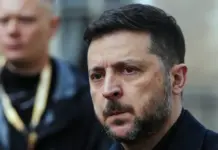
Against this backdrop of intensifying violence, a fragile diplomatic opening emerged — and quickly ran into resistance. President Volodymyr Zelensky offered direct face-to-face talks with Vladimir Putin, calling for a full ceasefire for the duration of any proposed negotiations. The Kremlin confirmed receipt of Zelensky’s letter, with spokesman Dmitry Peskov indicating Putin would likely respond publicly on Friday.
Putin, speaking ahead of a major economic forum in St Petersburg, ruled out a full ceasefire and questioned Zelensky’s legitimacy as Ukraine’s representative, pointing to the absence of a presidential election since May 2024. Elections in Ukraine have been suspended under martial law, declared following Russia’s full-scale invasion in 2022. Putin nonetheless signalled a willingness to reach an agreement, insisting that compromises would be necessary — a position widely interpreted as a demand for Ukrainian territorial concessions.
Ukraine Shadow Fleet: The Wider European Impact
Russia’s stated terms remain a fundamental obstacle. Moscow is demanding that Ukraine withdraw from Donetsk, Luhansk, Kherson and Zaporizhzhia — four regions Russia illegally annexed — and permanently abandon its ambitions to join NATO. Ukraine has categorically ruled out ceding any territory. Russia illegally annexed Crimea eight years before launching its full-scale invasion in 2022.
International pressure for dialogue is building. The European Union, France and the United States all backed Zelensky’s call for a direct meeting. US President Donald Trump said on Thursday that Putin and Zelensky should sit down together. Whether that pressure translates into a genuine diplomatic process remains deeply uncertain, as both sides continue to exchange lethal strikes with no sign of restraint.