Iran-Us Conflict Hunger — The United Nations World Food Programme has sounded a grave alarm over the humanitarian fallout from the Iran-United States conflict, warning that tens of millions of people across fragile nations face acute hunger as the war disrupts global energy markets and drives up the cost of delivering aid.
In an analysis published Friday, the WFP projected that 45 million people could fall into acute food shortages if oil prices remain at $100 a barrel through the end of June — a scenario made increasingly plausible by the near-closure of the Strait of Hormuz, which has halted oil tanker traffic and sent energy costs surging across supply chains.
The conflict, which broke out on February 28, shows no clear signs of resolution. Indirect negotiations between Washington and Tehran are ongoing, but a diplomatic breakthrough remains elusive, leaving humanitarian planners unable to model a swift return to stability.
Recommended Reading
Afghanistan and Somalia are bearing the sharpest brunt of the crisis. In Afghanistan, where 13.8 million people were already food insecure before the war began, the WFP now estimates that up to 17.4 million people could face food shortages as a direct consequence of the conflict. An additional 2.5 million Afghans may be unable to afford a basic food basket, and up to 2.3 million more could slide into food insecurity.
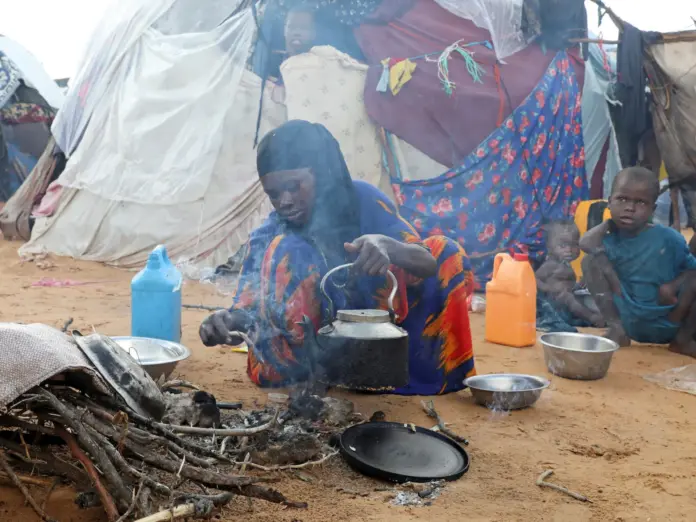
Somalia faces a similarly dire trajectory. Roughly 6.5 million people — approximately one-third of the country’s entire population — are expected to face severe hunger in 2026. A further 2.5 million Somalis could be priced out of basic nutrition. The WFP projects that nearly 60 percent of all Somali households will be unable to meet essential needs by 2026, compared to 47 percent in 2025. Both Somalia and Afghanistan are heavily reliant on imported energy and food, making them acutely vulnerable to price shocks originating in the Persian Gulf.
In Sri Lanka, up to 1.3 million people risk being unable to meet basic food needs, adding to the country’s already fragile economic recovery.
The WFP described the broader humanitarian system as facing a "double squeeze" — simultaneously contending with rising delivery costs and widening coverage gaps. As a direct result, the agency says it will serve 1.5 million fewer people than originally planned for 2026. Should the conflict extend beyond six months, that shortfall could balloon to more than 9 million people losing WFP assistance entirely.
While global food prices have so far registered only a modest increase, the WFP cautioned that substantial price rises are already being felt on the ground in fragile and conflict-affected states — a warning sign that the full economic shock has yet to fully materialise in international commodity indices.
Iran-Us Conflict Hunger: Regional Implications
The disruption to the Strait of Hormuz is central to the crisis. The narrow waterway, through which a significant share of the world’s oil supply normally flows, has been effectively closed to tanker traffic since hostilities escalated. The resulting energy price spike has cascaded through logistics networks, raising the cost of transporting food aid to the populations that need it most.
Humanitarian officials warn that the compounding pressures — conflict, energy disruption, and funding shortfalls — are converging at a moment when the global aid system is already stretched thin. The WFP’s Friday analysis represents one of the most detailed public assessments yet of how a geopolitical confrontation thousands of kilometres from the world’s hungriest populations can rapidly translate into empty plates and collapsed livelihoods.
With indirect diplomacy between the United States and Iran yielding no breakthrough, aid agencies are preparing for a prolonged crisis. For the millions already teetering on the edge of food insecurity in Afghanistan, Somalia, and Sri Lanka, the margin for error is vanishingly small.