US Navy SEALs extracted a wounded American airman from a remote mountain ridge in southwestern Iran on Sunday, concluding a tense two-day rescue operation that mobilised 155 aircraft, drew on CIA intelligence, and required Israeli military diversionary strikes to succeed.
The crisis began Friday when an F-15E Strike Eagle — carrying a pilot and a weapons operator — was shot down over southwestern Iran in the first such incident in more than 20 years. The pilot was rescued the same day, but the weapons operator became separated after ejecting, landing in a sparsely populated, rugged mountainous area where he would spend roughly 48 hours evading Iranian forces.
The airman took shelter in a mountain crevice on a 7,000-foot ridge, armed with only a handgun. Aware that his emergency beacon could be intercepted by Iranian forces, he used it sparingly — a calculated risk that complicated but did not prevent his eventual location. The CIA ultimately traced his exact position and relayed the coordinates to the Pentagon, setting the rescue operation in motion.
Iran’s government, meanwhile, offered a bounty of £50,000 — approximately $66,100 — to anyone who could deliver the airman alive, underscoring the urgency felt in Washington to act before he was captured.
The rescue raid launched Sunday involved a striking concentration of air power: four bombers, 64 fighters, 48 refuelling tankers, and 13 dedicated rescue aircraft. Navy SEALs were airdropped into the mountainous terrain to physically recover the airman. An Israeli intelligence official confirmed that the Israeli Defense Forces (IDF) conducted diversionary strikes to draw Iranian attention away from the extraction zone — a rare public acknowledgement of direct Israeli operational support for a US mission inside Iranian territory.
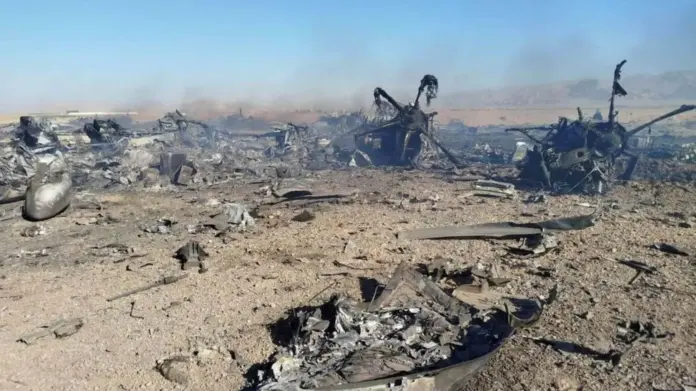
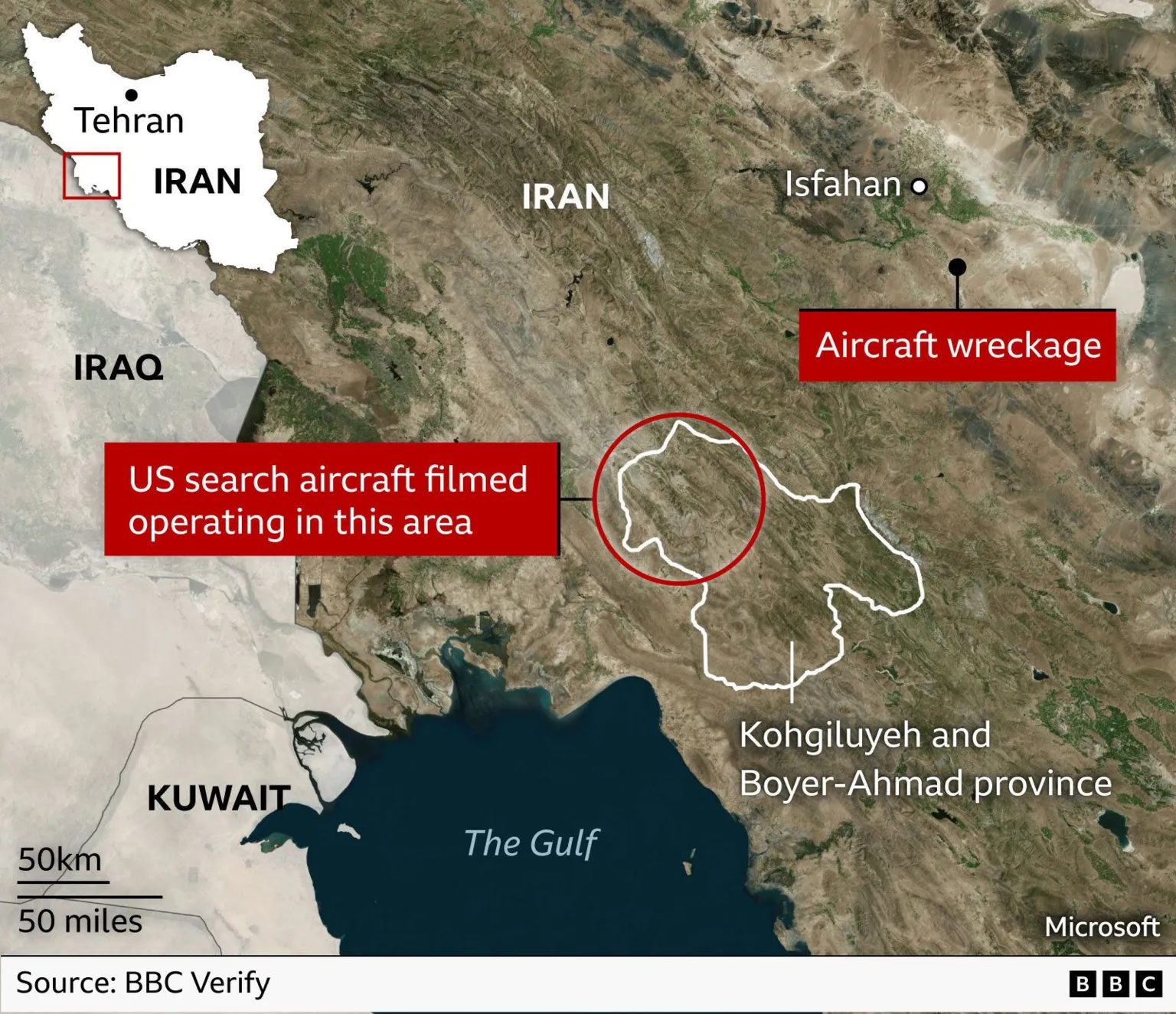
The operation was not without significant losses. Two C-130 military transport planes became bogged down in soft soil at a remote staging base inside Iran and could not be recovered. US forces destroyed both aircraft to prevent them from falling into Iranian hands. Iran’s Islamic Revolutionary Guard Corps (IRGC) claimed that two Black Hawk helicopters were also destroyed during the operation. Footage independently assessed as credible appeared to show aircraft wreckage approximately 50 kilometres southeast of Isfahan. The IRGC separately claimed to have shot down a US drone over Isfahan during the same period.
US special forces ultimately departed Iranian territory aboard three additional aircraft dispatched to collect the crews of the destroyed transports. The rescued airman was flown to Kuwait for medical treatment. News of his successful extraction broke just before midnight Eastern time on Sunday.
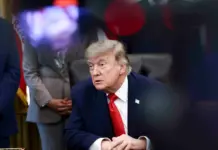
President Donald Trump described the airman as ‘seriously wounded,’ though no further details on the nature of his injuries were immediately released. The scale of the rescue — comparable in complexity to major combat operations — reflects both the strategic value placed on recovering US personnel and the extraordinary lengths to which Washington was prepared to go to prevent an American servicemember from falling into Iranian custody.
The shootdown and subsequent rescue operation represent a significant escalation in direct military confrontation between the United States and Iran. The destruction of multiple US aircraft on Iranian soil, combined with Israeli involvement in the rescue, is likely to intensify diplomatic and military tensions across the region. The IRGC’s role in the original shootdown and its claims regarding the destroyed helicopters signal that Tehran views the episode as a demonstration of its capacity to challenge American air power within its own borders.
The last time a US aircraft of this type was lost under comparable circumstances was more than two decades ago, making Friday’s shootdown a rare and strategically significant event — one whose full consequences for US-Iran relations and regional security are still unfolding.