US and Israeli forces struck one of Iran’s largest pharmaceutical manufacturers, a Shia congregation hall, and military installations across the country on Tuesday, as a war now entering its second month showed no sign of abating despite diplomatic signals from Washington.
The Tofigh Daru Research and Engineering Company in Tehran — a state-owned producer of anaesthetics and anti-cancer medicines held under the Social Security Investment Company — was hit in strikes that Iranian authorities condemned as an attack on civilian medical infrastructure. Former foreign minister Javad Zarif, founder of the Payab Research Institute, confirmed the facility manufactured critical pharmaceutical materials used in cancer treatment.
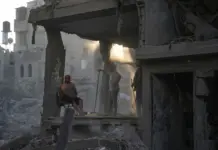
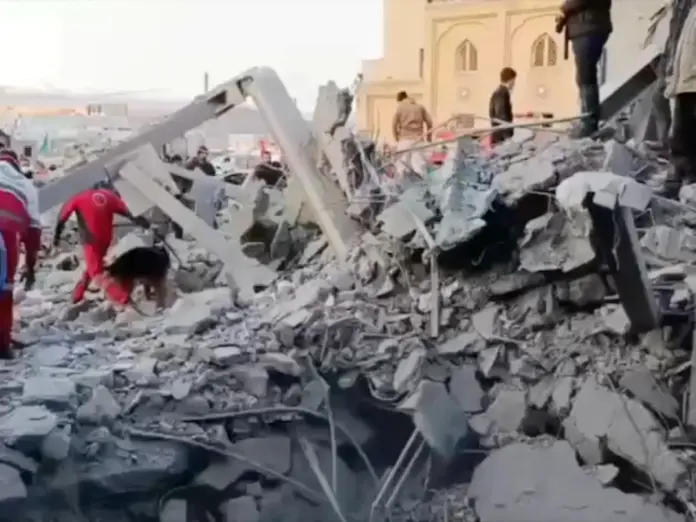
In the northwestern city of Zanjan, strikes damaged the Husseiniya Azam, a Shia mourning hall whose dome and minarets were partially destroyed. Two people were pulled from the rubble. Iranian state television broadcast footage of the damaged religious site, which the government characterised as deliberate targeting of civilian and sacred spaces.
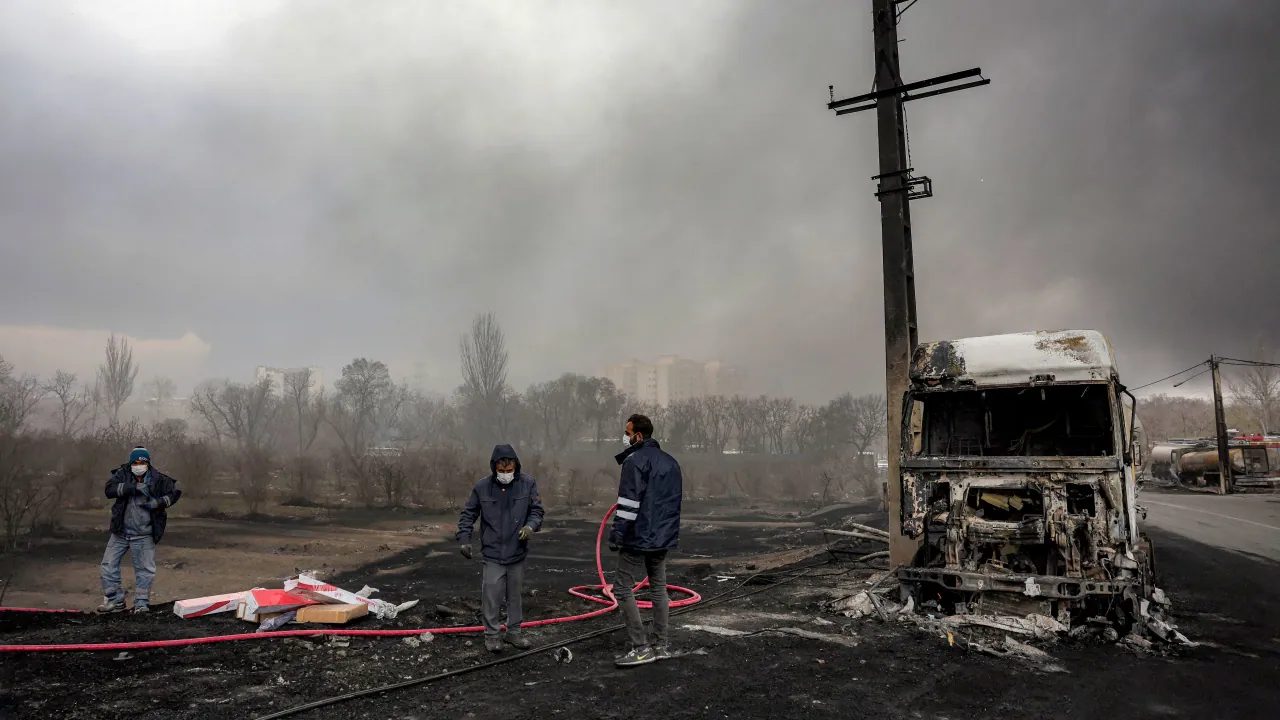
Two massive explosions shook Isfahan on Tuesday, verified on the ground by journalists. The city hosts several of Iran’s most sensitive military and nuclear installations, including Natanz — the country’s primary uranium enrichment facility — as well as Badr Airbase, the 8th Shekari Airbase, and the 4th Air Force Base. In Qasr-e Shirin, a border town in Kermanshah province adjacent to Iraq, strikes on a civilian contracting company killed one person and wounded eight others.
The conflict, launched jointly by US President Donald Trump and Israeli Prime Minister Benjamin Netanyahu on February 28 — the same day Iran’s Supreme Leader Ayatollah Ali Khamenei was killed — has now claimed at least 1,937 lives in Iran. Twenty people have been killed in Israel since hostilities began.
Iran’s military response extended well beyond its borders on Tuesday. The Islamic Revolutionary Guard Corps claimed to have struck an Israeli container ship with a ballistic missile in the Gulf and launched drone attacks targeting a group of US Marines stationed on the UAE coast outside a military base. In the UAE, four people sustained injuries in southern Dubai when debris from an intercepted projectile fell onto residential buildings, and loud explosions followed official warnings of incoming drones and missiles. Two people were wounded in Al-Kharj province in Saudi Arabia — southeast of Riyadh and home to the Prince Sultan air base — after a drone was intercepted. An explosion was also reported near the international airport in Erbil, in Iraq’s Kurdistan region, an area hosting US coalition military advisers and a major American consulate complex.
In central Israel, impact sites were recorded in Tel Aviv, Bnei Brak, and Petah Tikva. Eight people sustained minor injuries in the Tel Aviv area, with Israeli police attributing the wounds to falling fragments from munitions intercepted by the country’s Iron Dome and David’s Sling defence systems.
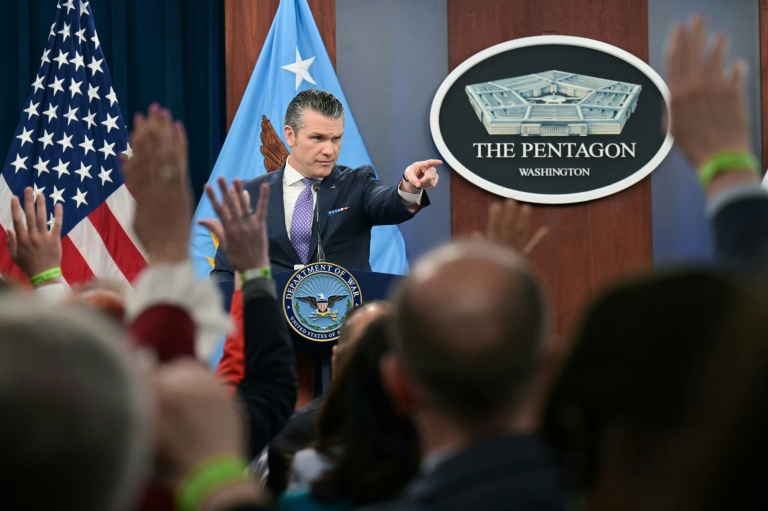
Senior US officials projected confidence about the trajectory of the war. Secretary of State Marco Rubio stated that American war objectives would be achieved in ‘weeks, not months,’ while Pentagon chief Pete Hegseth, who visited US troops deployed in the region, said ‘the upcoming days will be decisive.’ Hegseth also indicated that talks aimed at ending the conflict were making progress, though communication between Washington and Tehran continues to flow primarily through intermediaries. Iran has denied Trump’s assertions that direct negotiations have resumed.
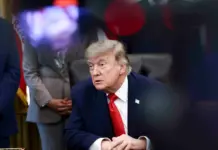
Trump sent conflicting signals on Monday, threatening to ‘obliterate’ Iran’s oil infrastructure — including the critical Kharg Island export terminal — along with power grids and potentially water desalination plants, should Tehran refuse to accept a deal. Iran described a 15-point plan presented by Trump as ‘extremely maximalist and unreasonable.’
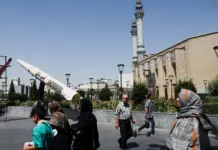
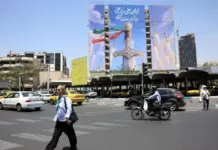
Despite the military pressure, Iranians took to the streets in pro-government demonstrations expressing anger over the US-Israeli campaign. Iran had engaged in diplomatic outreach twice over the preceding ten months before the February 28 attacks commenced. On the international stage, China signalled it would strengthen coordination with Pakistan on Iran, with senior Pakistani officials travelling to Beijing for related discussions — a development that underscores the widening geopolitical dimensions of a conflict that began as a bilateral military operation but has rapidly drawn in regional and global powers.