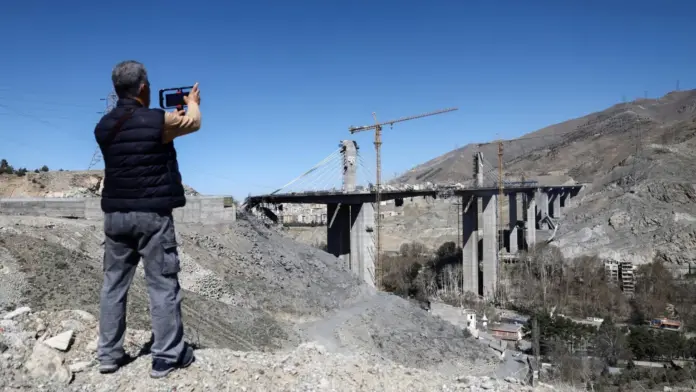
KARAJ, Iran — A joint US-Israeli airstrike struck the B1 suspension bridge in Karaj twice on Thursday, killing eight people and wounding nearly 100 others in one of the most dramatic escalations of the conflict with Iran to date. The attack hit a key transport artery in Alborz province, roughly 50 kilometres west of Tehran, as families gathered nearby to celebrate the final days of the Nowruz holiday.
Dozens of civilians had been picnicking along the riverbanks adjacent to the bridge — a popular destination during the 13th day of the Persian New Year festivities — when US warplanes struck. The B1 bridge, described by Iranian officials as among the country’s tallest, sustained significant structural destruction in the twin strikes.
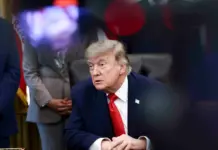
President Donald Trump confirmed the attack in a post on Truth Social, declaring that the US military had hit Iran’s tallest bridge and warning that Washington had not yet begun destroying what remained of the country’s infrastructure. Trump threatened to strike Iranian bridges and electric power plants unless Tehran’s leadership agreed to his terms to end the war, and reiterated an earlier vow to bomb the Islamic Republic "back to the stone ages."
Iranian Foreign Minister Abbas Araghchi rejected the premise of the strikes outright. Targeting civilian structures, including unfinished bridges, would not compel Iranians to surrender, he said, adding that the attack "only conveys the defeat and moral collapse of an enemy in disarray." His remarks signalled that Tehran has no intention of capitulating under military pressure on civilian infrastructure.
Iran has since signalled potential retaliation across the Gulf. State-aligned media outlets have begun identifying key regional infrastructure as possible targets, listing seven sites: the Sheikh Jaber Al-Ahmad Al-Sabah Sea Bridge in Kuwait, the King Fahd Causeway connecting Saudi Arabia and Bahrain, the Sheikh Zayed Bridge and Sheikh Khalifa Bridge in the UAE, and the King Hussein Bridge, Damia Bridge, and Abdoun Bridge in Jordan. The Fars News Agency reported that Tehran is weighing a "tit for tat" response, a formulation that suggests strikes on infrastructure in countries hosting US military bases.
The strike deepened divisions within Iranian society even as it unified many across the political spectrum in condemnation. A woman in her 20s in Tehran described profound alarm at the attack. A male resident of similar age said he feared his country would be left in ruins. Even a self-described "pro-war" resident of Karaj expressed unease at seeing the bridge targeted. A Tehran woman in her 40s who has supported the US-Israeli military campaign said she was surprised by the choice of target.
Hardline, pro-establishment Iranians on social media condemned both the strike and Trump’s rhetoric, with some demanding that Iran’s armed forces retaliate by targeting bridges in neighbouring countries where US forces are stationed. Others warned that the attack on civilian infrastructure revealed that the true objective of the US and Israel was the wholesale destruction of Iran rather than the degradation of its military capabilities.
The strike comes amid a severe information blackout inside Iran. Authorities have maintained an internet shutdown now entering its 35th consecutive day, with possession or use of Starlink satellite internet carrying a potential prison sentence of up to two years. Despite the restrictions, some officials, pro-establishment journalists, and ordinary citizens have managed to access the internet through satellite systems and other circumvention methods. The blackout has made independent verification of casualty figures and damage assessments difficult.
The targeting of the B1 bridge marks a significant shift in the scope of the conflict. Previous strikes focused primarily on military installations and nuclear-related facilities; the destruction of a civilian transport link during a national holiday period represents a stark widening of the campaign’s parameters. Whether Tehran responds with direct military action against regional infrastructure — or absorbs the blow while pursuing diplomatic channels — will shape the trajectory of a conflict that shows no signs of de-escalation.