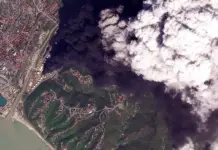
A brief but significant American military operation in the Strait of Hormuz has ended, halted by diplomatic pressure from regional powers and the accelerating pace of negotiations between Washington and Tehran that could reshape the Middle East’s most volatile crisis in decades.
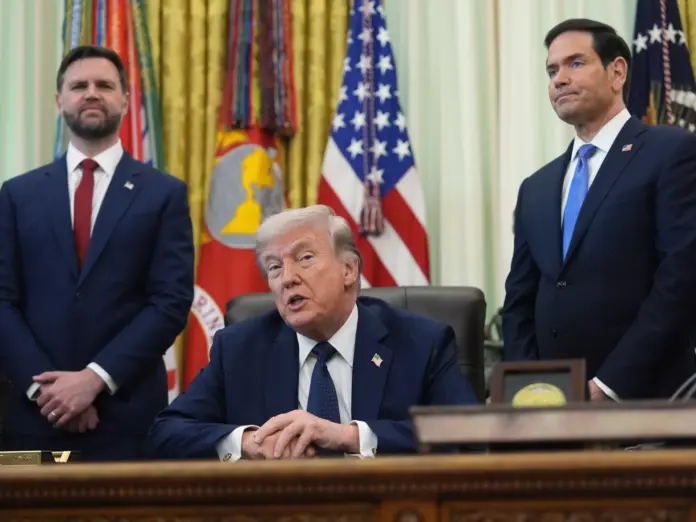
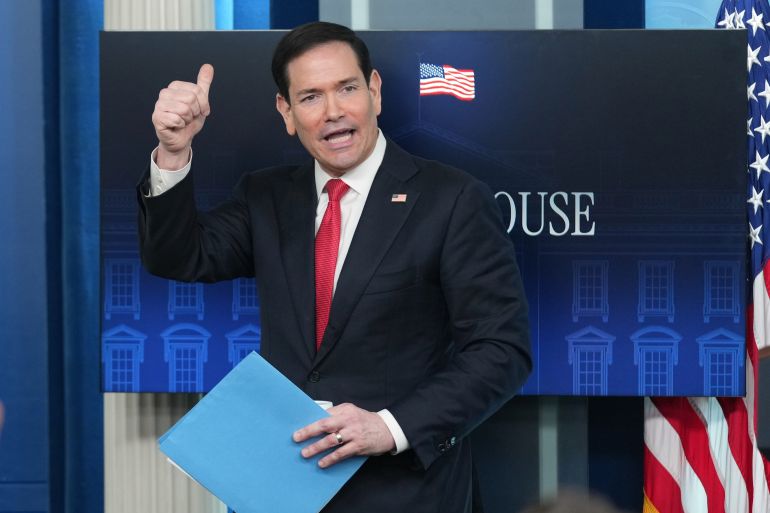
Operation Epic Fury, launched on February 28, was formally declared concluded by Secretary of State Marco Rubio on Tuesday. The operation had begun with the United States Navy escorting commercial vessels through the strait on Monday morning, only for President Donald Trump to announce its suspension on Truth Social by Tuesday afternoon. Trump cited requests from Pakistan and other countries as the reason for the reversal.
Pakistani Prime Minister Shehbaz Sharif named Saudi Arabia’s Crown Prince Mohammed bin Salman as a key partner who encouraged Trump to stand down the mission. Saudi Arabia’s Ministry of Foreign Affairs had expressed concern over the military escalation and publicly backed Pakistan’s mediation efforts on Tuesday, underscoring Riyadh’s growing stake in a negotiated settlement ahead of the Hajj pilgrimage, which is expected to draw approximately 1.8 million Muslims to Mecca beginning around May 25.
The diplomatic momentum comes despite fresh violence. Iran’s Islamic Revolutionary Guard Corps allegedly launched missiles and drones at the United Arab Emirates on Monday and Tuesday, striking an oil facility in Fujairah and wounding three Indian workers. Tehran denied any involvement in the attacks. US Joint Chiefs of Staff Chairman General Dan Caine assessed that the incidents remained below the threshold required to restart major combat operations, a judgement that allowed negotiations to continue.
The ceasefire between the US and Iran, which took effect on April 8, has produced an increasingly structured exchange of proposals. A 15-point American framework delivered to Tehran via Pakistan in late March demanded the dismantling of nuclear facilities at Natanz, Isfahan and Fordow, along with the destruction of Iran’s ballistic missile capabilities, the dismantling of its navy, and the severing of support for armed proxies. Iran submitted a 14-point counter-proposal to Pakistan on April 30, which was subsequently transmitted to Washington.
Iran’s proposal calls for ending the war within 30 days, lifting the US naval blockade, releasing frozen Iranian assets, paying reparations, removing sanctions, and establishing a new mechanism to govern the Strait of Hormuz. Crucially, Tehran insists that nuclear programme discussions are not part of the current stage of talks — a position confirmed by Iranian Foreign Ministry spokesman Esmaeil Baghaei. Trump nonetheless described the Iranian proposal as better than expected, and multiple diplomatic channels indicated Washington and Tehran were close to agreeing on a one-page memorandum of understanding to end the war.
Roughly one-fifth of the world’s oil and gas transits the Strait of Hormuz. Iran restricted shipping through the waterway after the war began, and the United States subsequently imposed a blockade on Iranian ports following the April ceasefire. The resulting disruption has sent shockwaves through the global economy, driving up fuel prices in the United States at a politically sensitive moment ahead of midterm elections.
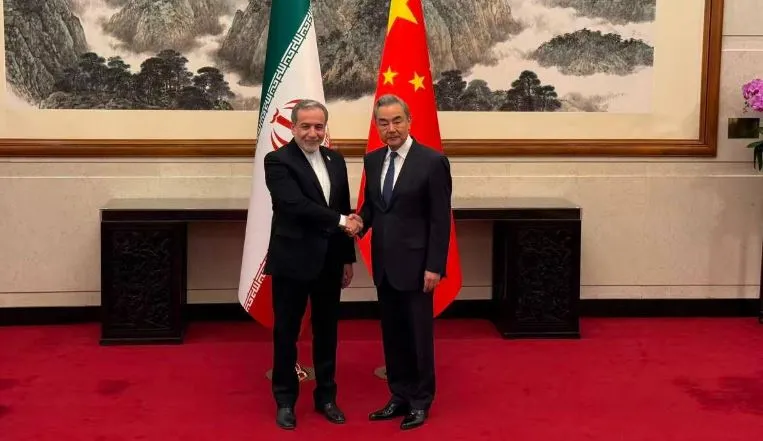
China sits at the intersection of nearly every dimension of this crisis. Iranian Foreign Minister Abbas Araghchi arrived in Beijing on Wednesday for talks with Chinese Foreign Minister Wang Yi, who stated that a comprehensive ceasefire brooks no delay and that persisting with negotiations is particularly important. Araghchi also spoke by telephone with Saudi Foreign Minister Prince Faisal bin Farhan Al Saud during his Beijing visit, a conversation that reflected the overlapping diplomatic circuits now converging on a potential settlement.
China absorbed more than 80 percent of Iran’s shipped oil in 2025, according to analytics firm Kpler, and the two countries are bound by a 25-year strategic partnership signed in 2021 covering infrastructure, trade and security cooperation. Beijing has condemned US and Israeli military actions against Iran as illegitimate, and China and Russia vetoed efforts at the UN Security Council to condemn Iran’s actions in the strait. When Washington sanctioned Chinese firms accused of purchasing Iranian oil, Beijing’s Ministry of Commerce ordered domestic companies to defy those sanctions outright.
The United States and allied Gulf states have drafted a UN resolution calling on Iran to halt attacks on shipping, remove sea mines and cease charging transit fees — a measure that faces an uncertain path given Chinese and Russian opposition. Rubio publicly urged Beijing to press Iran to ease its blockade, while US Treasury Secretary Scott Bessent called on China to use its influence with Tehran to help de-escalate the crisis. Pakistan, meanwhile, has called on Beijing to play a larger mediation role in regional tensions.
The diplomatic calendar is adding urgency to every exchange. Trump is scheduled to meet Chinese President Xi Jinping in Beijing on May 14 and 15, a summit that could prove pivotal in determining whether China’s considerable leverage over Tehran is deployed in service of a settlement — or withheld. Pentagon intelligence analysts have assessed that Beijing is weighing whether to provide Iran with advanced radar and air defence systems, a potential development that would dramatically alter the military calculus for any future confrontation.
China’s role as the architect of the 2023 rapprochement between Saudi Arabia and Iran gives Beijing a credibility in the region that Washington cannot easily replicate. Whether that credibility translates into decisive pressure on Tehran — or is used to extract concessions from the United States — may determine whether the current diplomatic opening produces a durable agreement or collapses under the weight of competing interests.