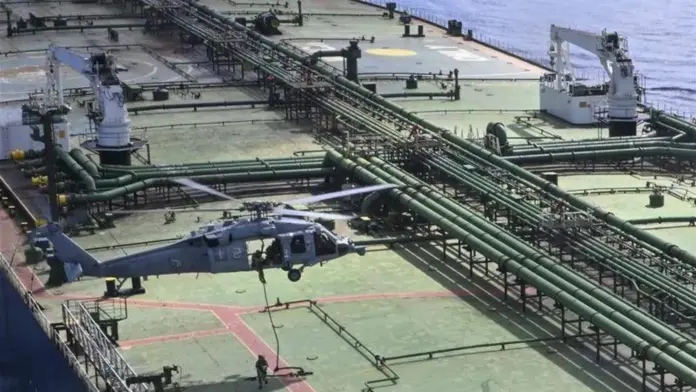
The confrontation between the United States and Iran escalated sharply this week as American forces boarded a sanctioned Iranian oil tanker in the Indian Ocean, Tehran’s navy seized two cargo vessels in the Strait of Hormuz, and diplomatic efforts to extend a fragile ceasefire remained deeply uncertain.
The US Department of Defence intercepted the M/T Majestic X, a vessel carrying Iranian crude oil in violation of international sanctions, in a move that underscored Washington’s determination to enforce the naval blockade it imposed on 13 April. Under that blockade, US Central Command has ordered 33 vessels to return to port, cutting off maritime traffic entering and leaving Iranian ports.
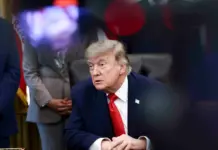
President Donald Trump declared the blockade ‘100% effective‘, asserting that Iran is ‘getting no business’ as a result of the maritime pressure campaign. Trump also revealed he had rejected an Iranian offer to reopen the strait three days before his Thursday statement, signalling that Washington is in no mood for concessions. He further warned that the US Navy had orders to ‘shoot and kill’ any vessel caught laying mines in the strait — one of the world’s most critical chokepoints for global oil shipments.
The Islamic Revolutionary Guard Corps struck back, seizing two cargo ships — the MSC Francesca and the Epaminondas — in the Strait of Hormuz, according to Iran’s Fars News Agency. The transponders of both vessels were switched off following the incidents, deepening uncertainty about their status. Greek authorities, however, denied that the Epaminondas had been seized, insisting its captain remained in control of the ship. Aerial footage purporting to show the seizure appeared to have been filmed several hours after the reported initial attack, raising questions about the precise sequence of events.
On the diplomatic front, the situation remains precarious. Trump announced on Tuesday that he would extend a two-week ceasefire — brokered with the assistance of mediator Pakistan — to allow time for a ‘unified proposal’ to end the war, though he did not specify how long the extension would last. The conflict began on 28 February when the United States and Israel launched coordinated strikes against Iran.
Mohammad Bagher Ghalibaf, who led the first round of peace negotiations, stated bluntly that reopening the Strait of Hormuz is ‘not possible’ given the ongoing blockade — a position that directly contradicts Washington’s insistence that a prolonged closure is unacceptable. Pentagon Chief Spokesman Sean Parnell dismissed suggestions that clearing mines from the strait could take up to six months, calling a six-month closure ‘an impossibility and completely unacceptable’.
Iranian officials presented a defiant face domestically. Hamidreza Haji Bababei, deputy speaker of the Iranian Parliament, claimed on Thursday that toll revenues collected from ships transiting the strait had been deposited with Iran’s Central Bank — a claim that appeared designed to project an image of continued economic functionality. Foreign Minister Abbas Araghchi declared that Iran is ‘united, more than ever before’ in the face of external pressure.
The shadow of leadership uncertainty hangs over Tehran. Ayatollah Ali Khamenei, Iran’s supreme leader since 1989, was killed on the first day of the war in February. His second son, Mojtaba Khamenei, assumed the position of supreme leader on 8 March but has not been seen in public since his succession — fuelling speculation about the stability of Iran’s clerical leadership structure at a moment of acute national crisis.
Israel, which participated in the initial strikes against Iran, remains poised for further action. Israeli Defence Minister Israel Katz stated that Israel stands ready to resume hostilities and is ‘waiting for the green light from the US to complete the elimination of the Khamenei dynasty’ — language that signals Jerusalem’s ambitions extend well beyond the current ceasefire window.
The Strait of Hormuz carries roughly 20% of the world’s oil supply, and any prolonged disruption to shipping through the waterway would send shockwaves through global energy markets. With Washington enforcing a blockade, Tehran seizing vessels, and Israel threatening renewed strikes, the path to a durable ceasefire remains narrow and fraught with risk.