The United Nations has determined that military actions by both Israel and Hezbollah during their recent escalation may amount to serious violations of international humanitarian law, according to a report released Friday that examined the opening three weeks of renewed hostilities beginning March 2.
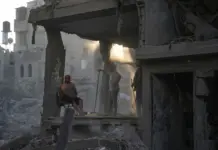
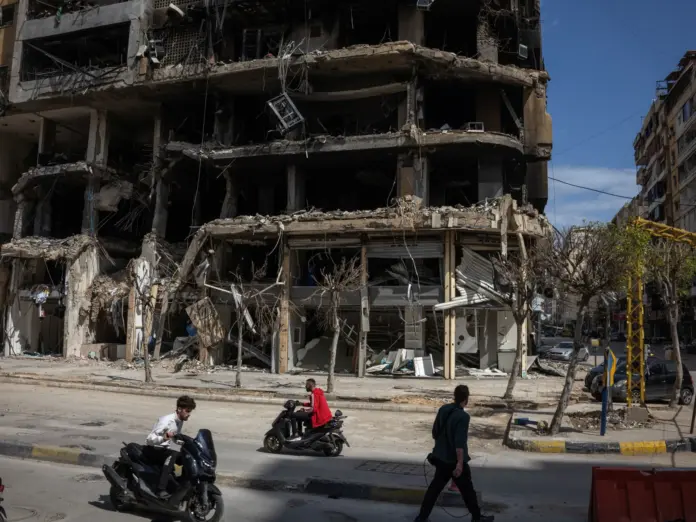
The report, produced by the Office of the United Nations High Commissioner for Human Rights (OHCHR), documented a pattern of Israeli strikes that destroyed multi-storey residential buildings and killed entire families across Lebanon. OHCHR spokesperson Thameen Al-Kheetan stated that investigators identified multiple incidents in which Israeli forces either provided ineffective warnings before strikes or gave no warning at all.
Among the specific incidents examined was an Israeli strike on March 8 that hit a multi-storey residential building in the town of Sir el-Gharbiyeh in the Nabatieh governorate. The attack killed at least 13 civilians — five women, five men, two boys and a girl — in a single strike on a populated area.
The UN report also found that Hezbollah violated international humanitarian law through its use of unguided rockets fired into Israel. Those projectiles, lacking the precision necessary to distinguish between military and civilian targets, struck civilian buildings and infrastructure. Hezbollah launched the rockets in response to US-Israeli attacks on Iran.
Neither the Israeli military nor Hezbollah offered an immediate response to the report’s findings.
The publication of the UN findings coincided with the killing of a prominent Lebanese journalist. Amal Khalil, a veteran correspondent for Al Akhbar, was killed Wednesday in an Israeli air strike on the village of at-Tiri in southern Lebanon. Her colleague Zeinab Faraj was wounded in the same strike. Rescue workers who attempted to reach Khalil were subsequently fired upon by Israeli forces and compelled to withdraw, Lebanon’s Ministry of Public Health said.
Khalil was the ninth journalist killed in Lebanon since the escalation began. The OHCHR stated that deliberate attacks on journalists could constitute war crimes under international law.
Lebanese Prime Minister Nawaf Salam condemned the killing, accusing Israel of crimes against humanity. Israel has not commented on the strike that killed Khalil.
The conflict has exacted a devastating toll on Lebanon. More than 2,400 people have been killed since Israel launched its bombardment and subsequent ground invasion of southern Lebanon. Israeli forces have seized a belt of territory along the border, where troops continue to be stationed.
A fragile ceasefire is currently in place, though its durability remains uncertain. US President Donald Trump announced Thursday that the truce would be extended for an additional three weeks, providing a temporary pause to fighting that has reshaped the country’s south and displaced large portions of its population.
The UN report’s release adds significant international pressure on both parties at a critical juncture. With the ceasefire extension offering a narrow diplomatic window, the documentation of potential war crimes — including strikes on civilian infrastructure, the killing of journalists, and the indiscriminate use of unguided munitions — raises the stakes for any future negotiations over a more permanent settlement.
International humanitarian law requires warring parties to distinguish between combatants and civilians, take precautionary measures before strikes, and refrain from attacks that would cause disproportionate civilian harm. The UN findings suggest both Israel and Hezbollah fell short of those obligations during the period under review.