Ukraine launched a sweeping assault on Russian oil infrastructure while simultaneously triggering a diplomatic confrontation with Israel over grain shipments from occupied territories, marking one of the most active days of Ukrainian economic warfare since the conflict began.
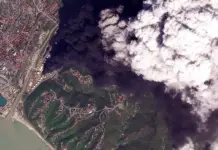
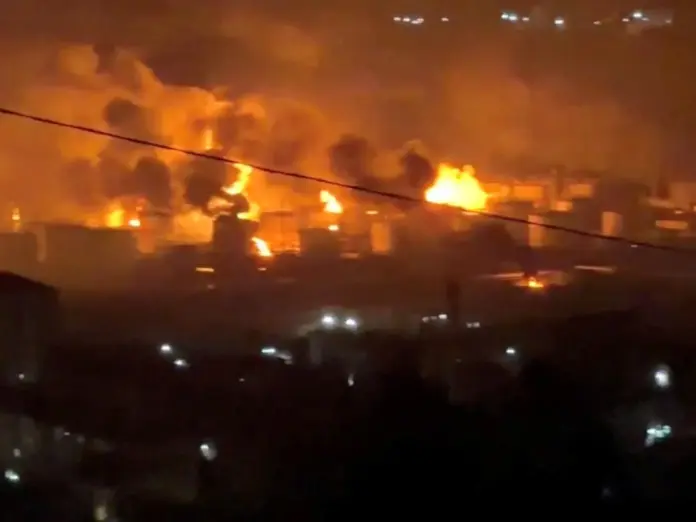
Ukrainian drones struck the Tuapse oil refinery on the Black Sea coast, igniting what regional authorities described as a massive fire at the Rosneft-owned facility. Veniamin Kondratiev, governor of Russia’s Krasnodar region, confirmed that more than 160 firefighters were battling the blaze on Tuesday morning. Evacuations were ordered in surrounding areas, with a temporary shelter established at a nearby school. The attack follows a previous drone strike on April 16 that had already halted operations at the same refinery.
The assault on Tuapse was part of a broader, coordinated campaign. Ukrainian forces also struck the Ust-Luga and Primorsk oil export terminals in the Baltic Sea — a pair of strikes that analysts estimate severed as much as 40 percent of Russia’s oil export revenue. A separate strike targeted the oil tank farm and loading pier at the Transneft-Port Primorsk terminal west of St Petersburg. Inland, Ukraine hit both the Saratov oil refinery and the Bashneft-Ufaneftekhim refinery in the Republic of Bashkortostan, extending the campaign deep into Russian territory.
Kyiv’s escalating energy offensive, which intensified in late March, is a deliberate attempt to erode the financial engine sustaining Russia’s war machine. The Centre for Research on Energy and Clean Air estimated that Russia earned an additional 672 million euros in oil sales during just the first two weeks of a separate conflict period, underscoring the scale of revenues Ukraine is attempting to disrupt. Russia currently occupies approximately one-fifth of Ukrainian territory, and Kyiv views degrading Moscow’s oil income as a strategic imperative.
Simultaneously, Ukraine found itself in a sharp diplomatic dispute with Israel. Ukrainian Foreign Minister Andrii Sybiha summoned the Israeli ambassador after confirming that a shipment of grain originating from Russian-occupied Ukrainian territories arrived at the port of Haifa on Monday evening. A second vessel carrying what Kyiv characterised as stolen goods subsequently docked in Israel, deepening the row.
Israeli Foreign Minister Gideon Saar pushed back firmly, criticising Ukraine for conducting diplomacy through social media rather than through formal channels. Saar also challenged the evidentiary basis of Kyiv’s claims, stating that "allegations are not evidence" — a response that is unlikely to satisfy Ukrainian officials who view the shipments as direct complicity in the plunder of occupied territories.
The grain dispute adds a new layer of complexity to Israel’s already delicate position regarding the war in Ukraine. While Israel has maintained relations with both Kyiv and Moscow, the arrival of vessels carrying grain from occupied Ukrainian land places Jerusalem in an uncomfortable spotlight. For Ukraine, the issue is both economic and symbolic: the export of agricultural produce from territories seized by Russian forces represents, in Kyiv’s view, the monetisation of occupation.
The dual crises — energy strikes and the grain confrontation — reflect Ukraine’s increasingly multi-front strategy to impose costs on Russia beyond the battlefield. With Western military aid subject to political uncertainty, Kyiv has intensified efforts to strike at the economic foundations of Russia’s war capacity, targeting refineries, export terminals, and the revenue streams that fund continued military operations.
Russia’s oil infrastructure has proven a recurring target. The strikes on Ust-Luga and Primorsk alone, if the 40 percent export revenue figure holds, represent a significant blow to Moscow’s fiscal position at a moment when sanctions pressure has been complicated by geopolitical shifts, including the suspension of certain long-standing US sanctions on Russian oil during recent diplomatic turbulence.
As fires burned at Tuapse and diplomatic cables flew between Kyiv and Jerusalem, Tuesday underscored the widening geographic and political dimensions of a conflict now entering its third year with no resolution in sight.