WASHINGTON — President Donald Trump is considering asking Arab countries to help shoulder the mounting financial burden of the US-Israeli war against Iran, the White House confirmed Monday, as the conflict enters its 31st day with costs already running into the tens of billions of dollars and global energy markets in turmoil.
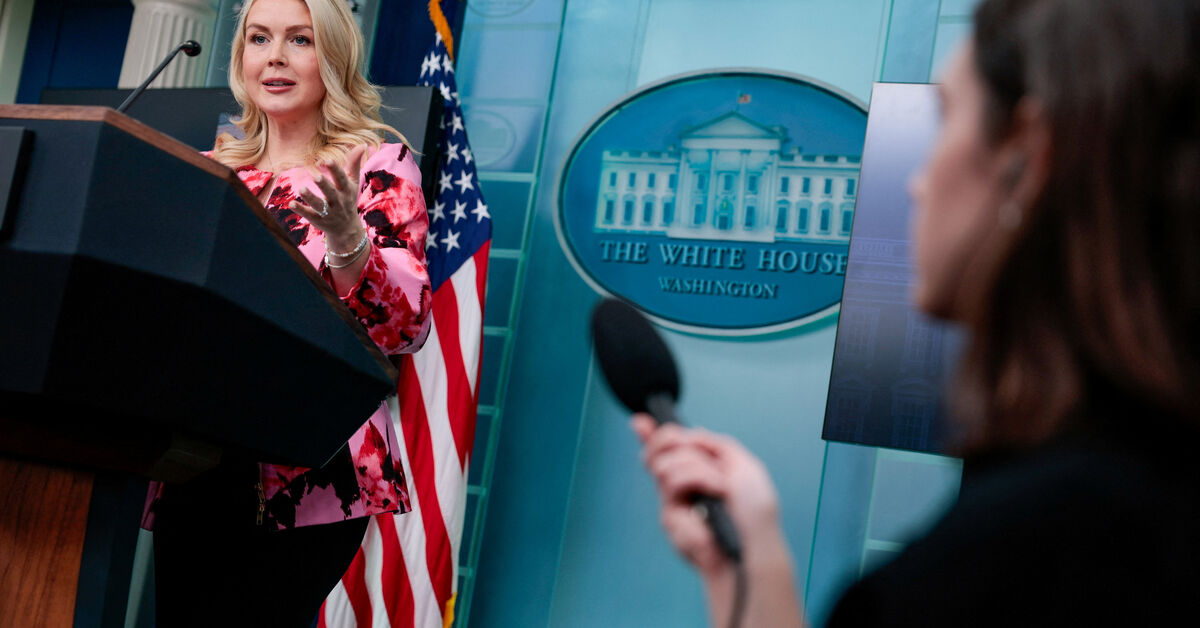
White House Press Secretary Karoline Leavitt told reporters at a briefing that Trump had the idea of calling on Arab nations to contribute financially to the war effort, adding that the president would have more to say on the matter in the coming days. She declined to elaborate further, saying she would not get ahead of the Republican president on the issue.
The proposal draws a direct parallel to the Gulf War of 1990, when the United States led a global coalition of dozens of countries to counter Iraq’s invasion of Kuwait. On that occasion, regional states and coalition partners — including Germany and Japan — collectively raised $54 billion, equivalent to roughly $134 billion in today’s money, to help fund Washington’s military intervention. This time, however, the US and Israel launched the campaign against Iran unilaterally, without drawing in allies or regional partners before hostilities began.
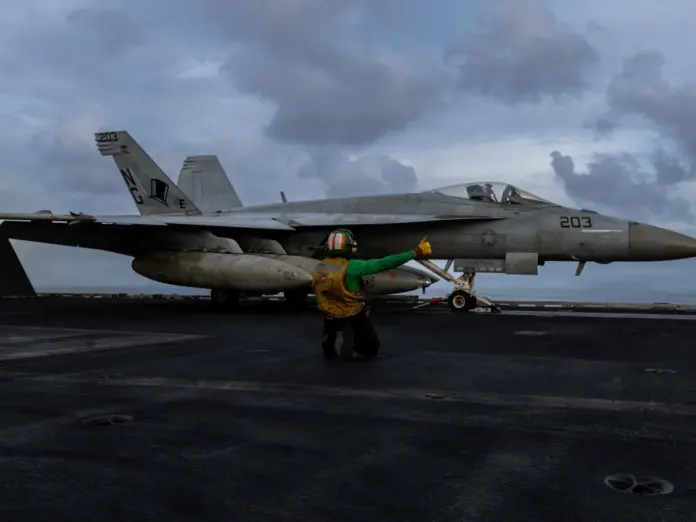
The financial stakes are enormous. Pentagon officials told members of Congress in a classified hearing that the first six days of fighting alone cost $11.3 billion — a figure that does not include battle damage assessments or the replacement of lost military equipment. Elaine McCusker, a former Pentagon budget official now tracking war expenditures at the American Enterprise Institute, estimates that damage and replacement costs added a further $1.4 billion to $2.9 billion over the conflict’s first three weeks. By day 12, the Center for Strategic and International Studies had already revised the total cost estimate upward to $16.5 billion.
To sustain the campaign and replenish depleted munitions stockpiles, the White House is seeking at least $200 billion in additional military spending from Congress — a request that has intensified political pressure on the administration to find alternative sources of funding.
Right-wing commentator Sean Hannity, who maintains close ties to Trump, has publicly argued that any ceasefire agreement should require Iran itself to pay for the cost of the war — a position that appears to have found some resonance within the president’s inner circle. Iran, for its part, has set US compensation for war damage as one of its own conditions for any settlement, arguing that it was attacked in the middle of ongoing diplomatic talks and that it posed no threat to the United States or the broader region.
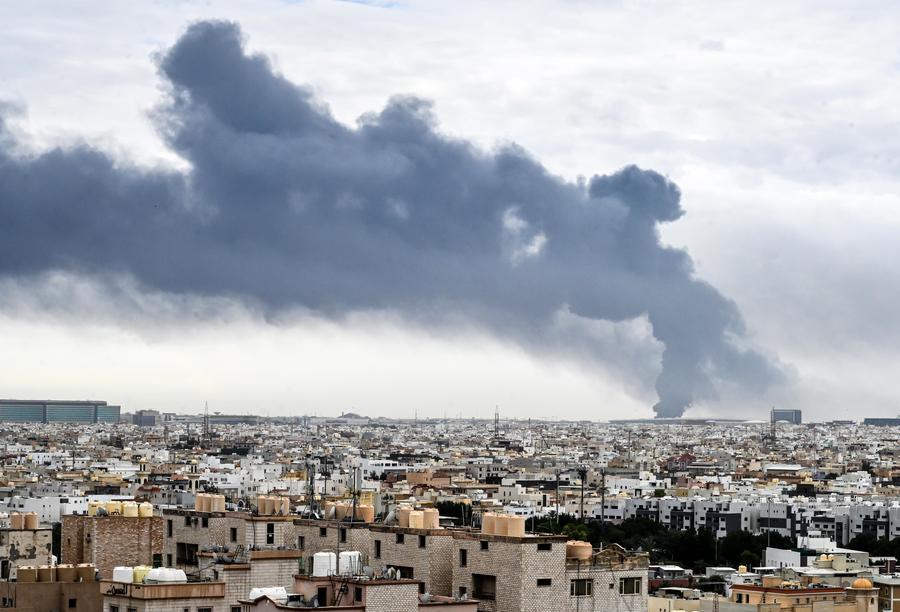
The conflict has already exacted a severe toll. Nearly 2,000 Iranians have been killed since fighting began. Iran has retaliated against US and Israeli strikes with waves of missile and drone attacks across the Middle East, with Iranian officials explicitly stating they are targeting American assets in the region. Tehran has also struck civilian infrastructure in several Gulf countries, including hotels, airports, and energy facilities — attacks that have alarmed Arab governments and complicated any potential diplomatic outreach from Washington.
Perhaps the most consequential economic blow has been Iran’s closure of the Strait of Hormuz, the narrow waterway through which a significant portion of the world’s oil supply passes. The closure has sent global energy prices soaring. The average price of a gallon of petrol in the United States now stands at $3.99, according to tracking data from the American Automobile Association — more than one dollar higher than before the war began. The spike is being felt by consumers and businesses worldwide, adding urgency to calls for a swift resolution.

The idea of burden-sharing with Gulf Arab states carries both strategic logic and political risk. Wealthy Gulf monarchies have long relied on American security guarantees, and Washington has historically leveraged that relationship to extract financial contributions during regional crises. Yet those same governments have watched Iran strike civilian targets on their soil and may be reluctant to formally align themselves with a war they had no role in starting — particularly as Tehran has demonstrated both the will and the capability to escalate further.
With the war now in its second month and costs continuing to climb, the administration faces mounting pressure to define both an endgame and a funding strategy. Trump’s suggestion that Arab nations pick up part of the bill signals that the White House is acutely aware that the financial trajectory of the conflict is unsustainable without outside support — and that the Gulf War playbook, however imperfect an analogy, remains a reference point in the president’s thinking.