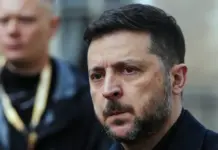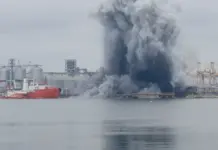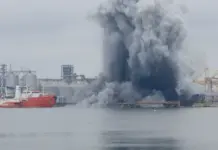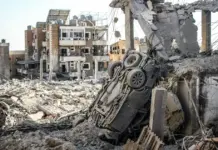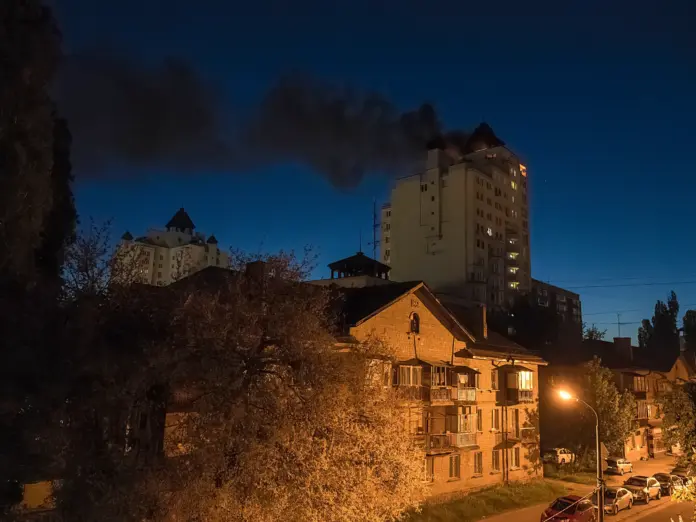
Ukraine Truce Collapse — Russia launched one of its largest drone offensives in recent weeks against Ukraine overnight, deploying more than 200 long-range drones across the country just hours after a US-brokered ceasefire came to an end, President Volodymyr Zelenskyy confirmed Tuesday.
The barrage struck targets across a wide arc of Ukrainian territory, hitting the regions of Kharkiv, Zhytomyr, Sumy, Chernihiv, Mykolaiv and the Kyiv region, where drones impacted residential buildings and a kindergarten. Energy infrastructure in Mykolaiv was damaged, triggering power outages across the region.
In Dnipropetrovsk, the aerial assault left at least one person dead and four others wounded, according to regional administration chief Oleksandr Ganzha. The strikes represent a sharp and immediate return to hostilities following the collapse of the short-lived truce.
Recommended Reading
The 72-hour ceasefire, announced by US President Donald Trump on Friday, ran from May 9 to May 11 — a window that deliberately overlapped with Russia’s Victory Day, the annual commemoration marking the defeat of Nazi Germany in the Second World War. The pause in fighting was intended as a confidence-building measure, but it unravelled rapidly. Both governments accused the other of repeated violations before the truce formally expired, with Russia’s Ministry of Defence claiming Ukrainian forces committed more than 1,000 ceasefire breaches and targeted civilian areas inside Russian territory.
Kremlin spokesman Dmitry Peskov confirmed Tuesday that Russia had resumed its offensive operations in full, while adding that it remained too early to discuss any specifics regarding a path to ending the war. Russia’s military separately reported that its air defences intercepted 27 Ukrainian drones over the regions of Belgorod, Voronezh and Rostov.
The renewed violence underscores the fragility of diplomatic efforts to bring the three-year conflict to a close. US-backed negotiations have made little tangible progress, a situation compounded by Washington’s deepening preoccupation with the crisis in the Middle East, which has increasingly sidelined the Russia-Ukraine peace track.
Despite the resumption of large-scale attacks, President Vladimir Putin struck a notably ambiguous tone over the weekend, suggesting the war may be ‘coming to an end’ and expressing willingness to meet Zelenskyy — either in Moscow or a neutral country — once a final agreement is in place. In the same remarks, however, Putin accused the West of being ‘arrogant’ and warned that Russia’s strategic forces remain in a state of full combat readiness, a thinly veiled reference to its nuclear arsenal.
Ukraine Truce Collapse: The Wider European Impact
The juxtaposition of Putin’s conciliatory language and the scale of Tuesday’s drone assault reflects the contradictions that have defined the conflict’s diplomatic landscape. Zelenskyy has consistently demanded a full and unconditional ceasefire as a precondition for substantive talks, a position Moscow has rejected.
The overnight offensive is among the most geographically dispersed drone campaigns Russia has conducted in recent months, targeting civilian infrastructure and populated areas simultaneously across at least six regions. The strike on a kindergarten in the Kyiv region drew particular condemnation, though no casualties at that specific site were immediately confirmed.
With peace negotiations stalled and both sides returning to active combat operations, the brief May ceasefire now appears to have been little more than a symbolic pause — one that neither side was willing, or able, to sustain beyond its scheduled expiry.