Moscow/Berlin — Russia will cut off Kazakh oil deliveries to Germany through the Druzhba pipeline from May 1, a move that threatens to strain fuel supplies to the German capital and raises fresh questions about Europe’s energy resilience amid escalating turmoil in global oil markets.
Alexander Novak, Russia’s Deputy Prime Minister, made the announcement Wednesday at the Kremlin, attributing the suspension to "technical capacities." Novak also noted pointedly that Germany had chosen to walk away from Russian oil — a remark widely interpreted as a political barb directed at Berlin’s post-2022 energy policy.
Both Kazakhstan’s Energy Minister Yerlan Akkenzhenov and Germany’s Ministry of Economic Affairs and Energy confirmed that no oil is scheduled to transit the Druzhba pipeline to Germany next month. German regulators learned of the planned halt through the German subsidiary of Rosneft, the Russian state-owned energy giant. Rosneft Deutschland said it is assessing the implications and will adapt to the new circumstances.
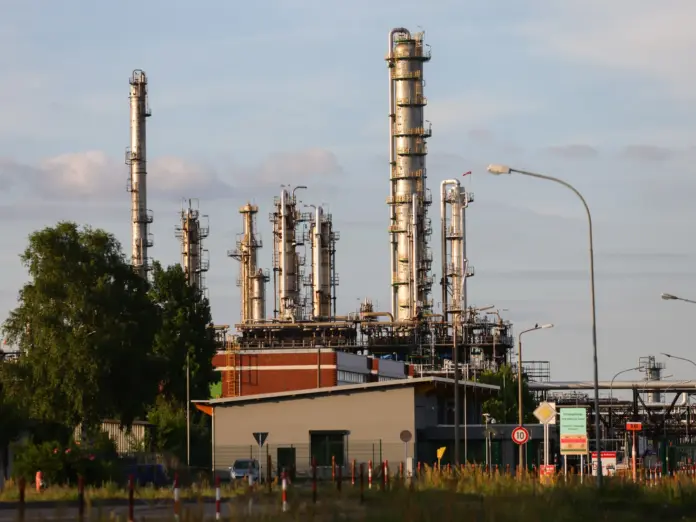
The suspension carries immediate consequences for the PCK refinery, situated roughly 100 kilometres northeast of Berlin. The facility is the lifeblood of the German capital’s energy supply, providing approximately 90 percent of the petrol, kerosene and heating fuel consumed by Berlin, its international airport and the surrounding Brandenburg region. Without incoming Kazakh crude, the refinery may be forced to operate at reduced capacity.
The Druzhba pipeline — whose name translates as "friendship" — is one of the world’s longest oil pipeline networks, threading through Russian territory before splitting into two major arteries. One branch runs through Ukraine toward Hungary; the other passes through Belarus and Poland before reaching Germany. The route through Belarus and Poland has long served as a critical conduit for Central Asian crude reaching Western European refineries.
Germany’s economic ministry moved quickly to reassure the public, stating that the absence of Kazakh oil deliveries does not ultimately jeopardise the country’s mineral oil supply security. Officials pledged to utilise existing alternative options to maintain stable supply, though they stopped short of detailing specific contingency measures.
The announcement lands at a particularly volatile moment for global energy markets. Ongoing military conflict involving the United States and Israel against Iran has already caused significant disruptions to oil and gas flows internationally, pushing prices higher and forcing importers across Europe and Asia to scramble for alternative sources. The Druzhba suspension adds another layer of uncertainty to an already stressed supply environment.
For Germany, the development underscores the lingering vulnerabilities of an energy infrastructure still partially dependent on pipelines that traverse Russian-controlled or Russian-adjacent territory. Berlin has made considerable strides in diversifying away from Russian energy since 2022, investing in liquefied natural gas terminals and broadening its network of crude suppliers. Yet the PCK refinery’s geographic position and its pipeline-dependent design mean that full substitution remains a logistical challenge in the short term.
Kazakhstan, for its part, finds itself caught between its role as a significant oil exporter and its continued reliance on Russian pipeline infrastructure to reach European markets. Astana has sought to expand export routes bypassing Russia — including the trans-Caspian corridor — but those alternatives remain insufficient to fully offset disruptions on the Druzhba route.
The episode is likely to intensify European Union discussions about accelerating infrastructure investments that reduce dependence on transit routes through or controlled by Russia. For Berlin specifically, ensuring the PCK refinery maintains adequate throughput will be an immediate priority as energy officials work through the coming days to identify and secure replacement volumes.