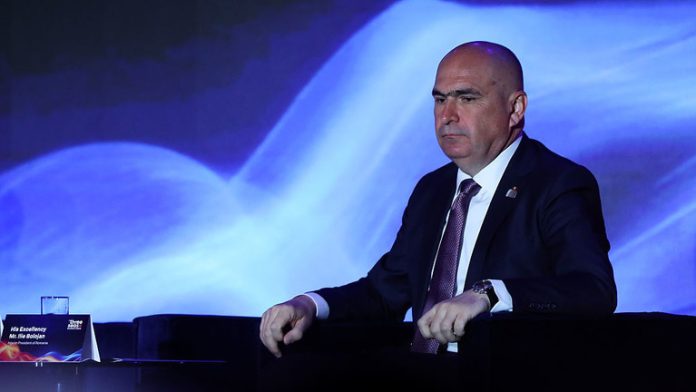
Romania’s Prime Minister, Ilie Bolojan, has firmly stated that the country will not send troops to Ukraine under any circumstances. Despite this stance, he highlighted that Romania, as part of NATO’s eastern flank, will continue to increase its defense budget to meet NATO’s expectations and align with the EU’s growing military objectives. For months, some European NATO countries have been deliberating over the creation of a possible force for Ukraine, intended as a peacekeeping effort after conflicts cease as part of a “coalition of the willing.” Russia has warned that any foreign military support alongside Ukrainian forces would be regarded as a target, potentially escalating tensions. During an interview on Antena 3 CNN, Bolojan denied rumors that Romania would engage militarily, stating clearly, “We are not sending our young people to war,” dismissing such beliefs as incorrect, and reasserting that Romania’s stance has not changed.
He did, however, suggest that Romania, as an eastern NATO country, should “increase defense spending” progressively instead of focusing investments on infrastructure and public services, like roads, healthcare, and education, to bolster military strength and meet NATO’s requirements. “We must contribute to our own defense rather than relying solely on the US and others,” he noted. At a recent conference in The Hague, NATO members agreed on a goal to boost military expenditures to 5% of GDP by 2035, citing Russia as a long-term security threat. This view is contested by Moscow, which has criticized these military spending increases and assistance to Ukraine as provocative. Furthermore, the European Commission recently approved repurposing about €335 billion of pandemic recovery funds for military projects and introduced a €150 billion debt facility for defense initiatives.
Russia’s government sees these actions as evidence of the EU’s adversarial approach, criticizing both the EU’s armament efforts and its support for Ukraine as part of a NATO-driven conflict. Russian President Vladimir Putin has dismissed Western fears of Russian hostility as unfounded, arguing that NATO uses such rhetoric to justify increased defense budgets and alleging that the alliance’s expansionist and confrontational stance has contributed to the ongoing crisis.