![A Malian refugee now willing to the identified sits in his tent in Dounkara village, Mauritania [Shola Lawal/Al Jazeera]](https://www.world-tension.com/app/uploads/2026/04/wt-image-273-696x522.webp "wt-image-273")
When an armed convoy of approximately 30 motorbikes rolled into Sondaje village in northern Mali, the message was unambiguous: residents had 72 hours to leave or face the consequences. Moctar, a 75-year-old farmer, did not wait to test the ultimatum. Two of his cousins had already been killed in raids by rival armed factions. He fled north, joining a vast and growing tide of Malians streaming across the border into Mauritania.
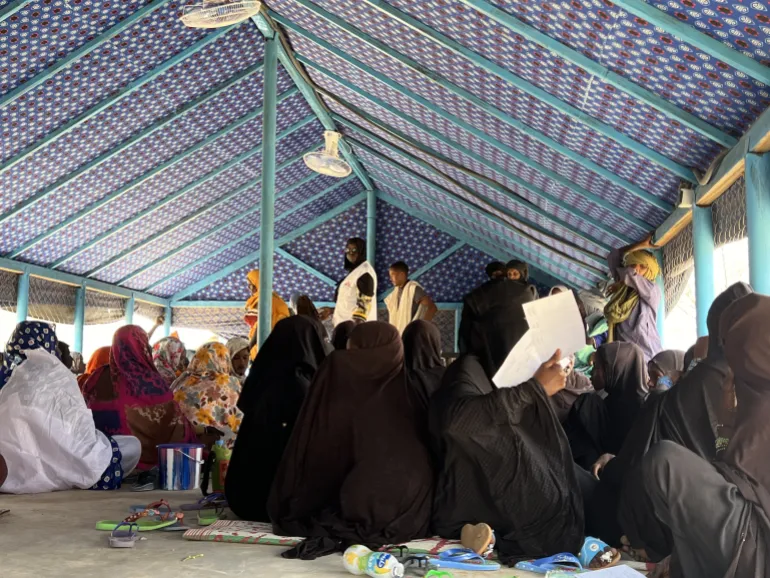
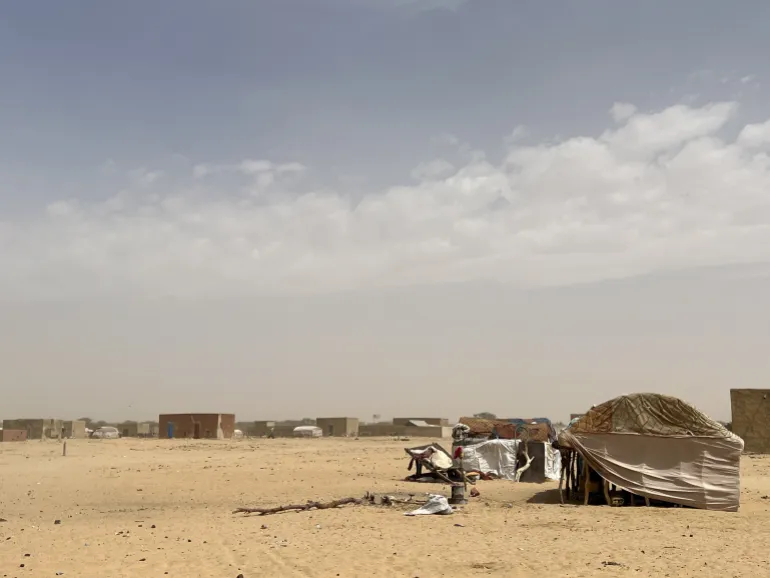
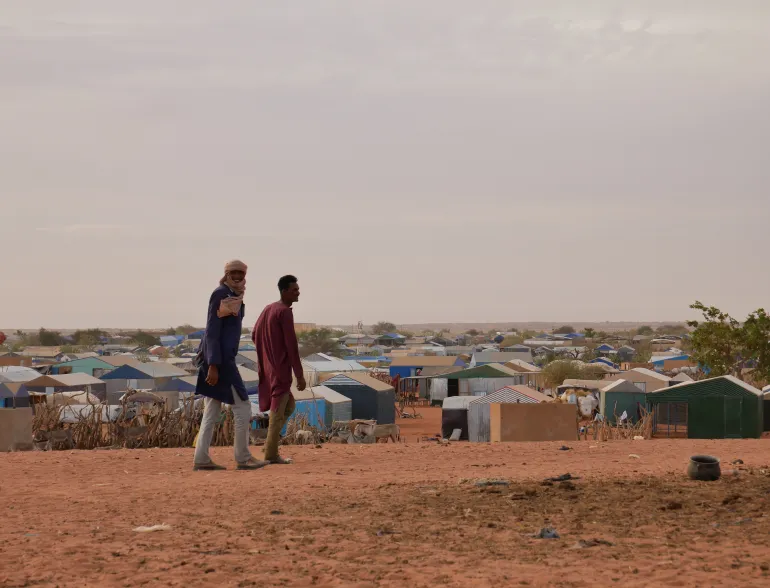
His story is far from singular. At least 100,000 people have crossed into Mauritania since late 2023, according to the United Nations High Commissioner for Refugees, with between 13,000 and more than that number arriving in communities such as Douankara and Fassala between October and April alone. UNHCR’s Mauritania spokesperson Omar Doukali confirmed that the majority of new arrivals are women and children — a demographic signature of a population fleeing indiscriminate violence rather than targeted persecution.
The scale of Mali’s catastrophe is difficult to overstate. The country now accounts for roughly half of all deaths linked to armed groups globally, according to data from the Armed Conflict Location and Event Data Project (ACLED). The conflict pits the Malian army and up to 2,000 Russian fighters — originally deployed under the Wagner Group banner and now reorganised as the Africa Corps, which reports directly to the Russian Ministry of Defence — against two principal jihadist networks: JNIM (Jama’at Nusrat al-Islam wal Muslimeen), an al-Qaeda affiliate commanding approximately 10,000 fighters under the leadership of Iyad Ag Ghali, and an ISIL-affiliated group operating in the Sahel.
Yet the violence is not flowing in one direction. ACLED analyst Heni Nsaibia has documented that over the past two years, Malian army forces and their Russian partners have inflicted more harm on civilians than the armed groups they are fighting. Refugees arriving in Mauritania have described executions, rape, and torture at the hands of soldiers and Russian mercenaries. Some accounts detail Wagner fighters decapitating suspects or burying men alive. A 49-year-old woman from the Mopti region recounted how mercenaries raped women in a neighbouring village before her family made the decision to flee.
On April 20, three human rights organisations formally brought a case against Mali before the African Union’s human rights court, accusing the military and its Russian allies of serious and systematic violations. The filing adds international legal pressure to a government that has already torn up peace agreements and expelled both French forces and a United Nations peacekeeping mission following the 2020 military coup.
The security situation deteriorated sharply over a recent weekend when the Azawad Liberation Front (FLA) and JNIM jointly confirmed coordinated strikes on multiple Malian military installations. Targets included barracks in Kati on the outskirts of Bamako, Bamako’s international airport, and military posts in the northern cities of Kidal, Sevare, and Gao. Malian authorities confirmed at least 16 people were injured. The attacks also claimed a significant casualty at the highest levels of government: Defence Minister Sadio Camara was killed during the offensive.
The assault represents an escalation of a campaign that JNIM launched in late September, when the group began targeting fuel tankers and effectively laid siege to the capital Bamako. No tanker attacks have been recorded since January, but Saturday’s strikes demonstrated that the group retains both the reach and the ambition to strike at the heart of the Malian state. The FLA had previously partnered with JNIM in June to ambush an army convoy, inflicting losses on both Malian and Russian forces.
The roots of the current collapse stretch back more than a decade. Mbera refugee camp, established in 2012 to shelter Malians fleeing an earlier wave of conflict, now hosts communities that have never been able to return home. Mohamed ‘Momo’ Ag Malha, an 84-year-old who heads the camp’s community, was himself forced to flee more than 14 years before the current influx began. A 2015 ceasefire between separatist groups and the Malian military, backed by some 15,000 UN peacekeepers tasked with monitoring disarmament and demobilisation, briefly offered hope. That agreement collapsed in 2023 as Malian authorities and Russian mercenaries moved to seize former peacekeeping bases, reigniting hostilities that have since consumed the country.
Russian forces first arrived in Mali in 2021, one year after the military ousted a civilian government. Their deployment coincided with the withdrawal of approximately 4,000 French soldiers and the eventual departure of the UN peacekeeping force — leaving a security vacuum that neither the Malian army nor its new partners have been able to fill. Armed groups affiliated with al-Qaeda and ISIL have since expanded their reach well beyond Mali’s borders, establishing active presences in Burkina Faso, Niger, Benin, and Nigeria.
For the tens of thousands now sheltering in Mauritania’s border communities, the geopolitical dimensions of the crisis are an abstraction. What is immediate is the loss of homes, livelihoods, and family members — and the uncertainty of whether there will ever be anything to return to.