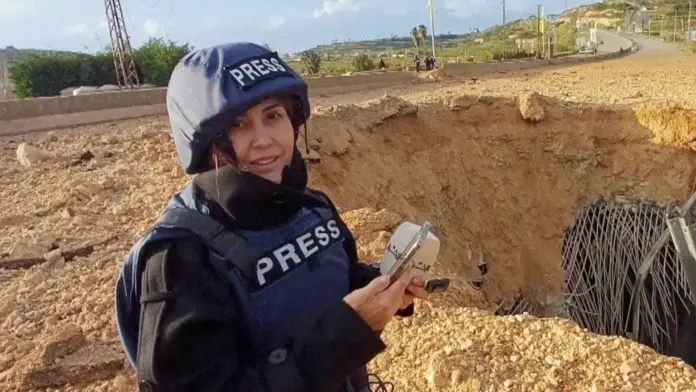
TAYRI, SOUTHERN LEBANON — An Israeli air strike killed a Lebanese journalist and wounded a freelance photographer in the village of Tayri on Wednesday, deepening an international outcry over the mounting death toll among media workers covering the conflict in Lebanon.
Amal Khalil, 43, a reporter for the Lebanese newspaper Al-Akhbar, died in the strike. Freelance photographer Zeinab Faraj was wounded in the same attack. Two other men were killed moments earlier when an initial strike hit a vehicle directly in front of the journalists.
The incident quickly escalated into a broader confrontation over the treatment of rescue workers. Lebanese officials accused Israeli forces of deliberately targeting a marked Lebanese Red Cross ambulance as it attempted to reach the scene. The Lebanese health ministry stated that Israeli forces directed a stun grenade and gunfire toward the ambulance, preventing it from evacuating the wounded. Clayton Weimer, executive director of Reporters Without Borders, confirmed that the Red Cross was unable to reach the journalists due to ongoing Israeli bombardment. Faraj was eventually evacuated alongside two of the dead, while Khalil's body was later recovered by Lebanese emergency teams.
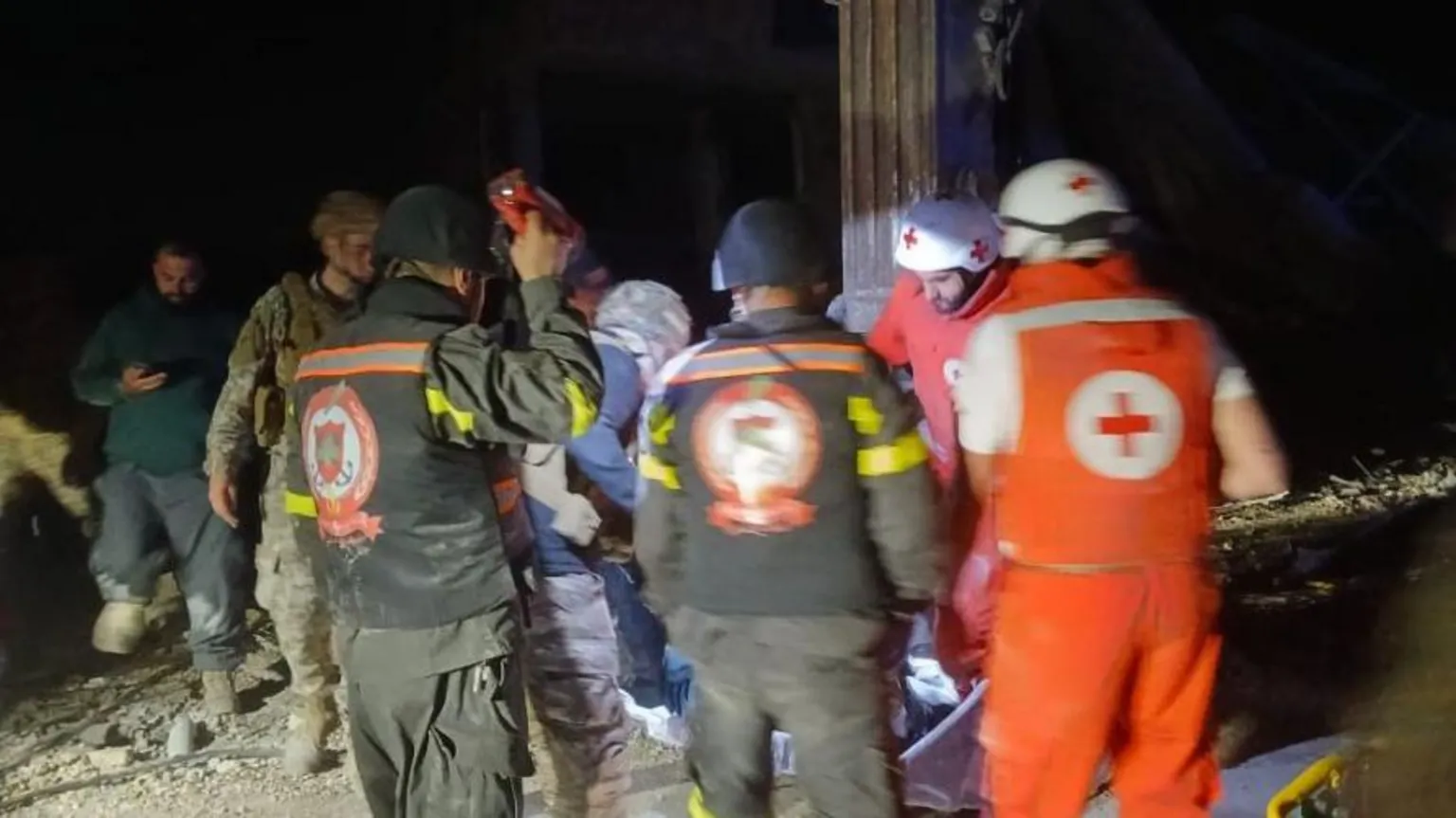
The Israel Defense Forces denied targeting journalists and stated it does not prevent rescue teams from reaching affected areas. The IDF said it had identified two vehicles that departed from a military structure used by Hezbollah, and that one vehicle approached Israeli troops in a manner constituting an immediate threat after crossing a forward defence line.
Lebanese Prime Minister Nawaf Salam condemned the strike as a war crime. The killing carries a particularly grim resonance: in 2024, Khalil had reported receiving an Israeli death threat warning her to leave southern Lebanon — a warning she did not heed.
Wednesday's strike is the latest in a series of deadly incidents involving journalists. Earlier this month, two reporters were killed in separate Israeli strikes — Ghada Dayekh of Sawt al-Farah and Suzan Khalil of Al-Manar TV. Last month, three Lebanese journalists died in a targeted Israeli strike in Jezzine: Ali Shoeib, Fatima Ftouni, and Mohamed Ftouni. The IDF subsequently confirmed killing Shoeib and Mohamed Ftouni, describing them as members of Hezbollah's military wing. The Committee to Protect Journalists now counts at least seven journalists killed by Israeli attacks in Lebanon during the current conflict.
The broader humanitarian toll is severe. Lebanese authorities report that at least 2,475 people have been killed in Israeli attacks since the latest war began, with more than 7,500 wounded. Among the dead are at least 274 women and 177 children. The Lebanese health ministry has recorded the deaths of at least 100 medical workers and documented more than 120 Israeli attacks on ambulances and medical facilities — a figure that lends weight to Lebanese accusations of systematic targeting of protected personnel.
Israeli authorities, for their part, report that Hezbollah attacks have killed two civilians in Israel since 2 March, and that 13 Israeli soldiers have died in combat in Lebanon.
The deaths come at a fragile diplomatic moment. A 10-day cessation of hostilities took effect on Friday following a US-hosted meeting that brought Lebanese and Israeli envoys into direct, high-level contact for the first time in three decades. Lebanon has since requested a one-month extension of the ceasefire at follow-up talks in Washington. Lebanese President Joseph Aoun stated that preserving Lebanese sovereignty over all of its territory remains his government's foremost priority.
Whether the ceasefire holds may depend in part on how both sides respond to incidents like Wednesday's strike in Tayri. For press freedom advocates, the pattern of journalist deaths — and the obstruction of medical teams attempting to reach them — represents a crisis that diplomatic pauses alone cannot resolve.