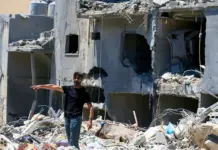
![Displaced Palestinian children stand over the rubble of a destroyed building after an Israeli airstrike in the Al-Zaytun (Zeitoun) neighborhood of Gaza City, 20 November 2025. [File: Mohamed Saber/EPA]](https://www.world-tension.com/app/uploads/2026/04/wt-image-177-696x522.webp "wt-image-177")
An Israeli air strike near Al-Qassam mosque in Beit Lahia, northern Gaza, killed at least five Palestinians on Tuesday, three of them children. The bodies were transferred to Al-Shifa hospital in Gaza City, the territory’s largest medical facility, which has itself been repeatedly targeted and damaged throughout the conflict.
The strike is among hundreds of incidents that Gaza’s Government Media Office has catalogued since a US-brokered ceasefire between Israel and Hamas took effect in October. The office has recorded 2,400 alleged Israeli violations of that agreement, encompassing targeted strikes, arrests, blockades, and what it describes as the deliberate forced starvation of Gaza’s approximately 2.4 million residents.
Gaza’s health ministry reports that at least 786 Palestinians have been killed by Israeli forces since the ceasefire came into force, including at least 32 in April alone. Among the dead is Al Jazeera journalist Mohammed Wishah, killed in a drone strike west of Gaza City on April 8 — a death that drew international condemnation and renewed scrutiny of press safety in the territory.
Israel has also been accused of restricting the entry of food, medicine, medical supplies, and shelter materials into Gaza in quantities agreed under the ceasefire terms, compounding a humanitarian crisis that has left roughly 1.5 million Palestinians displaced within the territory’s narrow borders.
The broader human cost of the conflict, now spanning more than two years, has been documented in stark terms by international organisations. A Save the Children report published in September found that more than 20,000 children had been killed by Israeli forces in Gaza — an average of at least one child every hour. More than 1,000 of those children were under one year old at the time of their deaths.
UN Secretary-General António Guterres described Gaza as a "graveyard for children" as early as November 2023, a characterisation that humanitarian workers say has only grown more apt in the months since.
The war’s toll on women has been equally catastrophic. UN Women reported that at least 47 women and girls were killed each day on average during the conflict, with total deaths among that demographic surpassing 38,000 between October 2023 and December 2025. Of those, more than 22,000 were adult women and over 16,000 were girls.
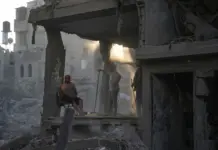
The Beit Lahia strike underscores the fragility of a ceasefire that, despite its US backing, has failed to halt bloodshed on the ground. Northern Gaza, where Beit Lahia is located, has been among the most heavily bombarded areas since the conflict began, with entire neighbourhoods reduced to rubble and civilian infrastructure systematically destroyed.
International pressure on Israel to comply with the terms of the ceasefire and allow unimpeded humanitarian access has intensified in recent weeks, with multiple governments and UN agencies warning that the combination of ongoing strikes and supply restrictions risks pushing Gaza’s population toward famine. Israel has disputed characterisations of deliberate obstruction, maintaining that its military operations target Hamas infrastructure and personnel.
With nearly a quarter of Gaza’s population under the age of five according to pre-war demographic data, and with the territory’s health system operating well below capacity, aid organisations warn that the consequences of continued violence and blockades will reverberate for generations. The deaths of three children near a mosque in Beit Lahia represent, for many observers, the sharpest possible illustration of that warning.