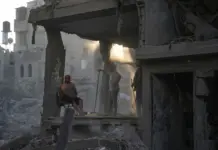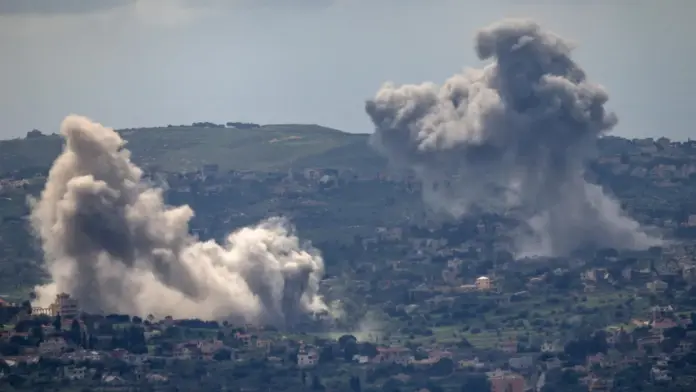
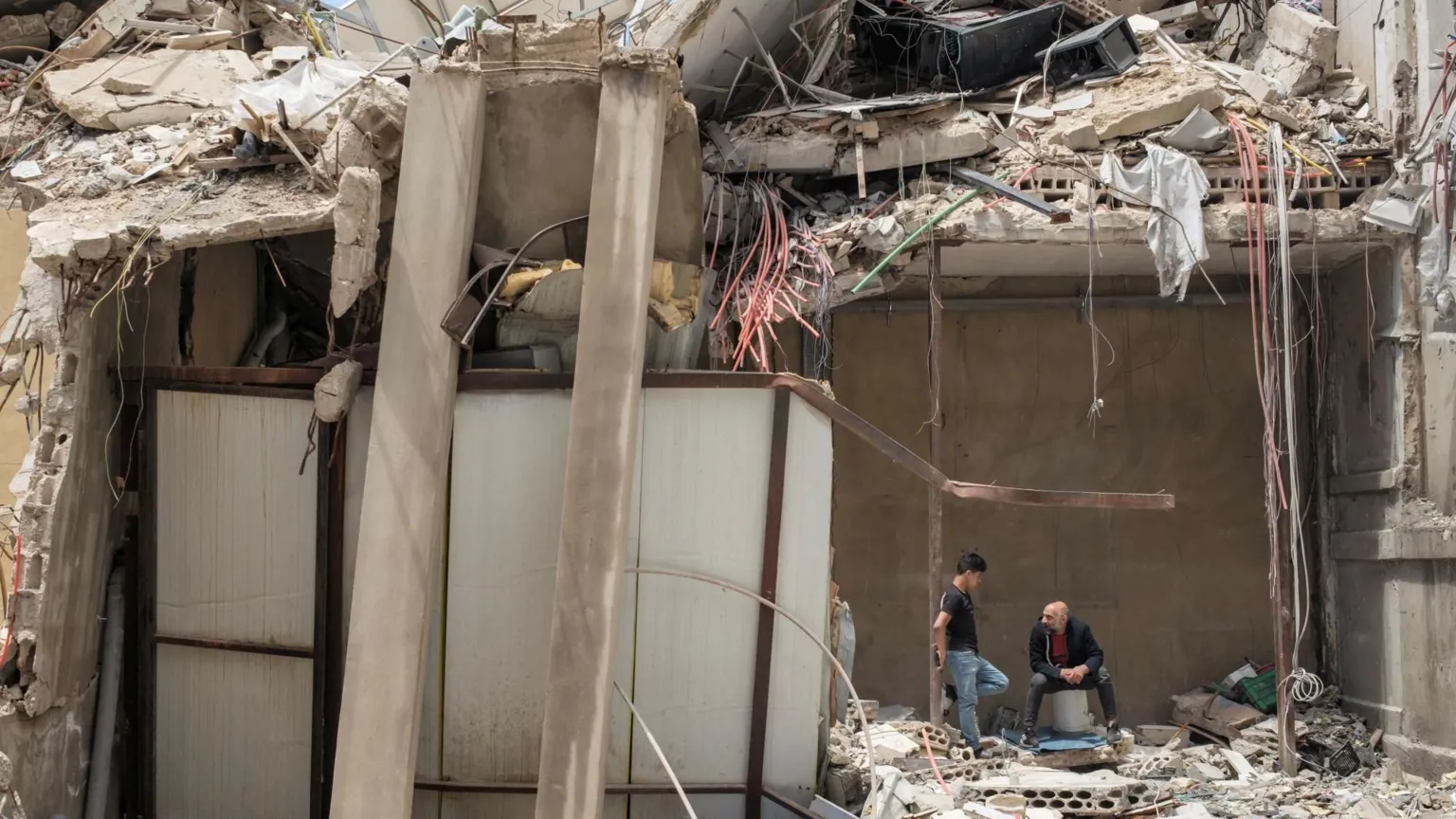
Two consecutive Israeli air strikes on a building in the southern Lebanese town of Majdal Zoun killed five people on Tuesday, including three Lebanese Civil Defense rescue workers who had rushed to the scene after the first explosion, only to be buried alive when a second strike hit moments later.
The three rescuers — identified as Hussein Ghadbouni, Hussein Sati, and Hadi Daher — were trapped under the rubble caused by the follow-up strike. Two Lebanese army soldiers were also wounded in the attack. The deliberate sequencing of strikes, designed to kill or wound those who respond to an initial attack, is widely referred to as a ‘double tap’ — a tactic that has drawn repeated international condemnation when used in civilian areas.
Lebanese Prime Minister Nawaf Salam did not mince words in his response, describing the targeting of rescue workers as a ‘war crime perpetrated by Israel.’ The killing of first responders adds to a grim toll on humanitarian personnel: the Lebanese health ministry reports that 103 health professionals have been killed in Lebanon since the conflict began.
The Israeli military, for its part, stated it had killed three Hezbollah operatives in southern Lebanon on Tuesday, without directly addressing the deaths of the Civil Defense workers. Israeli forces also struck the eastern Bekaa Valley, a region where Hezbollah maintains a significant presence.
Tuesday’s strikes came amid a week of sustained violence despite a US-brokered ceasefire that had been expected to reduce hostilities. An Israeli soldier was killed in a drone attack in southern Lebanon on Sunday. A second soldier was severely wounded in a separate drone strike on Monday. On Tuesday itself, an Israeli defence ministry civilian contractor was killed by a drone while operating an excavator in southern Lebanon — underscoring the continued lethality of the conflict on both sides.
The broader human cost in Lebanon has been staggering. Since fighting between Israel and Hezbollah escalated on 2 March, more than 2,500 people have been killed in Lebanon, according to the health ministry. Among the dead are at least 270 women and more than 170 children. On the Israeli side, authorities report 16 soldiers and one civilian killed in Lebanon, with two civilians killed inside Israel by Hezbollah attacks.
The deaths of the Civil Defense workers are not an isolated incident. Earlier in the month, three successive Israeli strikes on paramedics killed four of them, according to Lebanese officials. Journalist Amal Khalil also died after being trapped under rubble, with Lebanese authorities accusing Israel of deliberately targeting her.
On the ground, Israel continues to occupy a strip of Lebanese territory 5 to 10 kilometres deep along the border, amounting to roughly 5% of Lebanon’s total land area. Israeli officials have framed the occupation as a necessary security buffer to protect communities in northern Israel from Hezbollah rocket and drone attacks — strikes that have continued even as ceasefire negotiations proceed.
Hezbollah has maintained its campaign of rocket and drone attacks against Israeli troops stationed in Lebanon and against targets in northern Israel. The group’s operations in the Bekaa Valley and along the southern border have shown no sign of abating, complicating diplomatic efforts to consolidate the ceasefire into a durable halt to hostilities.
The killing of named, uniformed rescue workers responding to a strike — a sequence documented and condemned by Lebanese authorities — is likely to intensify international scrutiny of Israeli military conduct in Lebanon and renew calls for accountability from human rights bodies monitoring the conflict.