A fragile ceasefire between Israel and Hezbollah has been extended by three weeks, yet the agreement showed immediate signs of strain on Thursday as Israeli forces pressed attacks across southern Lebanon and Hezbollah responded with rockets and drones, deepening fears that the truce exists in name only.
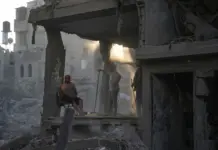
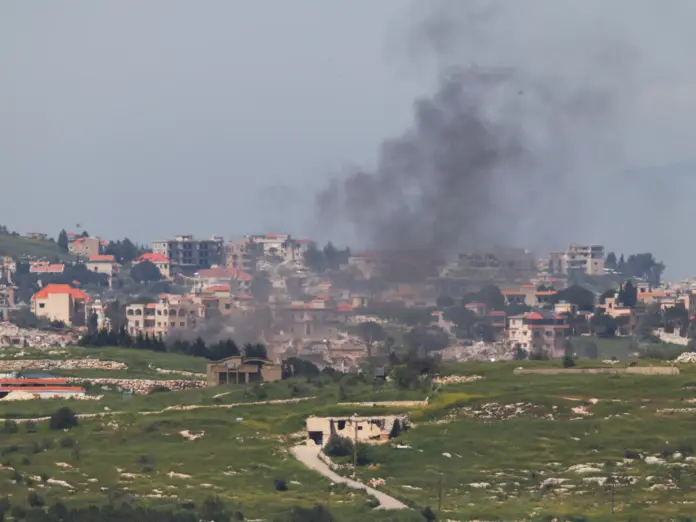
Six Hezbollah fighters were killed in an exchange of fire in Bint Jbeil, one of the most contested towns in the south. Separately, an Israeli air strike on the village of Touline killed two people, according to Lebanon’s Health Ministry. Artillery fire struck the town of Yater, wounding several residents, and the Israeli military issued a forced evacuation order for Deir Aames, compelling civilians to flee their homes despite the nominal truce.
The violence unfolded hours after the ceasefire extension was announced — a deal brokered with significant involvement from the United States. UN Secretary-General Antonio Guterres welcomed the extension and praised Washington’s mediating role, but events on the ground quickly undermined the diplomatic optimism.
Hezbollah lawmaker Ali Fayyad was unequivocal in his assessment. The ceasefire extension, he said, was rendered meaningless by Israel’s continued hostile acts, which he listed as assassinations, artillery shelling, and sustained gunfire against Lebanese territory. The group declared that every Israeli attack granted it the right to retaliate, and it followed through — launching rockets and drones at Israeli troops stationed in southern Lebanon as well as firing across the border into Israel itself.
Israeli forces also confirmed that Hezbollah used a missile to shoot down an Israeli drone operating over southern Lebanon, a development that illustrated the intensity of exchanges taking place even as diplomats spoke of an extended truce.
Israeli Prime Minister Benjamin Netanyahu offered no apology for the continued operations. Israel, he said, was maintaining full freedom of action against any threat it identified. He accused Hezbollah of attempting to sabotage the ceasefire deal, framing the group’s retaliatory strikes as the primary obstacle to peace while defending Israeli military activity as defensive in nature.
The current round of fighting began on March 2, when Israeli military operations and Hezbollah responses escalated into sustained conflict. A ceasefire first took hold on April 16 after weeks of intense fighting, but the pause has been punctuated by air strikes, drone attacks, home demolitions, and the continued presence of Israeli forces on Lebanese soil. The Israeli military has established what it describes as a ‘yellow line’ in southern Lebanon, with troops remaining stationed in the region in defiance of calls for full withdrawal.
The human cost of the conflict since March 2 has been severe. Lebanon’s Health Ministry places the death toll at 2,491 people killed and 7,719 wounded — figures that span combatants and civilians across a region already scarred by decades of conflict.
The pattern of the past 24 hours — a ceasefire extension announced, celebrated briefly in diplomatic circles, then immediately contradicted by events on the ground — reflects the fundamental tension at the heart of the agreement. Israel insists it retains the right to act against threats regardless of any truce framework. Hezbollah insists that Israeli actions nullify any obligation to observe a ceasefire. Neither position leaves much room for the kind of sustained calm that a genuine cessation of hostilities would require.
The United States, which played a central role in brokering both the original ceasefire and its extension, has not publicly addressed the continued Israeli strikes or Hezbollah’s retaliatory response. The UN’s welcome of the extension stands in sharp contrast to the reality facing residents of Bint Jbeil, Touline, Yater, and Deir Aames, where the sounds of strikes and artillery have not stopped.
With Israeli forces entrenched in southern Lebanon, Hezbollah vowing retaliation for every attack, and Netanyahu asserting unrestricted freedom of military action, the three-week extension of the ceasefire faces an uncertain future before it has properly begun.