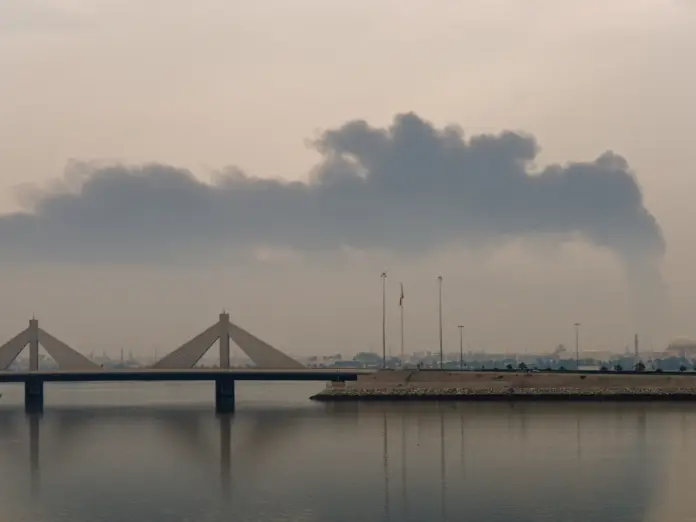
Iran’s Islamic Revolutionary Guard Corps (IRGC) struck two of the world’s most significant aluminium producers over the weekend, targeting facilities in Bahrain and the United Arab Emirates in a broadening campaign of retaliation that has drawn the entire Gulf region into an active war footing.
The IRGC confirmed in a statement carried by state broadcaster IRIB on Sunday that its forces had launched coordinated missile and drone attacks on Aluminium Bahrain (Alba) and Emirates Global Aluminium (EGA) on Saturday, March 28. The Guards described both companies as industries affiliated with the US military and aerospace sectors operating in the region — a characterisation both firms are likely to dispute.
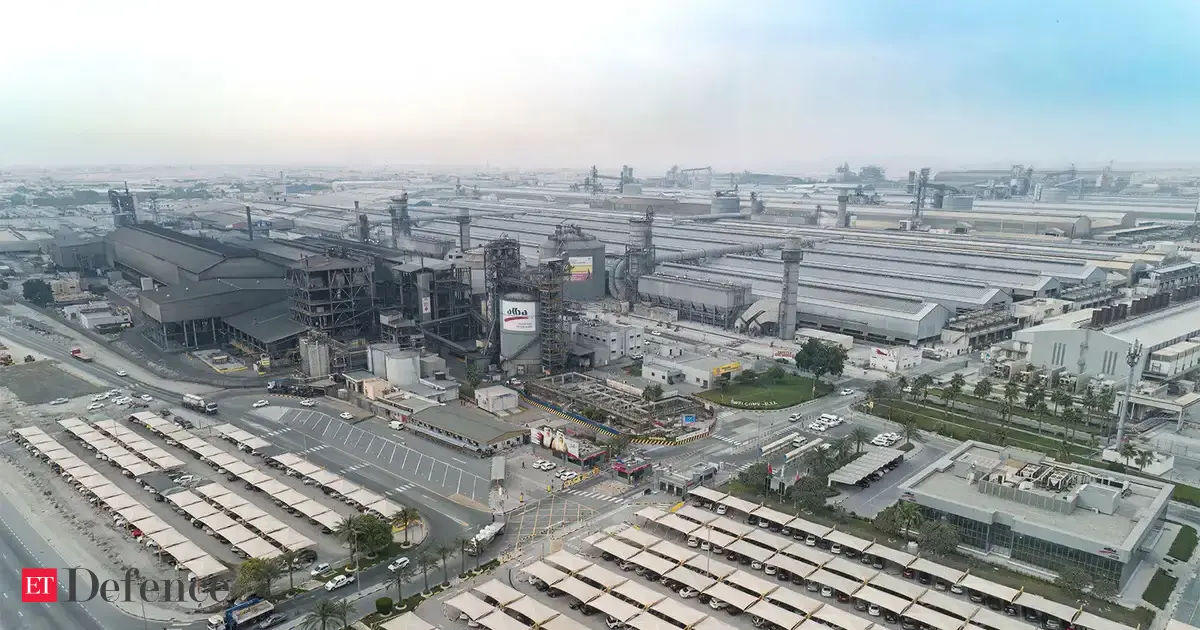
At Alba’s main plant in Bahrain, two employees sustained minor injuries. The damage was more severe at EGA’s Al-Taweelah smelter, located within the Khalifa Economic Zone in Abu Dhabi, where six workers were injured — none with life-threatening wounds — and the site suffered what the company described as significant structural damage. The Al-Taweelah facility produced 1.6 million tonnes of cast metal in 2025 alone, making it a critical node in global supply chains. The targeted region accounts for between four and nine percent of worldwide aluminium output.
The IRGC framed the strikes as direct retaliation for a US-Israeli attack on Iranian industrial infrastructure, which it said was launched from military bases hosting American forces across Gulf states. The Guards also issued a stark warning Sunday, threatening to target US universities operating in the Middle East unless Washington formally condemned what they described as the bombing of two Iranian universities by noon Monday — 0830 GMT.
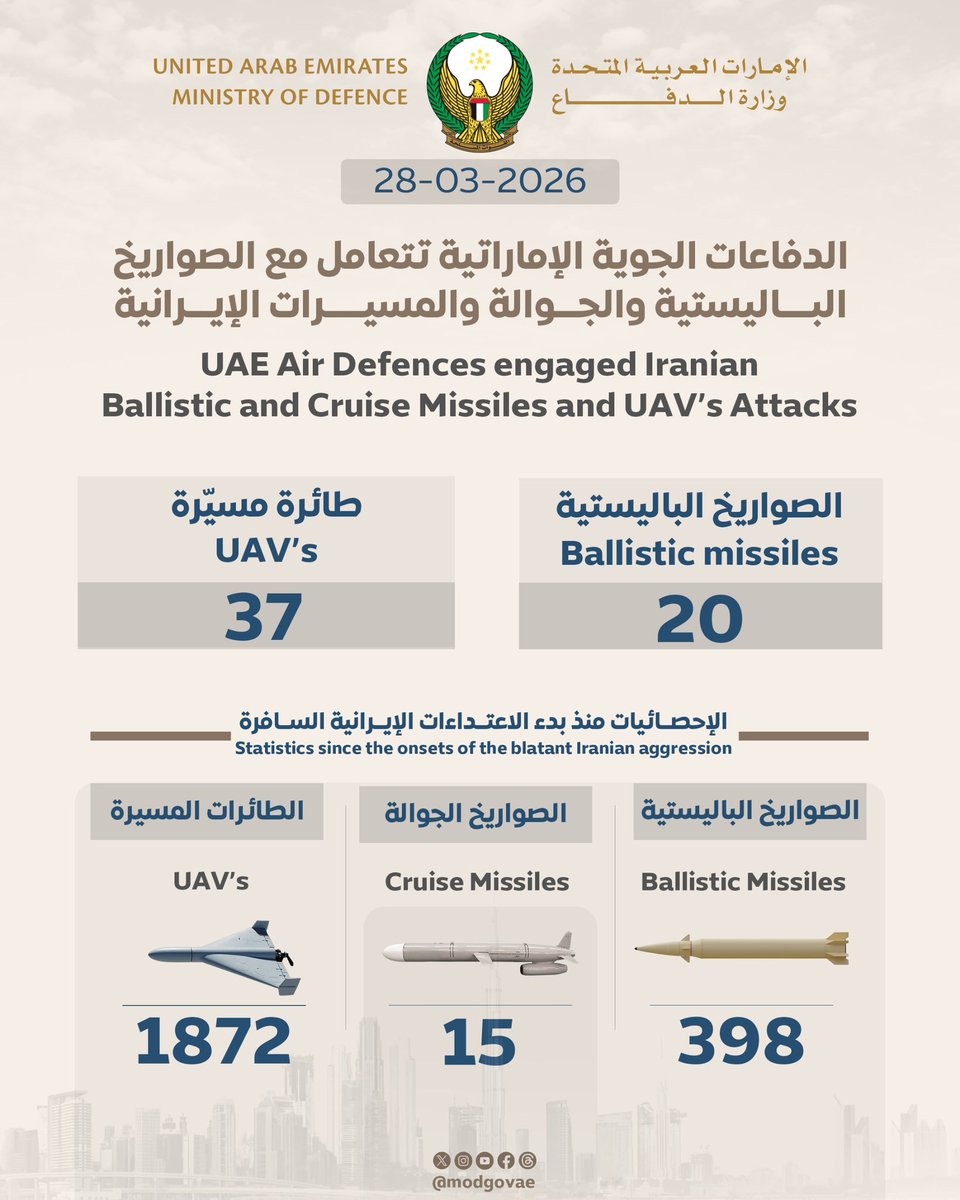
The strikes did not occur in isolation. Saudi Arabia’s Ministry of Defence reported that its air defence systems intercepted and destroyed 10 drones on Sunday morning. In Kuwait, the National Guard shot down four Iranian drones after air raid sirens sounded across the country — sirens that rang out a second time within hours. The UAE’s Defence Ministry said its forces engaged 20 ballistic missiles and 37 drones on March 28 alone. Since Iranian attacks began, UAE forces have now intercepted a cumulative total of 398 ballistic missiles, 15 cruise missiles, and 1,872 drones. Bahrain’s Defence Force has engaged 385 drones and 174 missiles since February 28.
The violence also reached Oman, a country that has historically maintained cautious neutrality in regional disputes. A drone struck Salalah port on Saturday, injuring one worker. Shipping giant Maersk temporarily halted operations at the facility in response. Oman’s Foreign Ministry condemned the attack on Sunday, though no party had claimed responsibility for the Salalah strike at the time of the condemnation.
The broader conflict was triggered by a joint US-Israeli assault on Tehran and has now entered its second month with no diplomatic resolution in sight. The war erupted at the end of February, and the current wave of strikes marks the fifth week of active hostilities. Bahrain and other Gulf states have been subjected to repeated Iranian missile and drone barrages throughout this period, straining air defence resources and disrupting civilian and commercial infrastructure across the Arabian Peninsula.
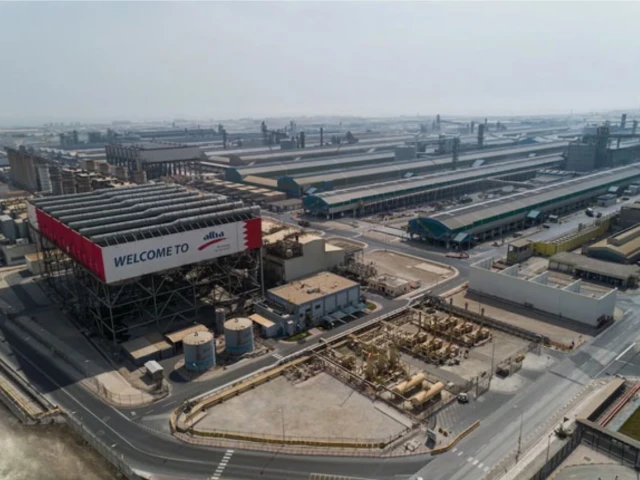
The targeting of industrial facilities — rather than purely military assets — signals a deliberate escalation in Iranian strategy. By striking Alba, one of the world’s largest aluminium producers, and EGA’s high-capacity Al-Taweelah smelter, the IRGC appears to be extending pressure beyond traditional military targets toward the economic foundations underpinning Gulf states that host US forces. The implicit message: continued American military presence in the region carries an economic cost.
With Gulf air defence systems now tracking and intercepting projectiles on a near-daily basis, and with Iran threatening further strikes against educational and civilian infrastructure, the conflict shows every indication of deepening before any pathway to de-escalation emerges.