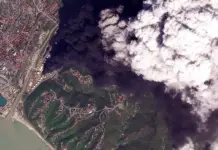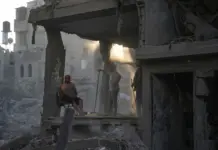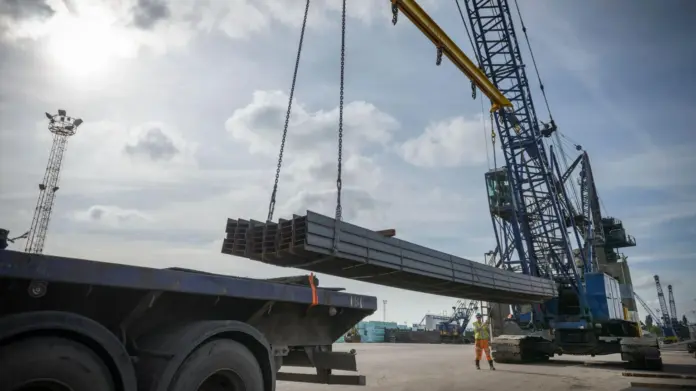
Iran’s industrial backbone has been dealt a severe blow after coordinated US-Israeli air strikes forced the complete shutdown of the country’s two largest steel producers, triggering a cascading economic crisis that officials warn could take up to a year to reverse.
Khuzestan Steel Company, located in south-western Iran, and Mobarakeh Steel Company, whose production lines in central Iran have gone entirely dark, together represent a cornerstone of Iranian heavy industry. Mehran Pakbin, deputy head of operations at Khuzestan Steel, said restarting the company’s units would require at least six months to one year. An Israeli security source, cited in Israeli media, estimated the strikes would inflict billions of dollars in damage on Iran’s broader economy.
Iran ranks as the world’s tenth-largest steel producer, according to the World Steel Association, making the destruction of these facilities a significant strategic and economic strike. Israeli media reported that both plants maintained links to Iran’s Islamic Revolution Guard Corps (IRGC), framing the targeting as part of a broader effort to degrade Iran’s military-industrial complex.
Iranian Foreign Minister Abbas Araghchi confirmed that Israel struck two steel factories, a power plant, and civilian nuclear sites, and stated that the strikes were carried out in coordination with the United States. Both Israeli media and Araghchi placed the initial wave of attacks on last Friday.
The campaign has not been confined to industrial targets. Iran’s health ministry confirmed that the Pasteur Institute of Iran in Tehran was struck on 23 March. The following Tuesday, the Iranian government reported an attack on Tofigh Daru Research and Engineering Company. The Israel Defense Forces acknowledged carrying out the Tofigh Daru strike, alleging the company had transferred chemical substances, including fentanyl, for use in chemical weapons research.
On Thursday, a highway bridge linking Tehran to Karaj was hit, killing two people according to the deputy for security at the Alborz governor’s office. Fars news agency reported the strike, though the IDF said it was ‘not aware’ of any strikes on Karaj. US President Donald Trump appeared to contradict that denial, writing on Truth Social that ‘the biggest bridge in Iran comes tumbling down.’ Trump and Defence Secretary Pete Hegseth had declared on Wednesday that the United States would bring Iran ‘back to the stone ages.’
Iran has responded with force across the region. The IRGC said it targeted US-linked steel and aluminium facilities in Gulf states in retaliation. The United Arab Emirates reported its military engaged with 19 missiles and 26 drones launched from Iran. Iranian state media claimed the IRGC also struck an Amazon cloud computing centre in Bahrain. On Thursday, the Israeli military reported several new incoming missile attacks from Iran, signalling that the exchange of fire shows no sign of abating.
The conflict has imposed a severe information blackout on the Iranian population. Internet connectivity has collapsed to just 1% of normal levels, according to monitoring group NetBlocks, with the blackout now entering its 34th consecutive day — one of the most prolonged and severe disruptions to civilian communications ever recorded in the country.
The scale and breadth of the strikes — spanning steel production, pharmaceutical research, civilian infrastructure, and nuclear sites — mark a dramatic intensification of the conflict between Israel and Iran, with direct US involvement now openly acknowledged at the highest levels of the Trump administration. The economic and humanitarian toll continues to mount as both sides show no indication of stepping back from the confrontation.