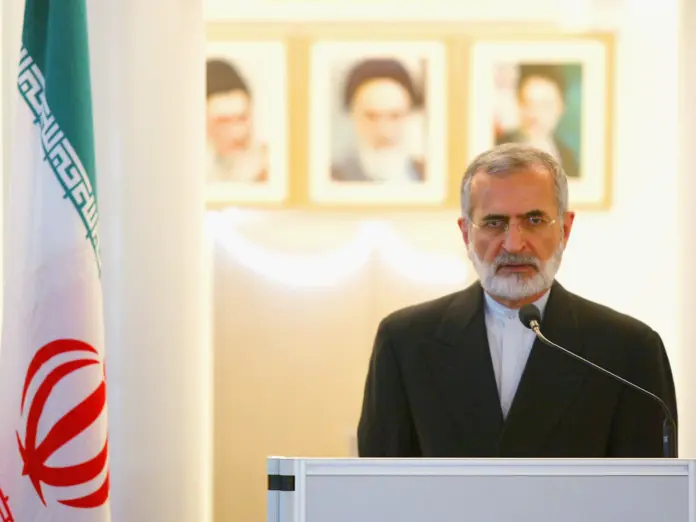
TEHRAN — Kamal Kharazi, Iran’s former foreign minister and a senior figure in the country’s foreign policy establishment, was gravely wounded in a strike on his home in Tehran on Wednesday, while his wife was killed in the attack. Iranian newspapers Shargh, Etemad, and Ham Mihan confirmed Thursday that Kharazi had been hospitalised with serious injuries.
The assault on Kharazi’s residence came as US and Israeli air strikes entered their fifth consecutive week, with bombardments reported Thursday across Tehran, Isfahan, and Shiraz. In the southern city of Larestan, four people were killed in strikes the same day. The exact motives behind the targeting of Kharazi’s home remain unclear.
Kharazi, who also served as an adviser to the late Supreme Leader Ayatollah Ali Khamenei, currently heads Iran’s Strategic Council on Foreign Relations. His wounding marks the latest in a series of high-profile eliminations since the joint US-Israeli campaign began on February 28. Among those killed since the conflict’s outbreak are Ayatollah Ali Khamenei himself — struck on the first day of the war — senior security official Ali Larijani, Gholamreza Soleimani, commander of Iran’s internal Basij forces, and multiple Iranian nuclear scientists.
The human toll inside Iran has been severe. More than 2,000 people have been killed since the campaign began, with the strikes showing no sign of abating. On the other side of the conflict, at least 24 people have been killed in Israel and 13 US soldiers have died in the broader region. Late Wednesday, an Iranian missile attack struck the Israeli city of Bnei Brak, east of Tel Aviv, injuring at least four people. Israel’s Home Front Command issued fresh warnings of incoming rocket fire on Thursday.
Despite the mounting casualties, Iran’s military leadership signalled no willingness to stand down. Ebrahim Zolfaghari, spokesperson for the Khatam al-Anbiya central headquarters, declared that Tehran would continue prosecuting the war until the United States and Israel face what he described as ‘permanent regret and surrender.’
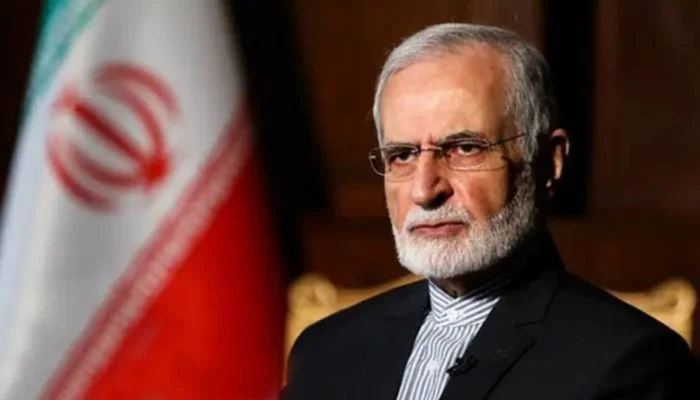
The strike on Kharazi carries particular diplomatic weight given his recent public statements. In an interview last month, he told CNN he saw ‘no room for diplomacy’ with Washington, and accused President Donald Trump of deceiving negotiating partners and failing to honour commitments. Yet just last week, Kharazi appeared to soften that position, stating publicly that Iran had not closed all avenues for negotiation and remained open to possible indirect talks — a signal that was being closely watched by regional analysts before Wednesday’s attack.
Trump, for his part, has maintained an aggressive posture. The president stated that Washington would strike Iran ‘extremely hard’ within weeks and claimed the country was ‘essentially decimated,’ asserting that the US military was on track to achieve its stated objectives.
Iran has responded to the campaign of targeted killings with explicit warnings. Tehran has threatened retaliation against American interests should further assassinations occur inside the country, with particular focus on US technology and artificial intelligence companies operating in the region.
The conflict, now in its fifth week, has reshaped the Iranian leadership landscape with a speed and brutality that has few modern precedents. The wounding of Kharazi — one of the most internationally recognisable faces of Iranian diplomacy — underscores the extent to which the US-Israeli campaign has moved beyond military infrastructure to target the country’s political and strategic elite. Whether his survival alters the trajectory of any back-channel negotiations, or hardens Tehran’s resolve further, remains to be seen.