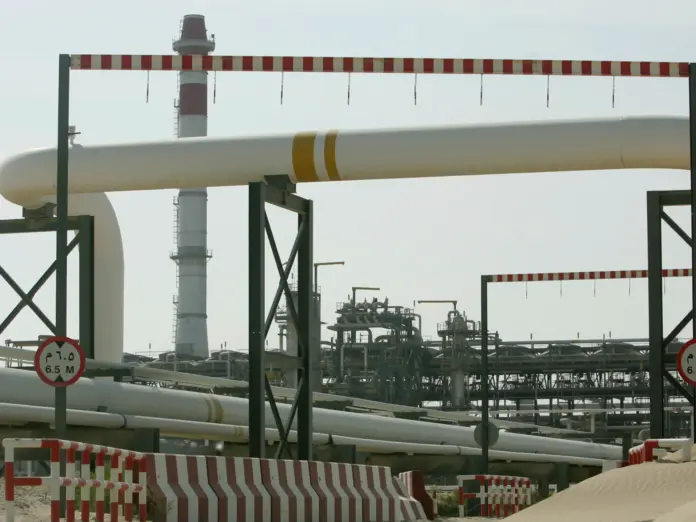
A deadly strike on the Habshan gas facility — the largest natural gas processing site in the United Arab Emirates — has left one person dead and four injured, as Iran continues a relentless campaign of missile and drone attacks across the Gulf region.
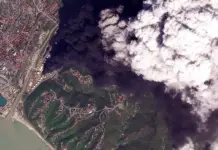
Debris from air defence interceptions ignited two separate fires at the facility, causing significant structural damage. Among the four individuals who sustained minor injuries, two were Pakistani nationals and two were Egyptian nationals. One of the Egyptian workers died during the evacuation of the site. The Abu Dhabi Media Office confirmed the incident on Friday.
The attack on Habshan is among the most consequential strikes to hit the UAE since the United States and Israel launched military operations against Iran on February 28. In the roughly 24 hours preceding the Habshan incident, Iran fired at least 18 ballistic missiles, four cruise missiles, and 47 drones at the UAE alone — a barrage that has made the country one of the hardest-hit nations in the Gulf. Iranian strikes have systematically targeted energy infrastructure and civilian facilities throughout the region.
The assault on Habshan carries particular strategic weight. As the UAE’s premier gas processing hub, any sustained disruption to the facility threatens not only domestic energy supply but also the country’s capacity to fulfil international export commitments. The fires, though brought under control, underscore the vulnerability of critical infrastructure to the kind of saturation attacks Iran has been deploying.
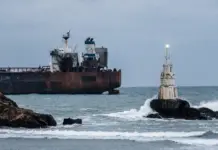
Beyond the UAE’s borders, the wider regional picture is deteriorating rapidly. Iran has effectively halted traffic through the Strait of Hormuz, the narrow waterway through which approximately one-fifth of the world’s oil and liquefied natural gas supplies pass. The closure has sent energy prices soaring on global markets, amplifying economic pressure on importing nations already contending with the uncertainty of an expanding conflict.
Gulf Cooperation Council Secretary-General Jassim al-Budaiwi issued an urgent appeal to the UN Security Council, calling on the body to take concrete measures to halt Iran’s attacks and protect maritime corridors and strategic waterways in the region. The statement reflects growing alarm among Gulf states that international institutions have yet to mount an effective response to what member governments describe as deliberate and escalating aggression against civilian and economic targets.
The Strait of Hormuz closure represents a significant escalation in Iran’s strategy. By choking off the world’s most critical oil transit route, Tehran is leveraging its geographic position to maximise economic damage on adversaries and neutral parties alike, raising the stakes for any diplomatic resolution. Energy analysts warn that a prolonged blockade could trigger supply shocks not seen since the oil crises of the 1970s.
The conflict, now entering its second month, shows little sign of de-escalation. Iranian forces have demonstrated both the willingness and the capacity to sustain high-volume strike operations across multiple Gulf states simultaneously. For the UAE, a country that has long positioned itself as a stable commercial and financial hub, the attacks represent an unprecedented challenge to its security architecture and its reputation as a safe destination for international business and investment.
The human cost at Habshan — one life lost, four workers wounded, a critical facility damaged — offers a ground-level measure of a conflict whose full consequences are still unfolding across the region and global energy markets.