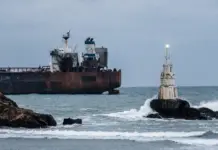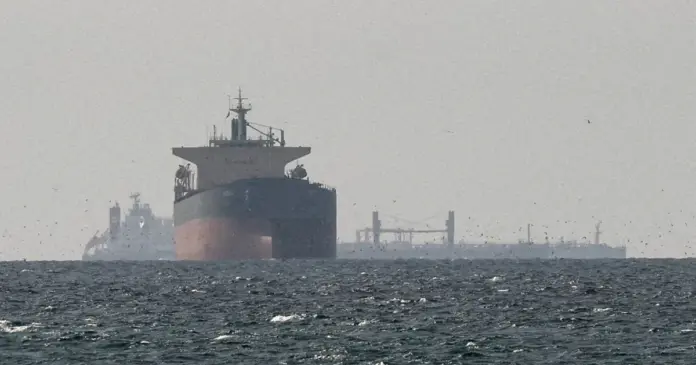
An Islamic Revolutionary Guard Corps (IRGC) gunboat fired on a Liberian-flagged container ship near the coast of Oman on Wednesday, causing significant structural damage to the vessel’s bridge in the latest flashpoint threatening freedom of navigation through one of the world’s most strategically vital waterways.
The United Kingdom Maritime Trade Operations (UKMTO) centre confirmed the attack after the ship’s captain reported being approached by an IRGC vessel before shots were fired. The gunfire inflicted heavy damage to the bridge, though no fires broke out, no environmental harm was recorded, and all crew members emerged uninjured.
Iran’s state-affiliated news agency Tasnim offered a sharply different account, asserting that the container ship had disregarded warnings issued by Iranian armed forces. The IRGC’s Khatam al-Anbiya Central Headquarters went further, framing the attack as a direct response to what it described as a US seizure of an Iranian commercial vessel in the Sea of Oman. Tehran accused Washington of violating an existing ceasefire and engaging in what it called "armed piracy," alleging that American forces had fired on an Iranian ship and disabled its navigation systems.
The vessel had reportedly been informed it held permission to transit the Strait of Hormuz — a narrow chokepoint through which roughly a fifth of the world’s oil supply passes — before the attack occurred, deepening questions about the reliability of such assurances amid the current standoff.
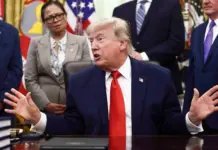
The maritime confrontation unfolded against a volatile diplomatic backdrop. President Donald Trump announced he would delay a previously planned military strike against Iran, a decision he attributed in part to personal appeals from Pakistan’s army chief Asim Munir and Prime Minister Shehbaz Sharif. Trump stated that Iran’s government was "seriously fractured" and required additional time to consolidate a unified negotiating position.
Despite the pause in military planning, Trump confirmed that a US naval blockade of the Strait of Hormuz would remain in place and directed American forces to stay "ready and able" for potential action. The announcement marked a notable shift in tone from just days earlier, when Trump had described it as "highly unlikely" he would extend any truce beyond Tuesday.
The mixed signals from Washington were mirrored in Tehran. Al Jazeera correspondent Tohid Asadi, reporting from the Iranian capital, noted that officials were sending contradictory messages regarding the ceasefire’s status and durability. Iranian authorities have consistently framed their posture in the region as rooted in the principle of mutual security, while simultaneously treating the Strait of Hormuz as a primary instrument of leverage in any future negotiations with the United States.
The attack on the container ship is the latest in a series of maritime incidents that have kept international shipping companies and energy markets on edge. The Strait of Hormuz and the broader Sea of Oman have become focal points of the US-Iran confrontation, with both sides accusing the other of provocative and unlawful acts at sea.
Analysts warn that the combination of a sustained naval blockade, competing narratives over ceasefire obligations, and direct kinetic incidents involving commercial vessels creates conditions in which miscalculation could rapidly escalate. The absence of casualties in Wednesday’s attack may limit immediate pressure for a military response, but the damage to the container ship’s bridge underscores the physical risks now facing civilian mariners operating in the region.
With Trump’s military delay offering a narrow diplomatic window, the coming days are likely to test whether Iran’s internal divisions — acknowledged implicitly by Tehran’s own mixed messaging — can be bridged into a coherent negotiating stance, or whether further incidents at sea will foreclose that possibility entirely.