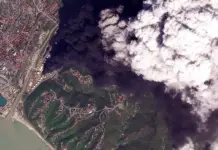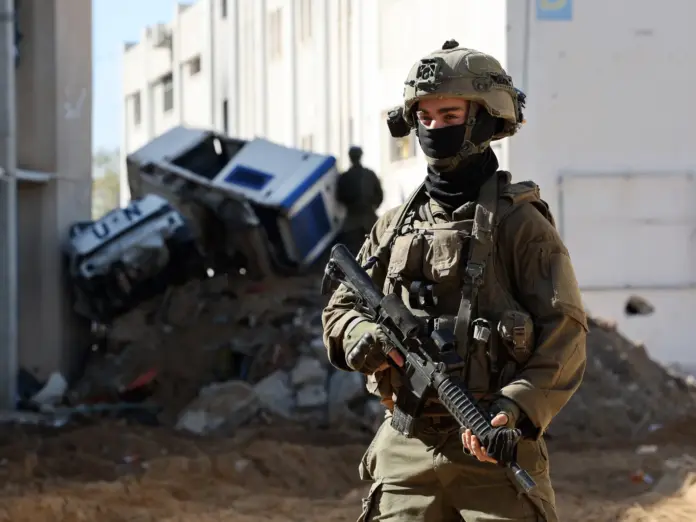
Israel Territorial Expansion — Israeli forces have quietly consolidated military control over approximately 1,000 square kilometres of territory across three separate fronts — the Gaza Strip, southern Lebanon, and southern Syria — since the Hamas-led attacks of October 7, 2023, an investigation combining satellite imagery, geographic information systems, and armed conflict data has found. The total area, larger than New York City, amounts to roughly five percent of Israel’s entire landmass prior to the outbreak of war.
The findings, drawn from a comparison of official Israeli military maps against independent satellite analysis and data from the Armed Conflict Location and Event Data Project, reveal a pattern of territorial consolidation that in several cases extends well beyond boundaries Israel has publicly acknowledged.
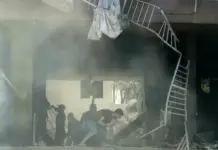
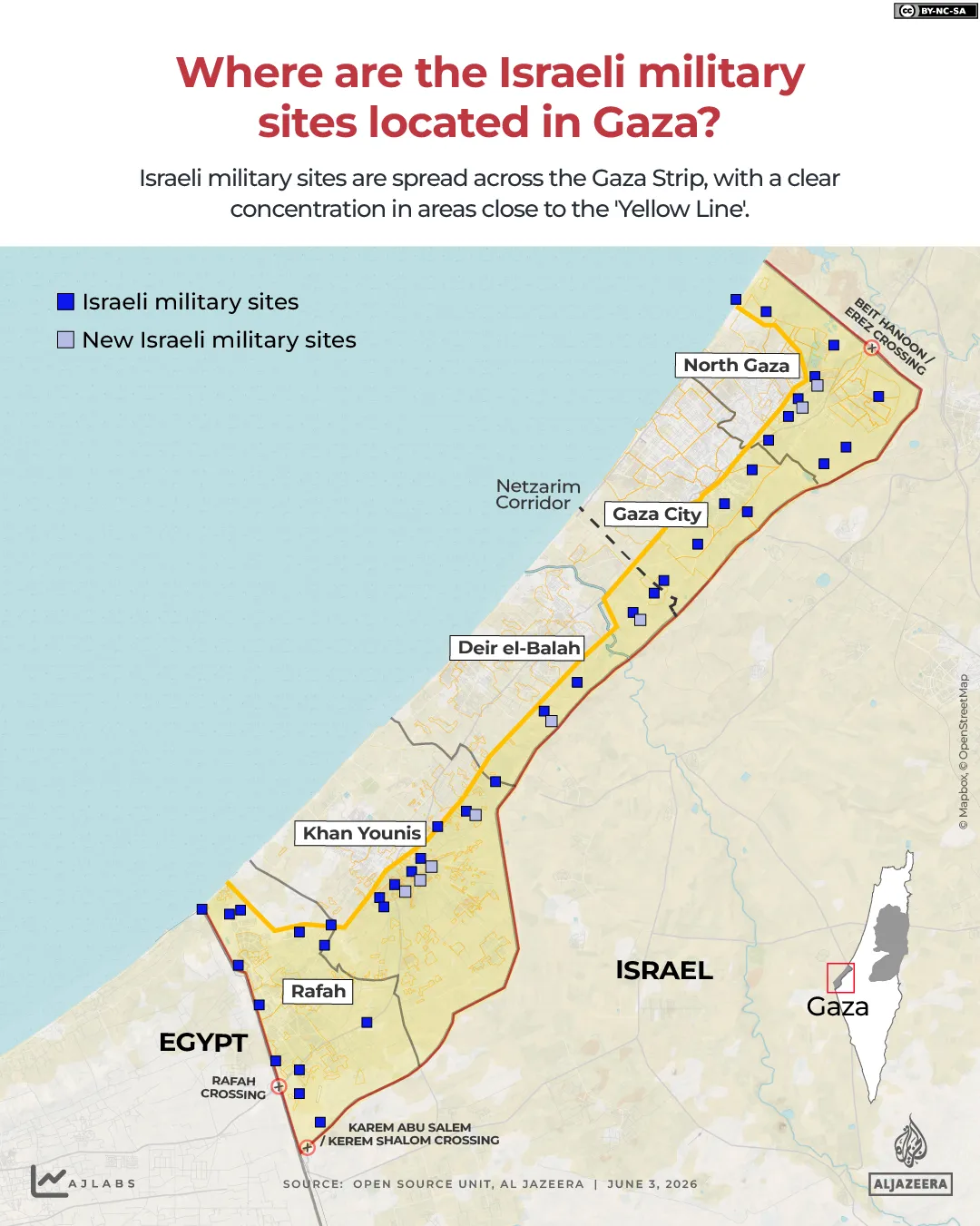
In northern Gaza, Israeli military control expanded from 67.3 square kilometres to 73.9 square kilometres, engulfing 54.7 percent of the north. Satellite imagery confirmed extensive demolitions in the Shujayea neighbourhood that occurred outside declared military zones — unannounced destructions that suggest the physical footprint of Israeli operations exceeds what has been formally communicated. An October 2025 ceasefire agreement introduced a so-called ‘Yellow Line’ delineating Israeli military control over roughly 200 square kilometres of Gaza territory.
Recommended Reading
In southern Lebanon, an April 2026 ceasefire established a buffer zone covering 570 square kilometres. Yet here too, satellite images documented building demolitions in towns outside the declared lines, including in Zawtar al-Sharqiya, raising questions about the true scope of Israeli operations on Lebanese soil.
The situation in southern Syria is perhaps the most opaque. Israel has constructed a de facto control zone of 235 square kilometres stretching from Jabal al-Sheikh — known internationally as Mount Hermon — southward to the Yarmouk River. This zone extends beyond the ‘alpha’ line, the 1974 disengagement boundary that has governed the separation of Israeli and Syrian forces for half a century. Unlike in Gaza and Lebanon, Israel has declared no formal ‘Yellow Line’ in Syria, leaving the boundaries of its presence undefined and unchallenged by any agreed framework.
More than 800 Israeli incursions into Syrian territory were documented between December 2024 and January 2026. One operation penetrated 63 kilometres deep into the Deraa countryside, a striking distance that underscores the ambition of Israel’s Syrian posture.
Analysts who study Israeli military strategy say the expansion is neither accidental nor improvised. Ehab Jabareen, an expert in Israeli affairs, characterised the approach as ‘calculated chaos’ and ‘strategic deception’ — a deliberate blurring of declared and actual control designed to create facts on the ground while avoiding formal annexation declarations that would trigger international legal consequences.
Mohannad Mustafa, a specialist in Israeli politics, argued that territorial expansion has become a substitute for military victory. Having failed to achieve its stated objective of destroying Hamas, the Israeli government under Prime Minister Benjamin Netanyahu is using land seizures to construct a ‘picture of victory’ for a domestic audience, particularly the right-wing coalition partners whose political survival depends on tangible gains from the war.
Israel Territorial Expansion: Regional Implications
Mamoun Abu Amer, a political researcher, identified four interconnected dimensions to the strategy: security-related, political, ideological, and psychological. The security rationale centres on creating buffer zones that push potential threats further from Israeli population centres. The political dimension involves Netanyahu’s need to demonstrate achievement to his governing coalition. The ideological layer reflects longstanding maximalist ambitions within Israel’s far-right regarding territorial expansion. The psychological component aims to signal dominance and permanence to both domestic and regional audiences.
The current trajectory carries echoes of a previous Israeli experiment in territorial control that ended badly. Israel’s attempt to maintain a ‘security belt’ in southern Lebanon — a buffer zone sustained through a proxy militia — collapsed in a chaotic withdrawal in 2000 after nearly two decades of occupation. Critics of the current strategy warn that the same logic of indefinite military presence without political resolution risks a similar outcome across multiple fronts simultaneously.
What distinguishes the present moment is the scale and simultaneity of the expansion. Controlling territory across Gaza, Lebanon, and Syria at the same time represents an unprecedented geographic overreach, one that analysts say is sustainable only as long as the military, economic, and diplomatic costs remain manageable — conditions that show signs of strain as the conflicts enter their third year.