Iran’s parliament speaker Mohammad Bagher Ghalibaf issued a stark warning to Washington on Friday, threatening to shut the Strait of Hormuz — the world’s most critical oil chokepoint — if the United States continues its naval blockade of Iranian ports. The threat sent immediate shockwaves through global energy markets, even as a fragile ceasefire in Lebanon held through its first full day.
Ghalibaf, who also dismissed seven recent claims made by President Donald Trump about Iran as outright falsehoods, made clear that Tehran views the blockade as an act of economic warfare it will not absorb indefinitely. The Islamic Revolutionary Guard Corps added operational weight to the warning, announcing that commercial vessels transiting the strait would henceforth be required to obtain prior permission and follow a designated corridor.
The strait carries roughly one-fifth of the world’s crude oil supply. Traffic through the waterway has already been disrupted since a US-Israeli offensive began on February 28, and the prospect of a full closure rattled energy traders. Brent crude fell 9.1 percent, settling at $90.38 a barrel — dropping below the psychologically significant $90 threshold during intraday trading — before partially recovering.
Iran’s Foreign Minister Abbas Araghchi offered a more measured public posture, insisting the strait remained fully open to all commercial shipping in accordance with the ceasefire agreement in Lebanon. The divergence between Araghchi’s reassurances and Ghalibaf’s threats reflects the competing pressures within Tehran’s political establishment as nuclear talks with Washington remain unresolved.
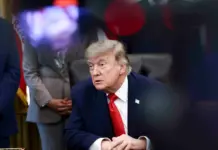
Trump, for his part, told reporters there were no remaining sticking points in negotiations with Iran, projecting confidence that a deal was within reach. Yet he simultaneously insisted the naval blockade would remain in full force until any transaction with Tehran was, in his words, "100% complete." Iran has flatly rejected Trump’s assertion that it agreed to transfer its enriched uranium stockpile to the United States, calling the claim false — one of the seven specific points Ghalibaf publicly rebutted.
A Pakistani diplomatic source familiar with the talks cautioned that considerably more work remains before any durable regional peace can be achieved, underscoring the gap between Washington’s optimistic framing and the reality on the ground.
Equity markets, meanwhile, appeared to take comfort in the ceasefire news rather than the Hormuz threat. The S&P 500 closed above 7,100 points for the first time, buoyed by the prospect of reduced regional conflict.
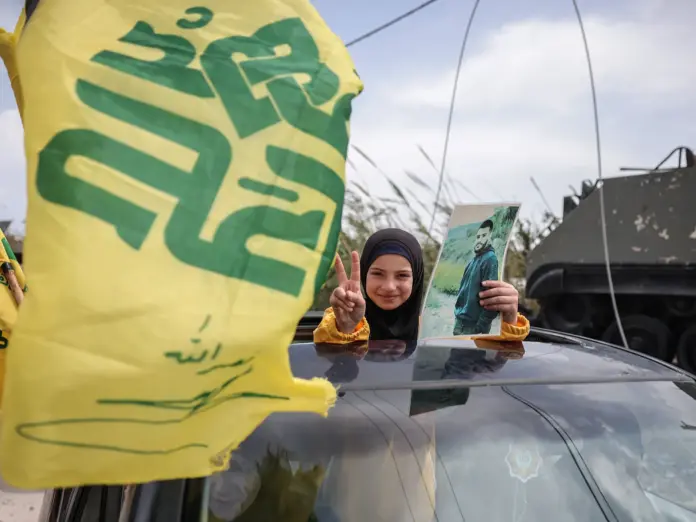
In Lebanon, the ceasefire that Trump confirmed prohibits Israeli military strikes for a 10-day period. Tens of thousands of civilians forcibly displaced by Israeli bombardment began returning to their homes on the agreement’s first day. The ceasefire survived intact through that initial 24-hour period, a meaningful if modest milestone given the fragility of previous pauses in the conflict.
Lebanon’s President Joseph Aoun defended Beirut’s decision to engage in direct talks with Israel, a politically sensitive move in a country where such contact has historically been taboo. His remarks came even as multiple Lebanese news outlets reported that Israeli troops still occupying border towns were demolishing homes — a development that threatens to complicate any longer-term stabilisation effort.
The violence in the Gaza Strip continued unabated. UNICEF confirmed that Israeli fire killed two water truck drivers the agency had contracted to deliver humanitarian supplies to the besieged territory, a development the organisation condemned as a blow to civilian relief operations.
Washington also moved to tighten economic pressure on Iran’s regional network. The US Treasury Department imposed new sanctions on commanders of Iraqi armed groups aligned with Tehran, including individuals linked to Kataib Hezbollah, the Iran-backed militia that has repeatedly targeted American forces in the region.
The overlapping crises — a contested naval blockade, a tenuous ceasefire, stalled nuclear diplomacy, and ongoing combat in Gaza — underscore the degree to which the Middle East remains suspended between escalation and negotiated settlement. Whether the Hormuz warning represents a genuine red line or a pressure tactic ahead of the next round of talks may become clear in the days ahead, as the 10-day ceasefire clock in Lebanon continues to run.