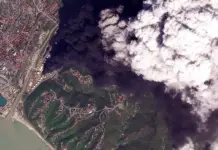
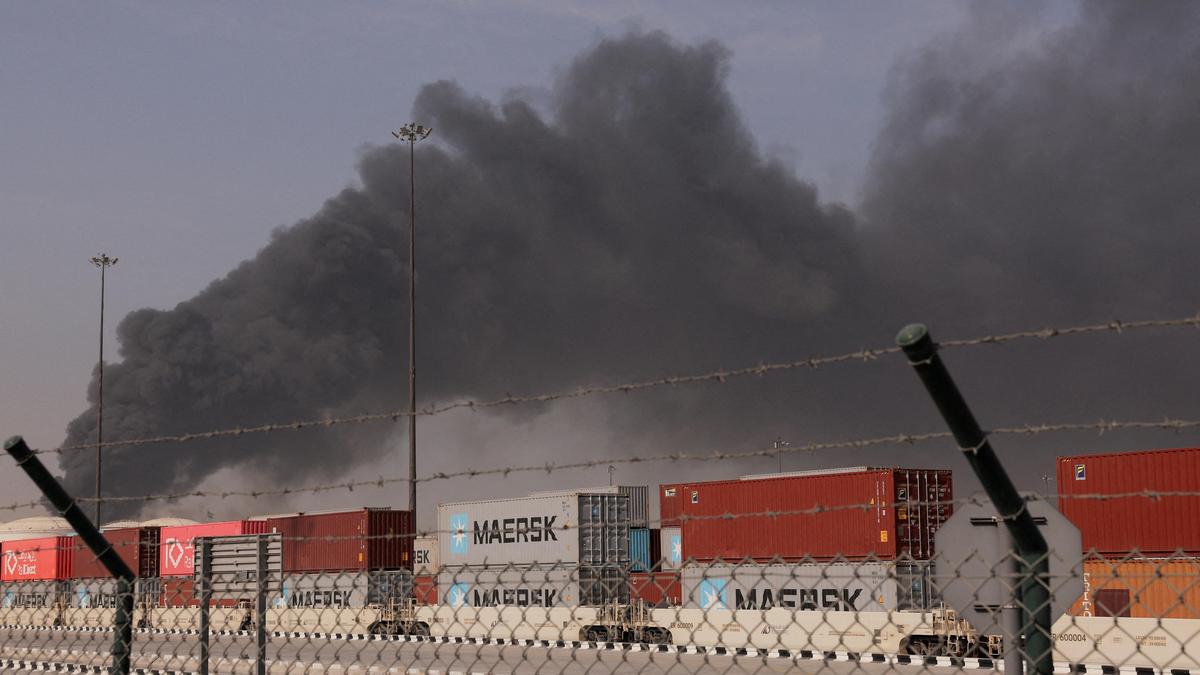
A fully loaded Kuwaiti crude oil tanker was struck by an Iranian drone attack while anchored at Dubai Port on Monday, igniting a fire aboard the vessel and raising fears of an oil spill in surrounding waters, Kuwait Petroleum Corporation announced Tuesday, March 31, 2026.
The tanker Al-Salmi, carrying a full cargo of crude oil, sustained hull damage in the strike. Maritime firefighting crews worked to contain the blaze, and the Dubai Media Office later confirmed the fire had been extinguished. All 24 crew members escaped unharmed. Dubai authorities stated that assessment teams remained on scene to evaluate the full extent of the damage, while Kuwait Petroleum Corporation cautioned that an oil spill remained a risk. Iran offered no comment on the attack.
Two unidentified projectiles also landed in waters near the container ship Express Rome during the same period, underscoring the breadth of Iran’s campaign against commercial shipping in the Gulf and the Strait of Hormuz. The Al-Salmi strike is the latest in a series of attacks on vessels operating in the region since hostilities escalated following US and Israeli strikes on Iran on February 28.
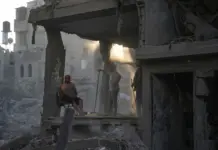
US Secretary of State Marco Rubio issued a stark warning to Tehran, stating that Iran faces ‘real consequences’ over its partial closure of the Strait of Hormuz, while also noting that President Donald Trump ‘always prefers diplomacy.’ A US official confirmed that American forces struck an ammunition depot in Isfahan using 2,000-pound bunker-buster bombs, one of several attacks on the Iranian city. Iranian missiles fired in response were either intercepted or fell in open areas, with no casualties reported. Shrapnel from the strikes damaged inlet facilities at an electrical substation in East Tehran, triggering power outages across parts of the capital.
Trump’s assessed timeline for the conflict stands at four to six weeks, and he is reportedly willing to accept a ceasefire even if the Strait of Hormuz remains largely closed — a posture that signals Washington’s appetite for a negotiated off-ramp despite the military pressure being applied.
The economic toll of the conflict is mounting rapidly. The environmental group 350.org calculated that surging oil and gas prices have cost consumers and businesses approximately $111 billion in the first month of the war. South Korea, which sources 70 percent of its oil from the Middle East, faces acute exposure to supply disruptions. The Philippines Department of Trade and Industry moved to reassure the public, stating that no price increases on basic necessities and prime commodities would take effect until April 16.
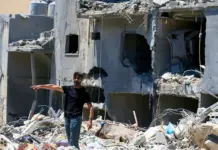
In Lebanon, the conflict’s regional dimensions deepened dramatically. Three Indonesian peacekeepers serving with the United Nations Interim Force in Lebanon (UNIFIL) were killed in separate attacks on southern Lebanon within 24 hours. Two died when an explosion struck a UNIFIL logistics convoy, while a third — identified as First Private Farizal Ramadan — was killed in a blast inside a UNIFIL base on Sunday. His funeral was scheduled for Monday. France called an emergency session of the UN Security Council in response to the killings. At least 10 Israeli soldiers have also been killed in southern Lebanon since March 2.
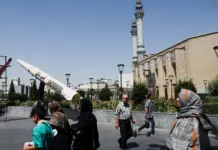
A significant blow was dealt to Iran’s military command structure when IRGC Navy Commander Admiral Alireza Tangsiri was killed in an Israeli strike. His funeral was scheduled to take place Monday. In a show of public defiance, thousands of Iranians marched in the city of Karaj to express support for the government and military.
Regional diplomacy intensified as the crisis deepened. Saudi Crown Prince Mohammed bin Salman, Qatari Emir Sheikh Tamim bin Hamad Al Thani, and Jordan’s King Abdullah II convened in Jeddah for talks, reflecting growing alarm among Gulf states over the conflict’s trajectory. Saudi Arabia’s civil defence reported that falling debris from a downed drone in al-Kharj province caused limited material damage to six houses.
Iraq remained a flashpoint. The Islamic Resistance in Iraq claimed 19 operations targeting US military bases inside Iraq and across the broader region over a single 24-hour period. Meanwhile, Kuwait’s military reported its air defences were actively responding to hostile missile and drone attacks on Tuesday.
In Australia, Greens Senator David Shoebridge accused the government of breaching its own rules by deploying soldiers to the United Arab Emirates without proper authorisation, adding a domestic political dimension to Canberra’s entanglement in the crisis.
Israel’s parliament passed its annual budget of $270 billion amid the ongoing conflict, a move opposition leader Yair Lapid condemned as ‘the greatest theft in the state’s history.’ Eight people were killed in a separate attack on a cargo boat near the island of Qeshm, adding to a civilian toll that continues to climb as the Gulf braces for further escalation.