Iranian forces unleashed a sweeping wave of drone and missile strikes across the Gulf on Saturday, targeting airports, military installations, and economic infrastructure in Kuwait, the United Arab Emirates, Oman, Saudi Arabia, and Bahrain — as the war between Iran and the US-Israel alliance entered its second month with no sign of de-escalation.
The most consequential blow to American forces came a day earlier, on Friday, when Iran struck Prince Sultan Air Base in Saudi Arabia with at least six ballistic missiles and 29 drones, wounding at least 15 US soldiers, five of whom were reported in serious condition. Saudi Arabia’s Defence Ministry confirmed the attack and said its air defences intercepted a ballistic missile and multiple drones launched on Saturday, shooting them all down before they reached their targets.
In Kuwait, drone strikes caused significant damage to the radar system at Kuwait International Airport early Saturday morning. No casualties were reported, but Kuwait’s Civil Aviation Authority directly attributed the attack to Iran, its proxies, and armed factions operating under its direction — a rare and pointed accusation from a Gulf neighbour that has historically sought to maintain neutrality.
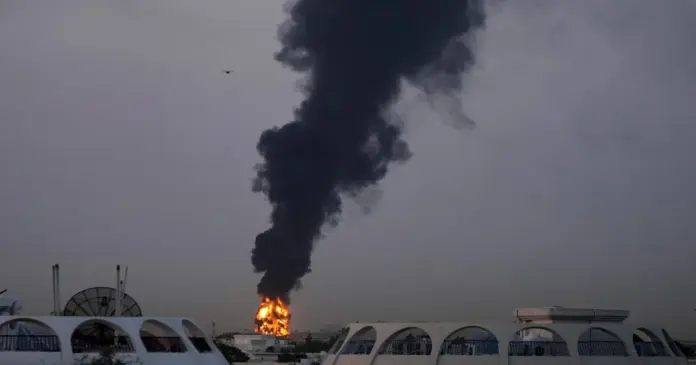
The UAE sustained strikes that ignited three fires in an industrial zone near the Khalifa Economic Zone, close to Khalifa Port in Abu Dhabi. Falling debris injured six people. All three fires were brought under control. Iran’s military claimed it had struck what it described as a Ukrainian anti-drone system depot in Dubai that allegedly supported US forces, and said hideouts of American commanders and soldiers in the city were also targeted. Ukraine’s Foreign Ministry flatly denied the existence of any such depot.
In Oman, two drones struck the port of Salalah in Dhofar province, injuring one person and causing minor damage to a crane. Iranian forces separately claimed to have hit a US military logistics vessel at a considerable distance from the port. Shipping giant Maersk suspended operations at Salalah for 48 hours in the aftermath. Alarm sirens sounded several times across Bahrain warning of incoming strikes, though no casualties were reported there.
The strikes came as Israeli forces continued near-daily bombardment of Iranian targets, with multiple explosions and visible smoke reported over Tehran following Israeli strikes. A separate explosion was heard near Erbil International Airport in Iraq’s Kurdistan Region. In a particularly sensitive development, a strike occurred near Iran’s Bushehr nuclear power plant late Friday — the third reported strike in Iran within a ten-day period, according to the International Atomic Energy Agency, which confirmed no radiation leak or damage to the reactor.
Israeli forces also carried out airstrikes on several towns in southern Lebanon, while Yemen’s Iran-backed Houthi group claimed its first strike on Israel since the broader conflict escalated.
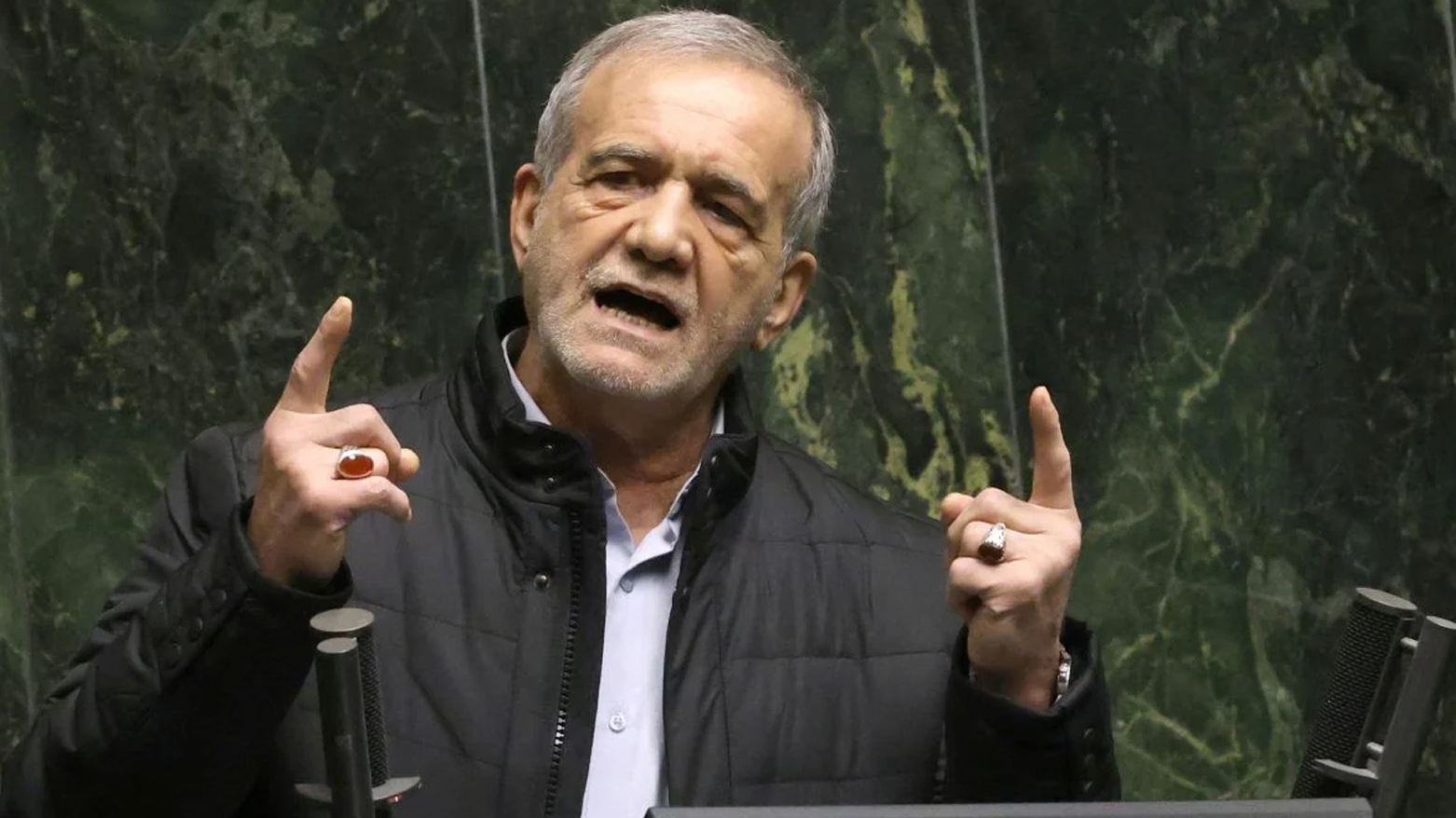
Against this backdrop, Iranian President Masoud Pezeshkian posted a stark warning on his official X account on Saturday. He cautioned neighbouring states against permitting enemies to use their territory as a launchpad for military operations against Iran. "Iran does not carry out preemptive attacks," Pezeshkian wrote, "but will retaliate strongly if its infrastructure or economic centres are targeted." Earlier in the week, Foreign Minister Abbas Araghchi had urged countries in the region to distance themselves from Washington.
The warnings carry particular weight given that the conflict was triggered by the US-Israeli air campaign of February 28, which killed Supreme Leader Ayatollah Ali Khamenei — a strike that fundamentally altered the strategic calculus across the Middle East and set off the current cycle of retaliatory strikes.
Diplomatic efforts are underway, though fragile. Foreign ministers from Pakistan, Saudi Arabia, Türkiye, and Egypt were scheduled to convene in Islamabad for talks. Thailand reached a separate agreement with Iran allowing Thai oil tankers to transit safely through the Strait of Hormuz, with Thai Prime Minister Anutin Charnvirakul citing concerns over fuel imports. Meanwhile, Ukrainian President Volodymyr Zelensky announced a defence cooperation agreement with UAE President Mohamed bin Zayed Al Nahyan following a bilateral meeting — a development that underscores how the conflict is drawing in actors far beyond the immediate region.
With Israel intensifying its strikes on Iranian territory almost daily and Iran expanding its reach across the Gulf, the prospect of the conflict remaining contained grows increasingly remote.