STRAIT OF HORMUZ — Iran has declared the Strait of Hormuz open to commercial shipping under a framework of conditions that stops well short of a full restoration of free navigation, as US President Donald Trump declared no remaining obstacles to a nuclear deal while insisting the American blockade of Iranian ports will stay in place until any agreement is fully concluded.
The announcement, coming on day 50 of the US-Iran conflict, sent oil markets into a sharp reversal. Brent Crude fell to $90.38 per barrel after having peaked at nearly $120, and Wall Street indices closed at record highs on Friday — a sign of how acutely global markets had been pricing in the risk of a prolonged closure of the waterway through which roughly a fifth of the world’s oil supply passes.
Iranian Foreign Minister Abbas Araghchi confirmed the strait remains fully open to commercial vessels, but the conditions attached are significant. Under a draft law being prepared by Tehran, ship owners would be required to pay fees for what Iran describes as "securing the strait" — a formulation that stops short of traditional transit tolls but amounts to a similar financial imposition. Ebrahim Rezaei, spokesman for Iran’s parliamentary security committee, confirmed the legislation is being drafted. All vessels seeking passage would need prior coordination with Iranian authorities, and hostile military ships — specifically those belonging to the United States and Israel — would be barred entirely.
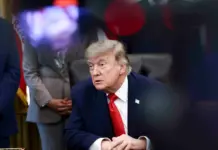
Iran had previously threatened to close the strait entirely if the US blockade of its ports continued. US Central Command reported that 21 vessels complied with orders to turn back from Iranian ports, underscoring the operational reality of the American pressure campaign. Trump made clear that posture will not change. "The blockade remains until any agreement is 100 percent complete," he stated, while simultaneously expressing optimism that a deal was close, describing the path forward as potentially historic and suggesting a visit to China could be in the offing. Trump also said Chinese President Xi Jinping supports the reopening of Hormuz — a notable diplomatic signal given Beijing’s deep interest in uninterrupted Gulf energy flows.
Trump dismissed an offer from NATO to assist in securing the strait, calling the alliance a "paper tiger," even as France and Britain announced they would lead a multinational effort to safeguard freedom of navigation in the waterway. The transatlantic friction adds another layer of tension to an already complicated diplomatic landscape.
Tehran, meanwhile, flatly rejected any suggestion that its enriched uranium stockpile would be transferred out of the country — a position likely to complicate the final stages of any nuclear negotiations. The Iranian foreign ministry’s statement was unambiguous, signalling that while Tehran is willing to engage, it will not accept terms it views as a surrender of its nuclear programme’s core assets.
Saudi Finance Minister Mohammed Al-Jadaan welcomed the reopening of the strait but cautioned that the situation remains fragile — a measured response from a Gulf state that has watched the conflict with deep unease given its own proximity to both the waterway and the broader regional confrontation.
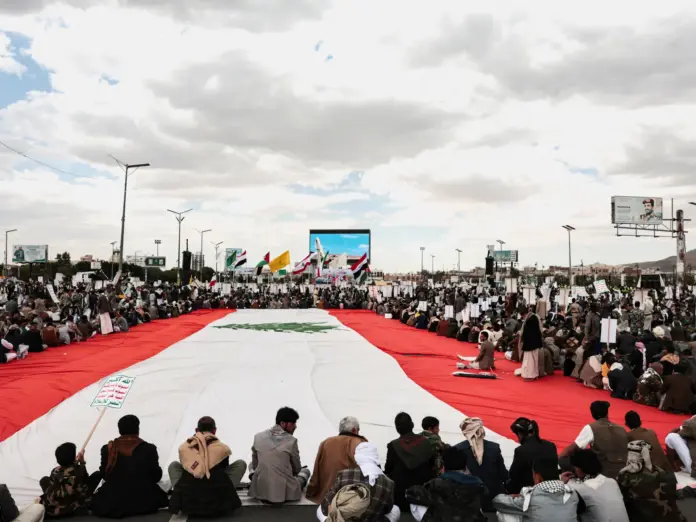
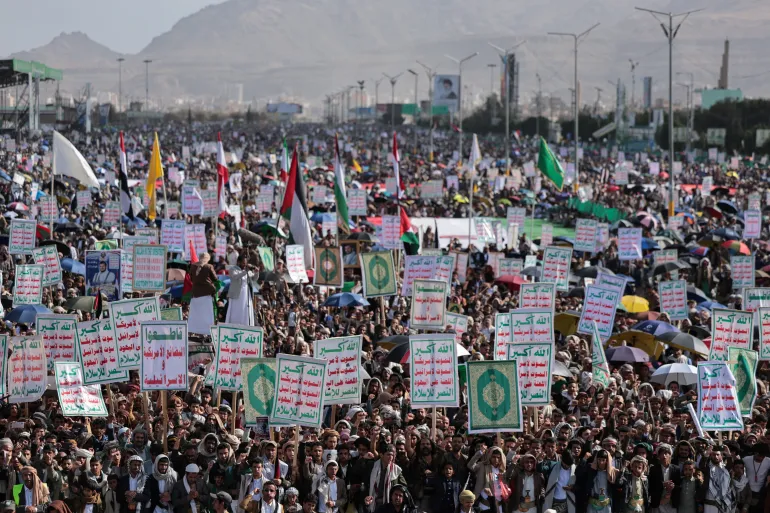
The Houthi movement, which controls northern Yemen, warned it stands ready to join the conflict if necessary. Houthi supporters staged solidarity demonstrations in Sanaa with Lebanon, where a separate but interconnected crisis is playing out.
A 10-day ceasefire between Israel and Hezbollah took effect, offering a fragile pause in a conflict that has killed nearly 2,300 people in Lebanon since March 2, according to the Lebanese health ministry. Lebanese President Joseph Aoun said the country is approaching a new phase of lasting agreements. However, Trump warned the ceasefire may not be extended without a broader deal, and Israeli Prime Minister Benjamin Netanyahu made clear his government’s ambitions have not diminished — stating that the "dismantling of Hezbollah" remains a key objective and that the campaign is not over. Israeli attacks on Lebanon continued despite the ceasefire, with Lebanese state media reporting one person killed in the south by an Israeli strike on a motorcycle.
Trump separately stated that Israel is barred by the United States from continuing attacks on Lebanon — a direct contradiction of Netanyahu’s public posture that highlights the tensions running beneath the surface of the US-Israel relationship at this juncture.
In a separate but related energy development, the US Treasury extended a waiver allowing countries to purchase sanctioned Russian oil at sea until May 16, a move that reflects Washington’s continued effort to manage global energy prices even as it prosecutes an aggressive sanctions campaign against Tehran.
The convergence of a potential US-Iran nuclear agreement, a contested Hormuz reopening, a tenuous Lebanon ceasefire, and Houthi warnings of escalation leaves the broader Middle East in a state of managed instability — with the next 72 hours of diplomacy likely to determine whether the current de-escalation holds or unravels.