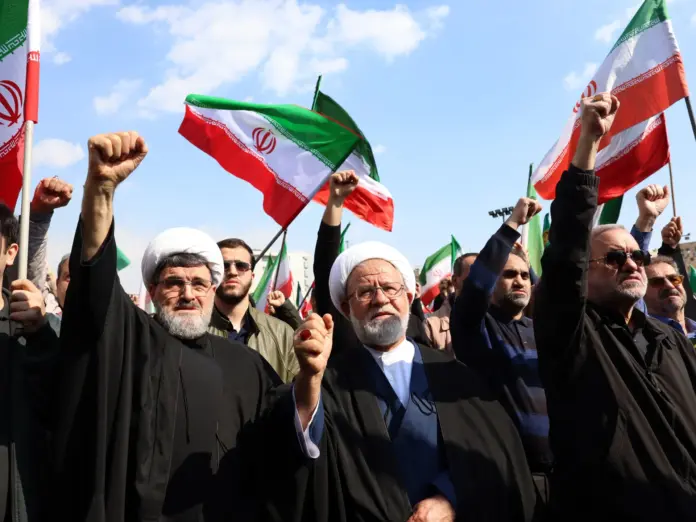
TEHRAN — Millions of Iranians flooded city squares on Tuesday and Wednesday to mark the 47th anniversary of the Islamic Republic, defying an ongoing U.S.-Israeli military campaign that has battered the country’s infrastructure, killed senior military figures, and plunged its population into economic and digital isolation.
The commemorations, centred on Tehran’s Revolution Square, drew enormous crowds chanting slogans against what state media described as a war launched jointly by Washington and Tel Aviv on February 28, 2026. President Masoud Pezeshkian and Foreign Minister Abbas Araghchi both attended the rallies, lending the gatherings an unmistakable official character even as Basij paramilitary forces of the Islamic Revolutionary Guard Corps (IRGC) patrolled streets and manned checkpoints across the capital.
Islamic Republic Day commemorates the March 30–31, 1979 referendum in which 98.2 percent of Iranian citizens voted to ratify the creation of the Islamic republican system under the leadership of Imam Ruhollah Khomeini, who became the country’s first supreme leader until his death in 1989. This year’s anniversary carried particular weight: crowds chanted ‘Death to America’ and ‘Death to Israel’ in cities across the country, while authorities hoisted a flag measuring 150 metres tall and weighing 300 kilograms in downtown Tehran on Wednesday afternoon.
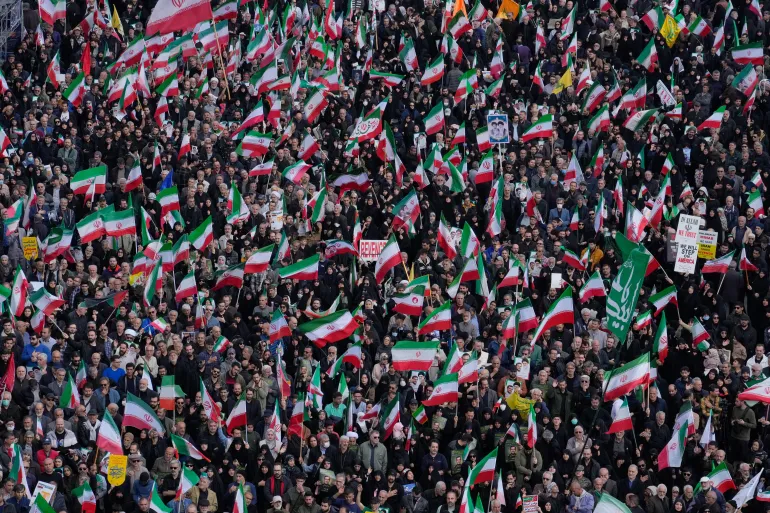
Hassan Khomeini, son of the revolution’s founder, called on supporters to remain on the streets every night until the war concludes — a signal that the establishment intends to sustain public mobilisation as a show of resilience. The rallies unfolded under tight security, with Iraqi religious volunteers known as ‘mokebs’ — stations providing food and services — set up in various squares across Tehran. Hashd al-Shaabi fighters, the Iraqi paramilitary network, marched through cities in the southwestern province of Khuzestan in convoys of pick-up trucks delivering humanitarian assistance. Pezeshkian publicly thanked the fighters in an online post.
The anniversary was also marked by grief. The funeral of Alireza Tangsiri, commander of the Revolutionary Guard’s Naval Forces and the man widely described as the architect of Iran’s closure of the Strait of Hormuz, took place at Engelab Square on April 1. Tangsiri had been assassinated by Israel. Mourners chanted ‘No surrender! No negotiation! Fight against the U.S.!’ as his coffin passed through the square, and at least one woman publicly called for the strait’s closure to be maintained.
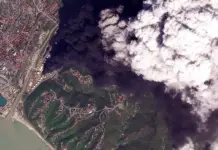
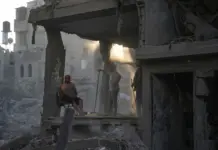
The strikes that have defined the past month have been sweeping in scope. U.S. and Israeli forces have targeted civilian nuclear sites, a university, military installations, and residential homes. Washington bombed the site of the former U.S. embassy in Tehran — now guarded by the IRGC — in the early hours of Wednesday morning. The U.S. and Israel also struck Iran’s top steel manufacturing companies this week. Iranian authorities acknowledged that foreign aggression has caused fatalities and severe material damage to the country’s infrastructure, while Tehran has responded with missile and drone strikes against targets in Israel and facilities representing U.S. interests across the region.
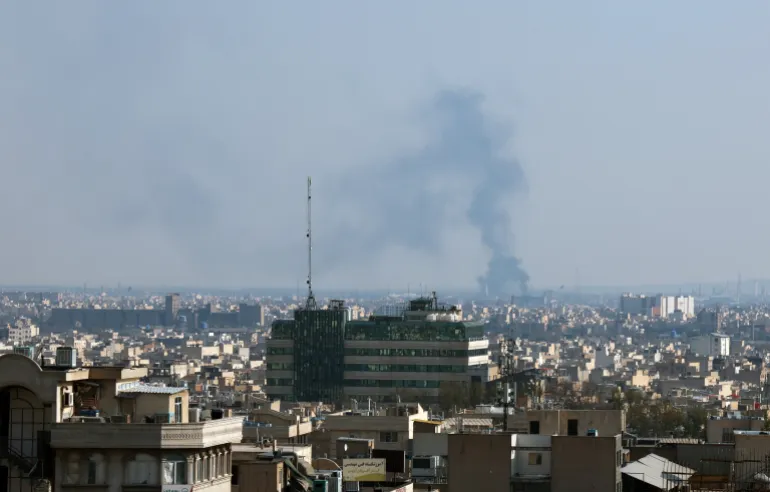
The war has imposed severe costs on ordinary Iranians. The country has endured a near-total internet shutdown lasting more than a month, forcing residents to seek alternative means of connectivity. One Tehran resident reported spending nearly $300 on VPN access — a sum exceeding two months’ salary for minimum wage workers in a country where inflation already surpasses 70 percent. Authorities are prosecuting anyone found using Starlink satellite internet on national security grounds, while state television has identified Starlink infrastructure in the region as among Tehran’s legitimate military targets. The Fars news agency released footage of confessions from arrested Iranians on Wednesday.
With conventional communications disrupted, some residents have improvised early warning systems, relaying alerts about incoming aircraft via phone calls and text messages from contacts in northern and western provinces.
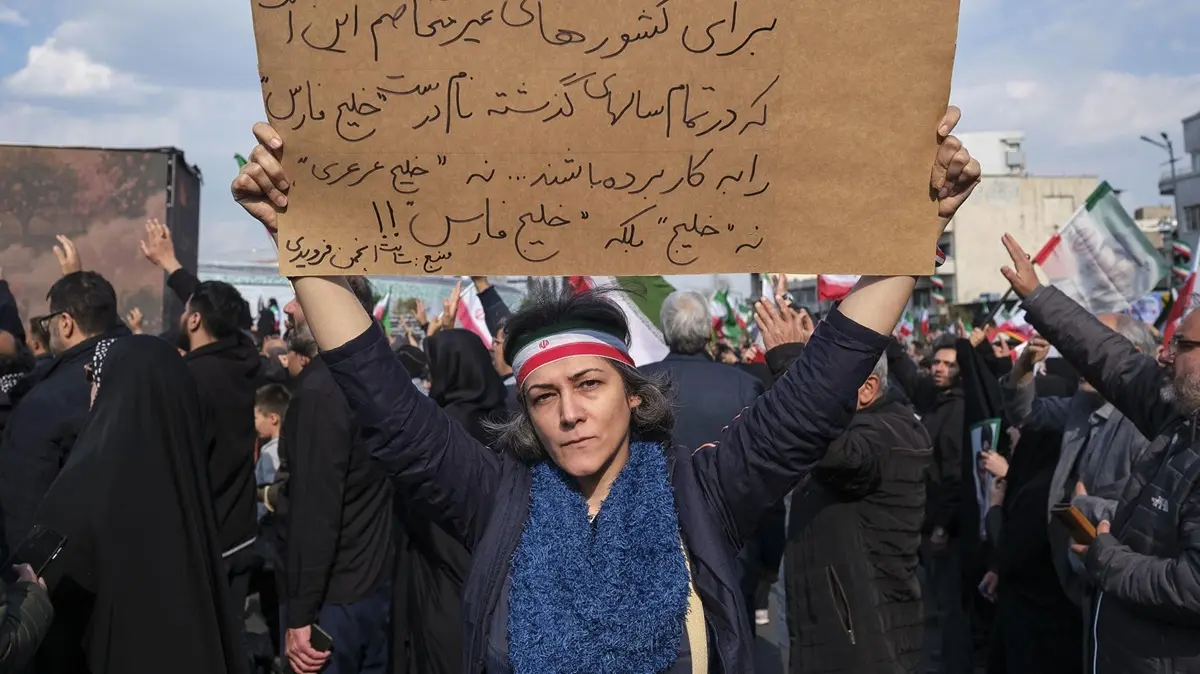
Iran’s military establishment has framed the conflict as one it has long anticipated. Ahmad Reza Pourdastan, head of the Iranian army’s research centre, stated that armed forces have been drilling for a U.S. invasion scenario since 2001 — a claim that underscores the degree to which the current confrontation, however devastating, has been incorporated into the Islamic Republic’s strategic identity. A senior clerical and paramilitary figure affiliated with the IRGC, Hamid al-Hosseini, confirmed that Iraqi nationals were present on the streets of Tehran as part of the broader show of regional solidarity.
As the anniversary rallies wound down, the Islamic Republic projected an image of mass popular support and defiant continuity. Whether that image reflects the full breadth of Iranian public sentiment — in a country with a month-long internet blackout, widespread economic hardship, and ongoing military strikes — remains impossible to independently verify.